


From Green Beans to Lamb, a Michelin Recommended Story
When I go to a good butcher restaurant, my expectations are actually quite simple: good meat, proper fire, and a few decent meze. And if you are in the Aegean, surely it should not be too difficult to get green beans and peppers right either. At Kasap Fuat, this is exactly where the problems started.
We tried three meze.
The first was a spicy pepper in sauce. It arrived looking bright, fresh and very appetising. After the first bite, however, all that remained was the heat. There was pepper, there was spice, but there was no flavour. The sad part is that almost any jar of peppers you pick up from a market stall in the Aegean or Thrace would probably taste better.
Then came the green beans.
It is harder to describe the disappointment they caused. You almost want to look at the plate and ask: “What did they do to you in Çeşme to make you disappoint me like this, green bean?”
Buy almost any green bean from the Urla market and turning it into something this tasteless would require an extra effort of its own. For me, the way a restaurant in the Aegean treats a simple ingredient like this is not a minor detail. It tells you something about its respect for the produce.
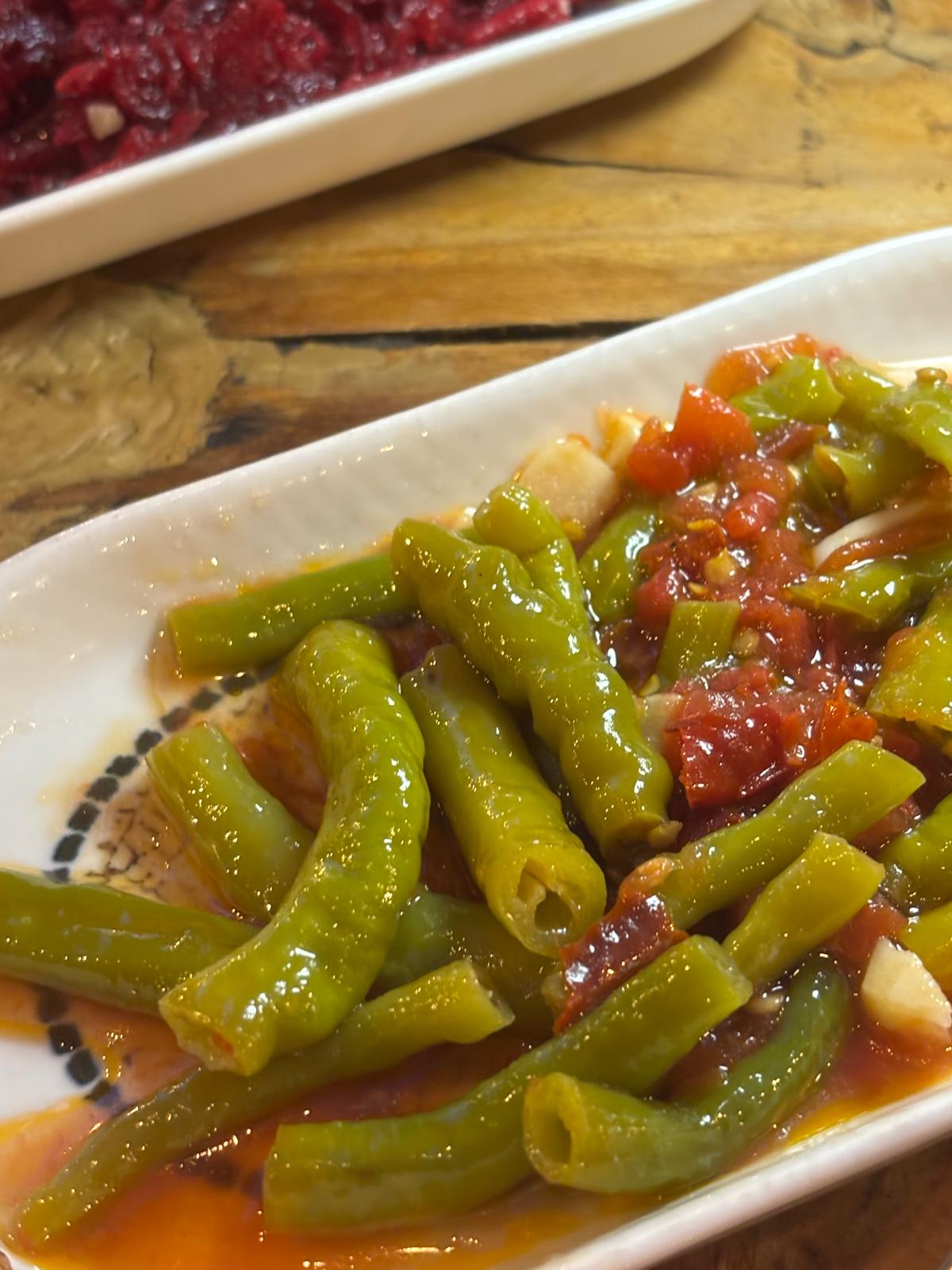
Spicy Pepper in Sauce
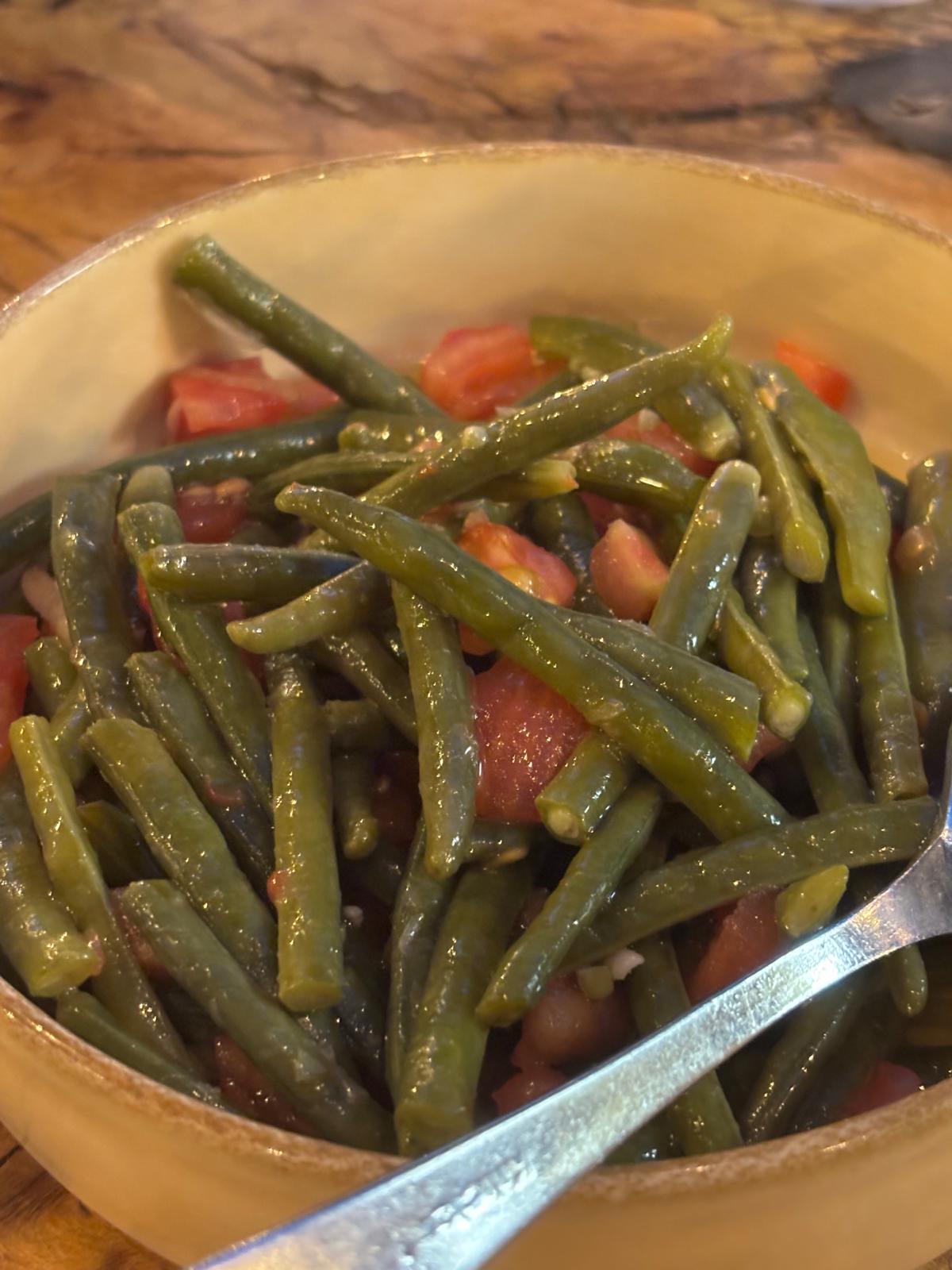
Green Beans
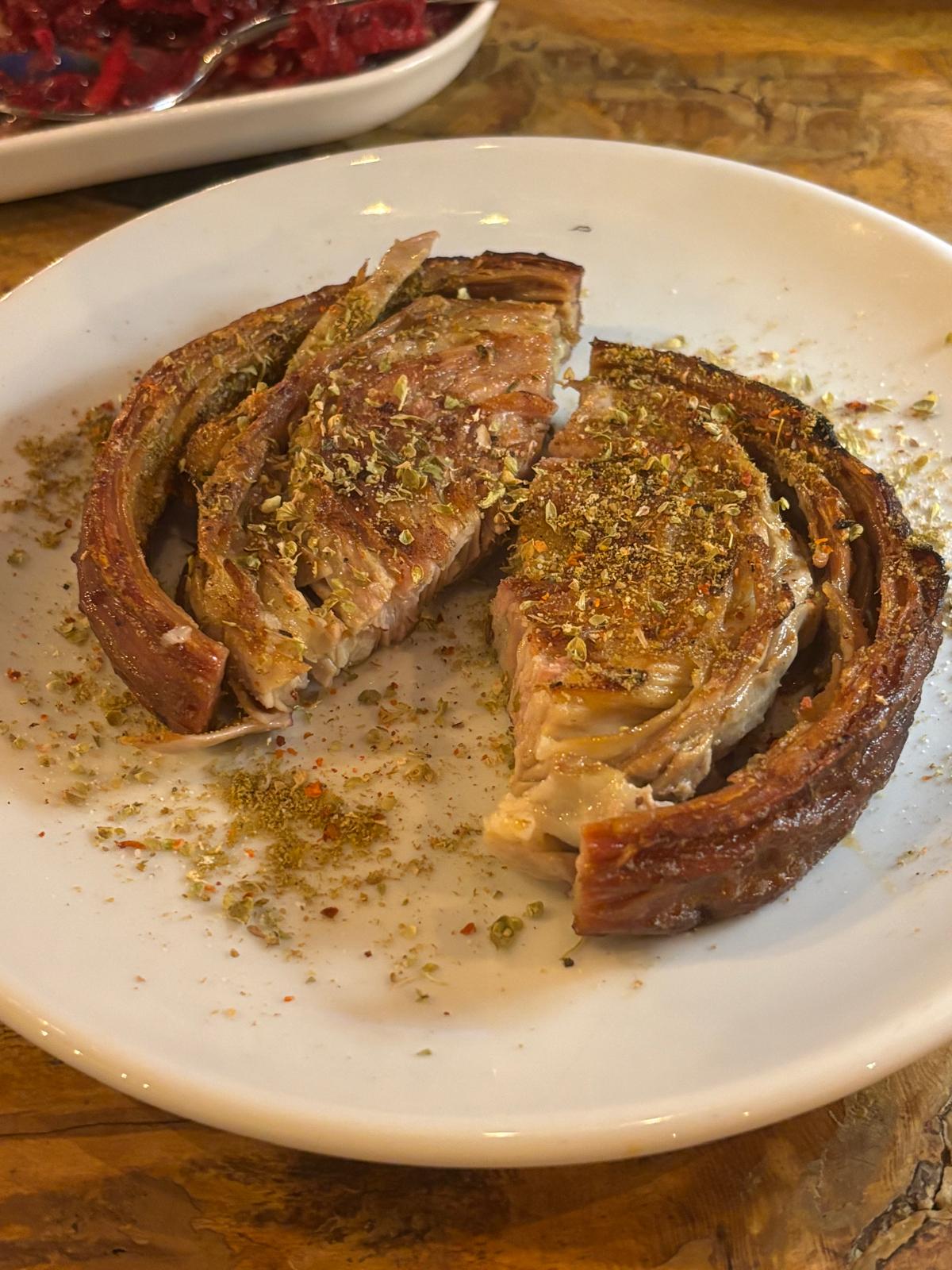
The third meze was grated beetroot. Yes, that one was edible. The fact that “edible” had already become a compliment probably tells you something about how the evening was going.
There were things I liked, of course.
I really enjoyed the merguez, particularly the one with sun-dried tomatoes and cheese. It was easily one of the most enjoyable bites of the evening. The kokoreç was also above average. But it was the kind of good kokoreç you can quite easily find around İzmir and its surroundings. Good, yes, but not special enough on its own to justify making the trip here.
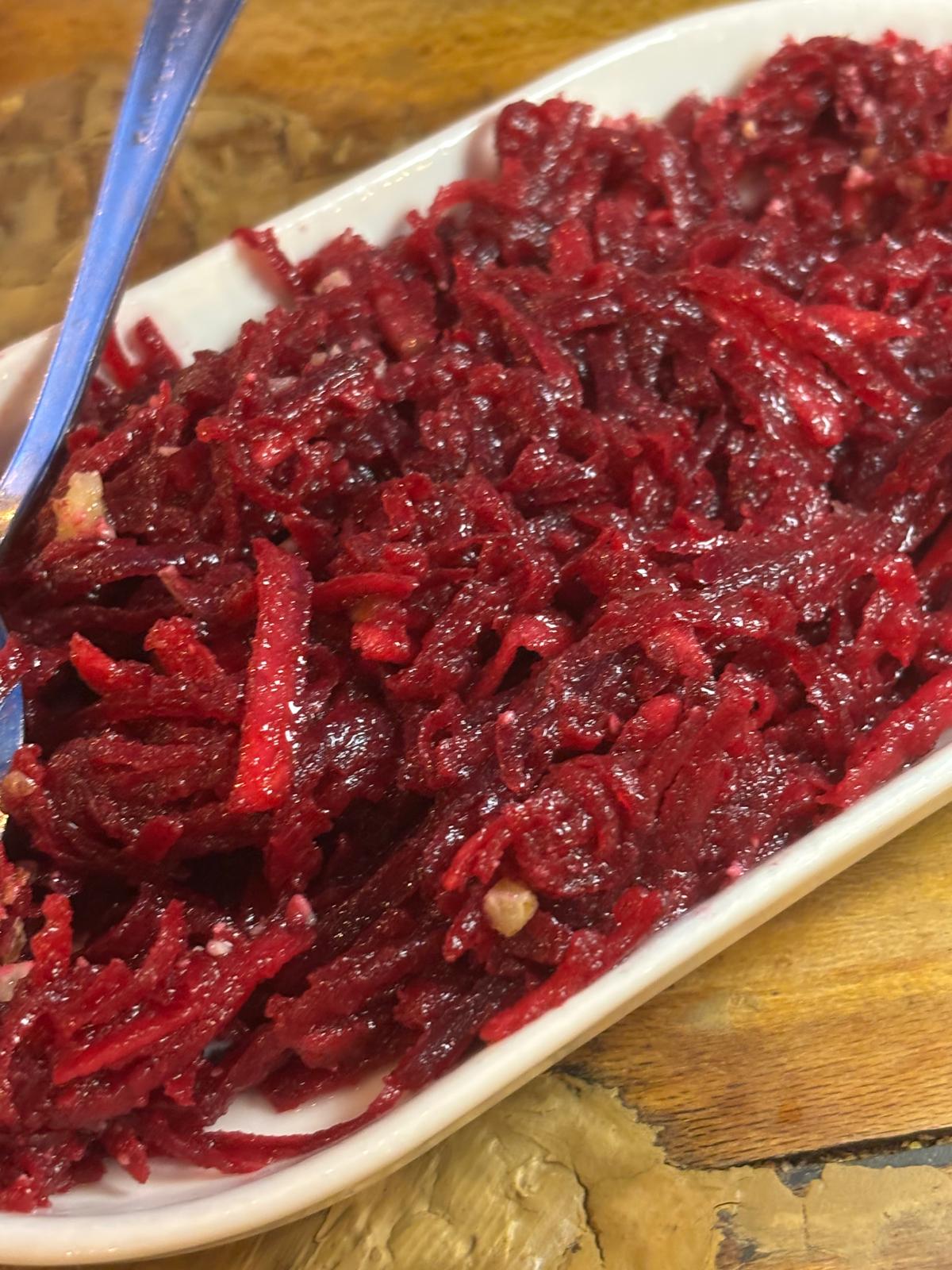
Grated Beetroot
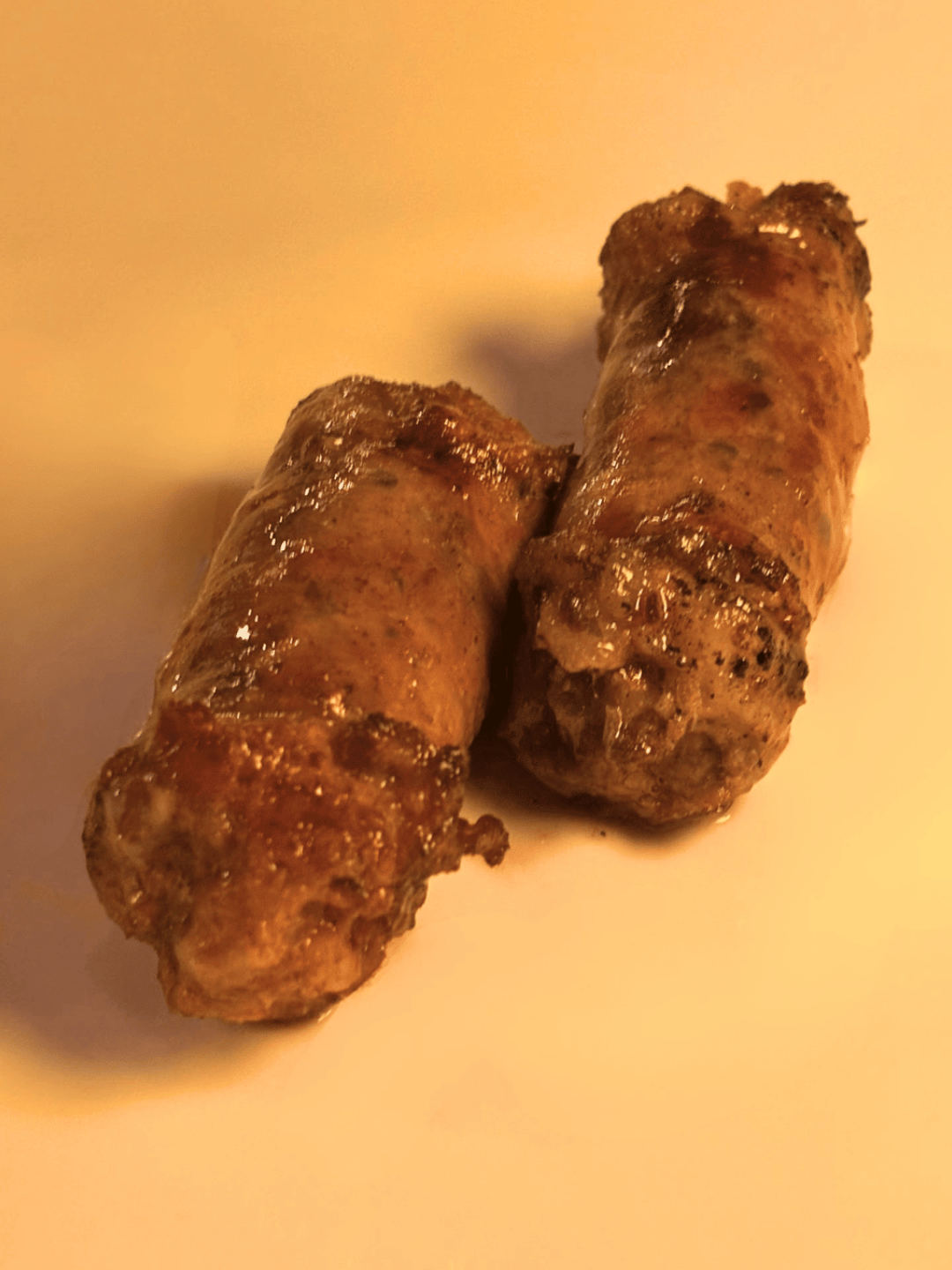
Merguez
The real problem started with the meat.
When we were ordering, we were told, more or less: “You can eat ribeye anytime. But this ribeye cap is something special.” Naturally, a sentence like that raises expectations.
What arrived was overcooked. More importantly, it simply wasn’t tasty. Calling a cut of meat “special” is not enough. Whatever makes it special has to survive the journey to the plate.
The lamb rump was even more problematic. It was a fatty cut, somewhat similar to the Turkish yağlı kara, but the cooking was poor. The fire was not hot enough, so instead of the fatty parts browning, rendering and developing flavour, they were almost boiled.
And the lamb itself was not particularly flavoursome either. It did not even reach the level of a good, standard yağlı kara.
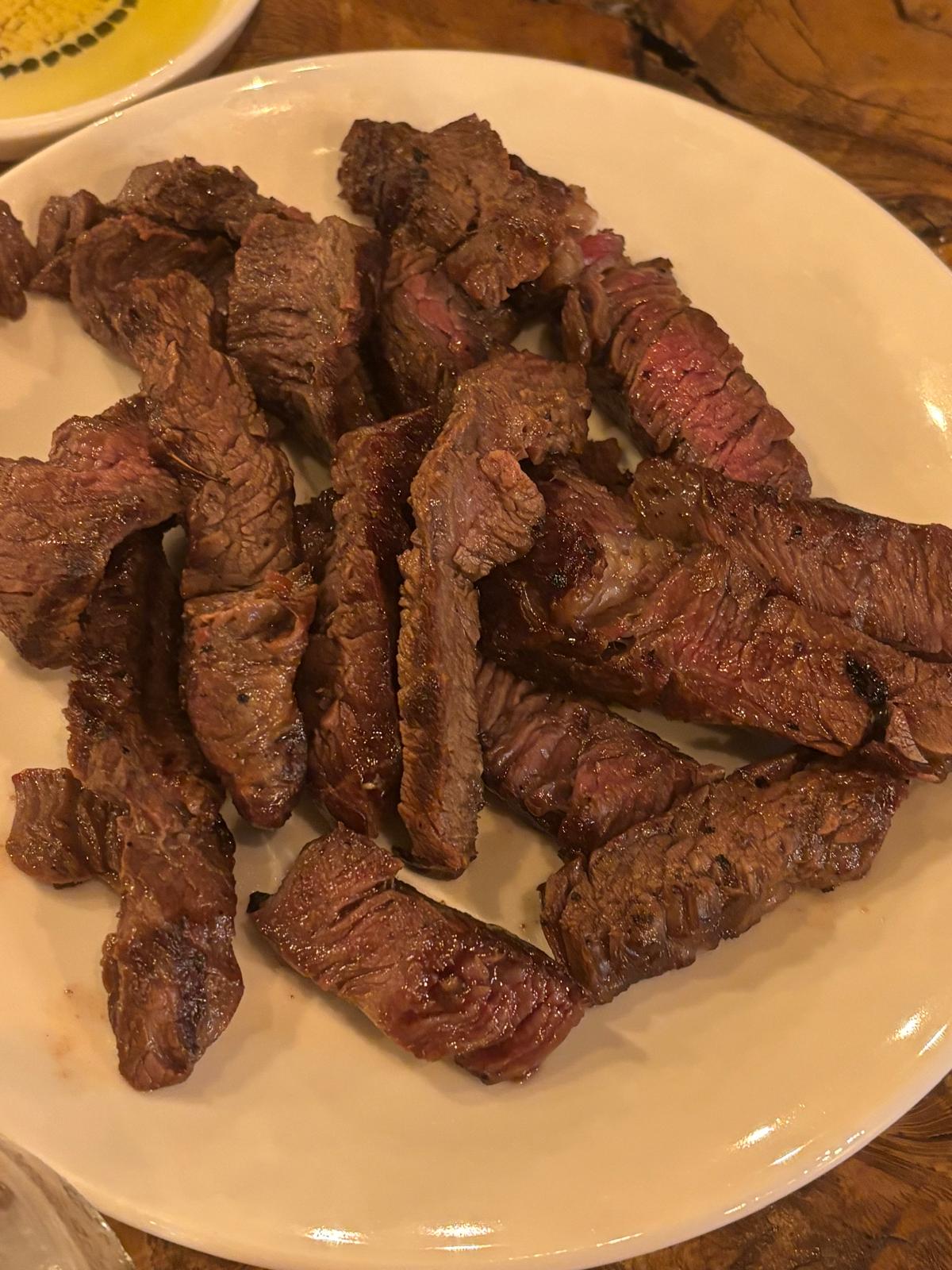
Ribeye Cap
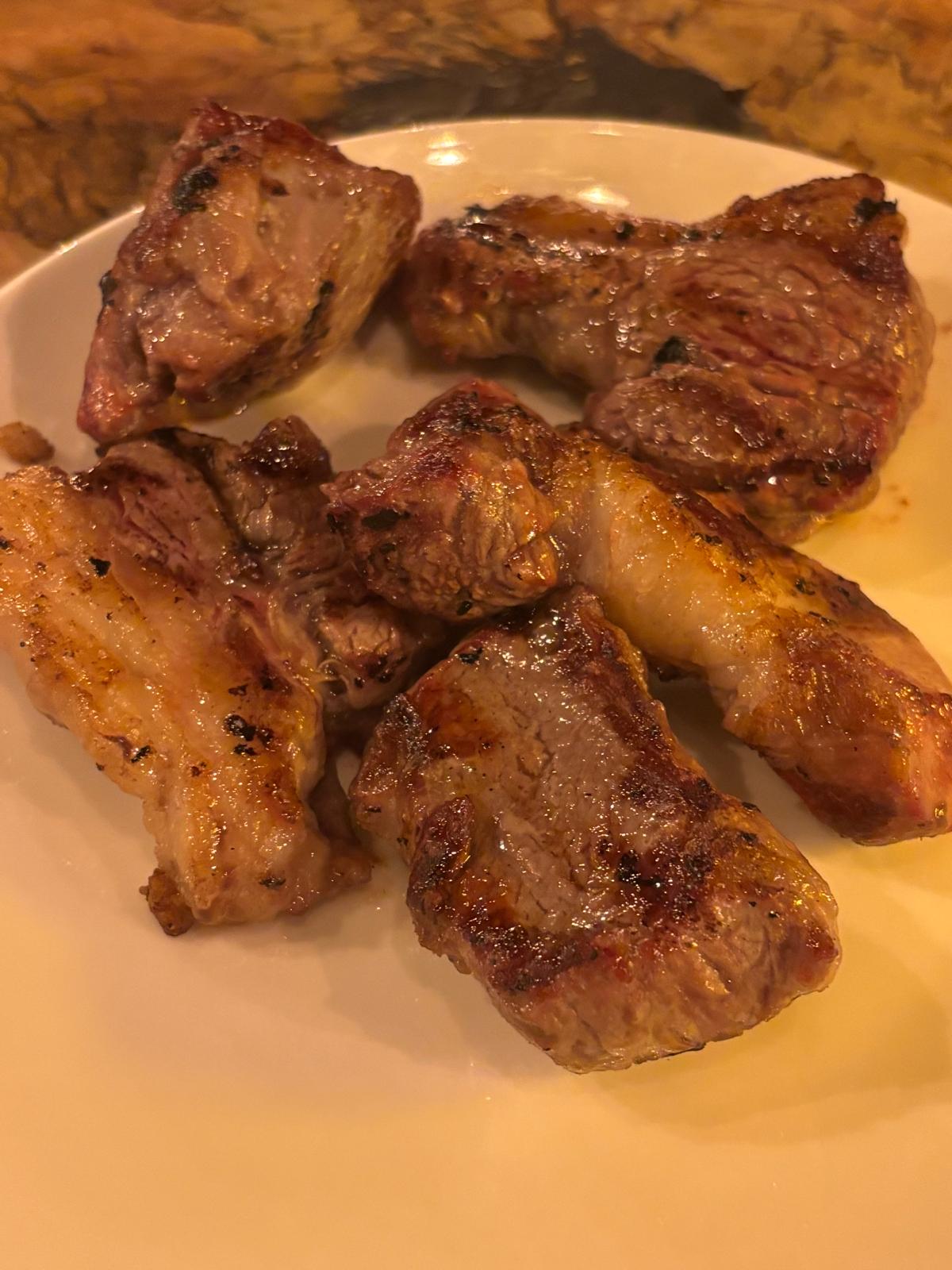
Lamb Rump
At this point, the issue goes beyond personal taste. At a restaurant that builds its identity around being a butcher, expecting both beef and lamb to be cooked properly is hardly asking too much.
And then there is the Michelin question.
Kasap Fuat is included in the Michelin Guide as a Recommended/Selected restaurant. My confidence in Michelin’s “Recommended” category has already been declining for some time, and this dinner did nothing to reverse that. If anything, it reinforced my doubts.
Nobody expects perfection simply because Michelin recommends a restaurant. But when you consider the produce, the cooking, and the price together, I think it is still reasonable to expect a certain standard.
And the prices are seriously high.
Our bill came to TRY 9,320. Of course, that included rakı and the meze, but we are still talking about roughly €60 per person with essentially one portion of meat each.
At this price level, the quality of meat you can eat in Spain is simply not comparable with what arrived on our table here.
The higher the price, the higher the customer’s expectations. Inevitably.
By the end of the evening, however, what made me think most was not what was on the plates. It was the dining room.
This was a Thursday evening in the middle of August. If the restaurant had around 30 tables, only six were occupied. Roughly 20% occupancy.
Doesn’t a restaurant owner look around on an August evening like this and ask: Why?
Is it the prices? Is it the food? Or is it both?
I think it would be too easy to blame the economic situation alone. Because if you put this green bean on the table and then, despite presenting yourself as a Michelin Recommended butcher restaurant, cannot cook either your beef or your lamb properly, perhaps the reason those tables are empty should also be looked for in the kitchen.
At these prices, you should probably look there even more carefully.
Would I come back for the merguez? Maybe.
Would I come back for a full dinner at these prices? No.
Kasap Fuat Çeşme
Altınyunus Mah., 3435 Sokak No:66, Çeşme / İzmir
Total 6.2/10
Food 5/10
Service 9/10
Comfort & Ambiance 6/10
Value for money 5/10
Price per person 50-60 €
Footnote: Since When Is Merguez Italian?
On the bill, next to Merguez, it says in brackets: “Italian sausage.”
A small but rather interesting detail.
Because merguez is not Italian. It is North African in origin, particularly associated with the cuisines of Algeria and Tunisia.
For a restaurant that makes such a point of its expertise in meat, not knowing the origin of one of the products it serves is a little strange.
Or perhaps they do know.
Maybe they simply thought calling it “Italian” would increase its value.
After all, there are only a few hundred kilometres between the two shores of the Mediterranean.
On the price tag, however, the distance can sometimes be much greater.
