


Expecting More From One Star
I went to Casa Lavanda with high expectations. There was little reason not to. Set in a beautiful garden in the village of Ulupelit in Şile, the restaurant works with produce from its own garden as well as ingredients sourced from local producers. It is the kitchen of Chef Emre Şen. It holds one Michelin Star as well as a Michelin Green Star.
The place really is beautiful. The garden, the tables, the atmosphere of a summer evening… Service is very good, too. And when it comes to wine, the price-to-quality ratio is quite reasonable by Turkish standards.
The problems started with the food.
The first serious disappointment was the artichoke salad.
My reference point for an artichoke salad is not another Michelin-starred restaurant. It is a similar salad I ate more than ten years ago at Armutlu Dükkan.
Surely that should not be an impossible benchmark for Chef Emre Şen to reach.
We are not talking about an especially complicated dish. Yet the artichoke salad that arrived at our table simply should not have been served in that condition.
What had happened to the artichoke? I don’t know.
Was it from a bad preserve? Perhaps it was fresh, although artichokes are hardly at their best at this time of year, and had simply been left in the marinade until all life had been taken out of them?
One could speculate forever.
But as a customer sitting in front of the plate, it is not my job to work out what went wrong in the kitchen. My job is to decide whether what I am eating tastes good.
It didn’t.
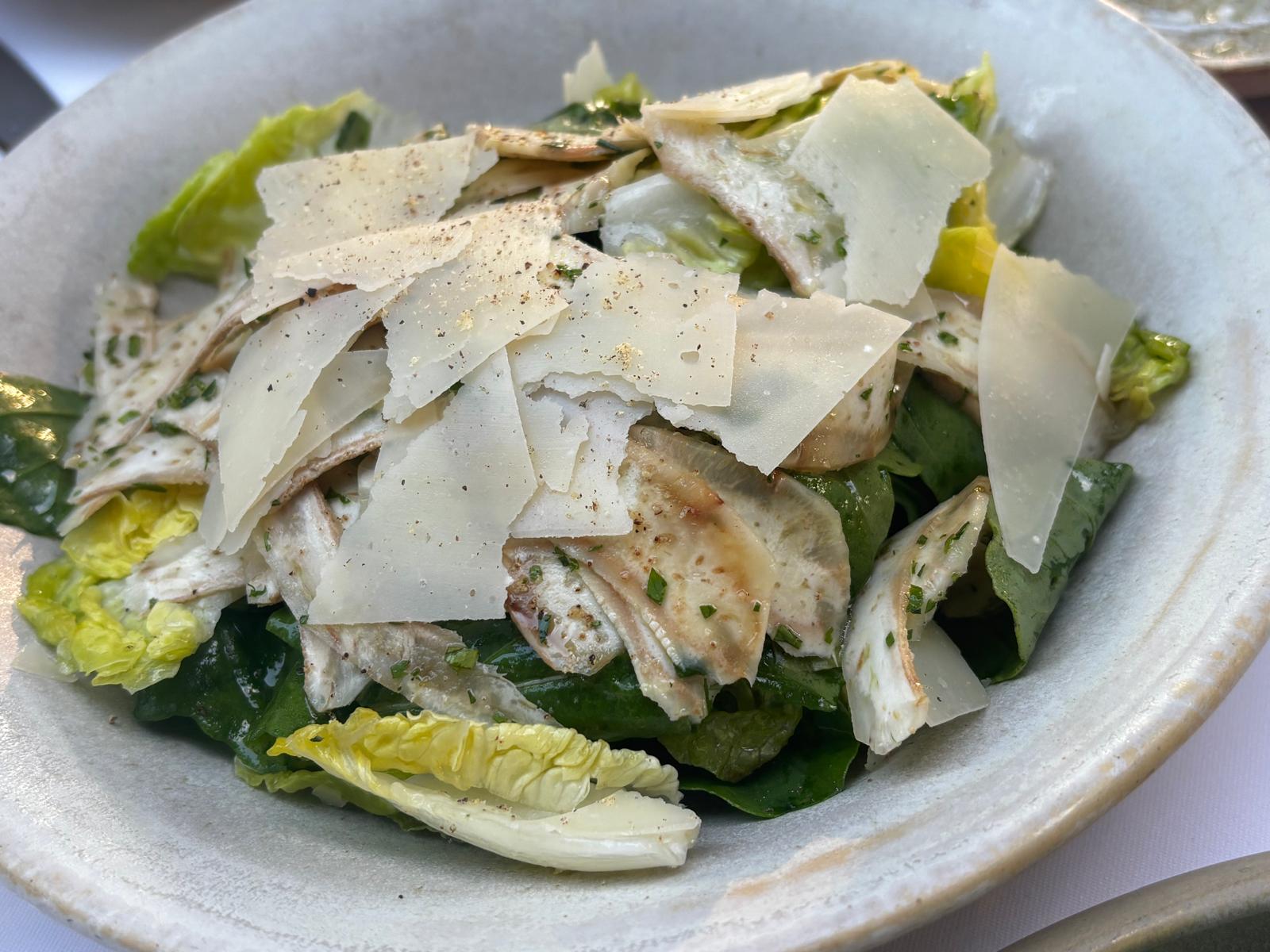
Artichoke Salad
There had actually been a small warning at the beginning of the evening. The grissini brought to the table had absorbed moisture and gone soft. We mentioned it. To their credit, they immediately replaced them and acknowledged the problem.
That is, after all, part of what good service means.
I only wish the problem with the artichoke had been as easy to solve as the grissini.
Then came the Flame-Seared Red Mullet from Babakale.
The name was considerably more exciting than either its flavour or its texture.
It reminded me of salt cod that has been left sitting too long after desalting. Anyone familiar with bacalhau will know what I mean. Leave it too long after removing the salt and the flavour starts becoming neutral, an unpleasant smell can develop, the colour turns dull and the texture deteriorates.
That was exactly the sensation this red mullet gave me.
Babakale was there. The skin had been touched by flame. The name sounded wonderful.
But where was the fish?
Next came the octopus, again from Babakale.
It wasn’t bad.
Technically, there was no major problem with the cooking. It wasn’t rubbery, nor had it been overcooked until it fell apart. The texture was pretty much where it should have been.
But it had no flavour.
Perhaps this was the dish that best summed up the fundamental problem of the evening:
Properly cooked, but without personality.
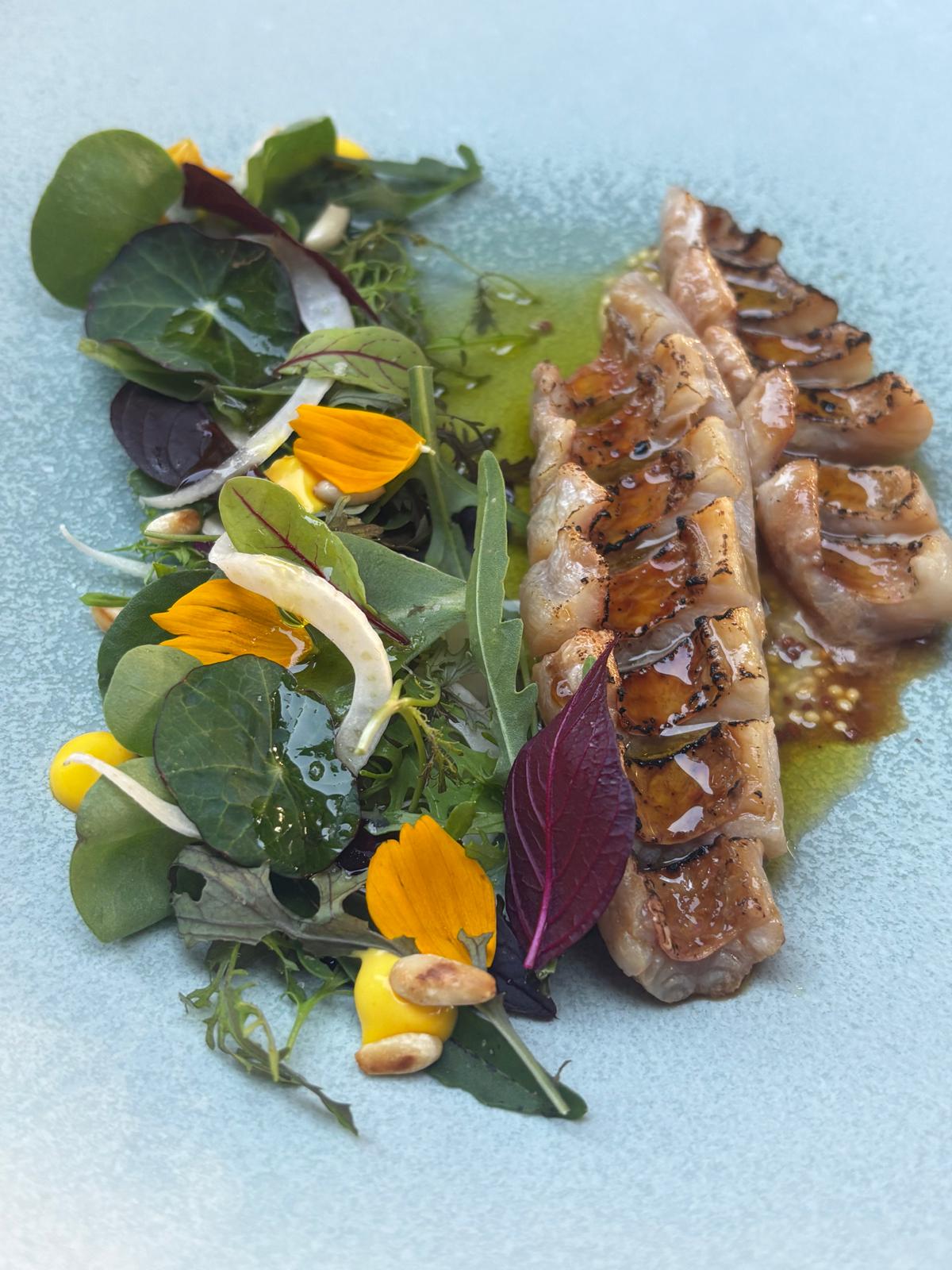
Flame-Seared Red Mullet from Babakale
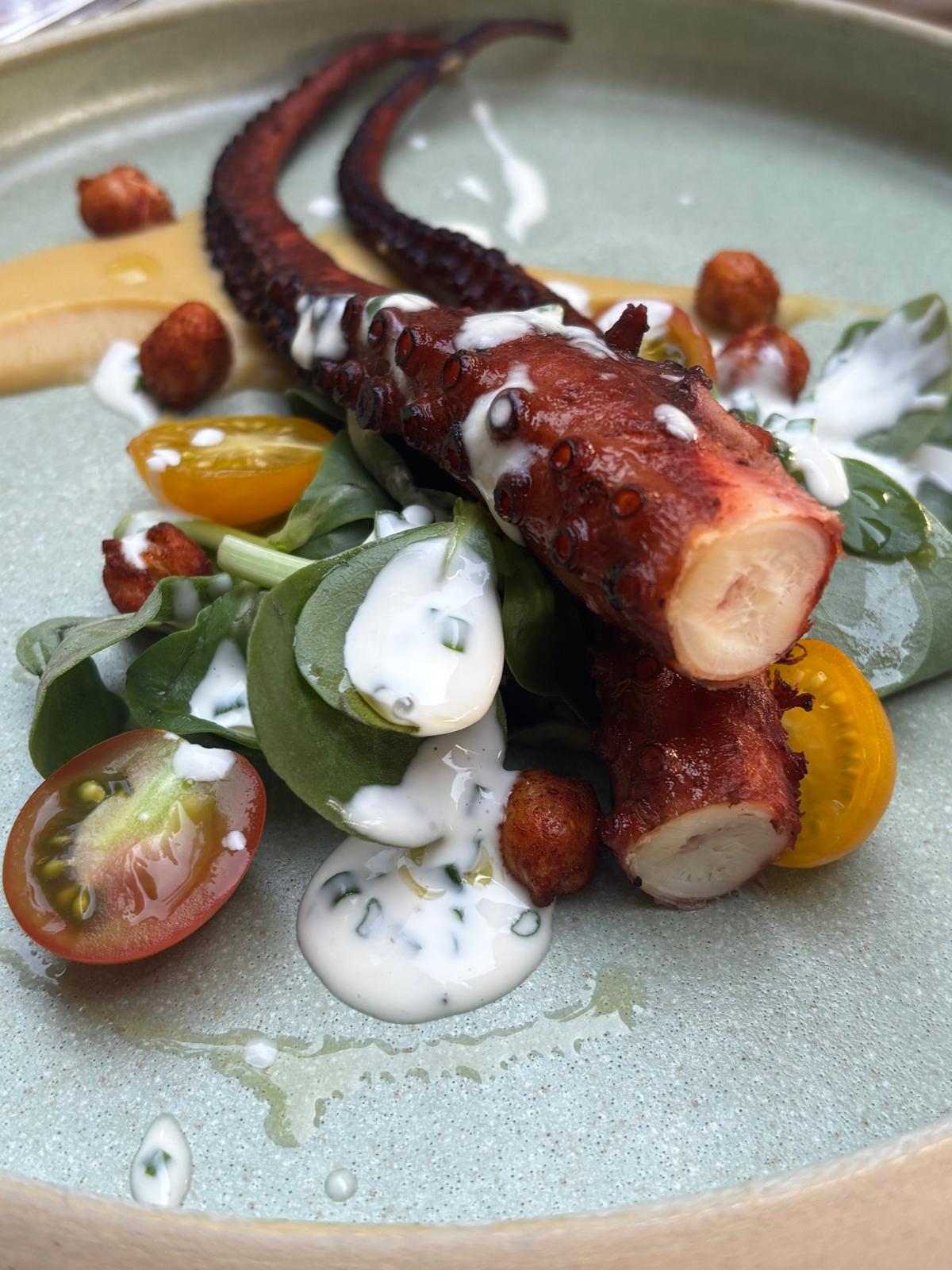
Octopus from Babakale
The milk-fed kid had much the same problem.
The cooking was good. But again, there was very little flavour. In fact, judging by taste alone, I would have struggled to tell you what meat I was eating.
If you are eating kid, wanting to taste that it is actually kid surely isn’t asking too much.
The Tagliatelle Bolognese wasn’t bad either.
It was competently made and perfectly easy to eat. At another restaurant, perhaps I wouldn’t even have spent much time thinking about it.
But that is exactly the point.
At a Michelin-starred restaurant, “not bad” cannot be the benchmark.
It was clearly below what I expect from a one-star restaurant, a Bolognese that left very little behind in the memory.
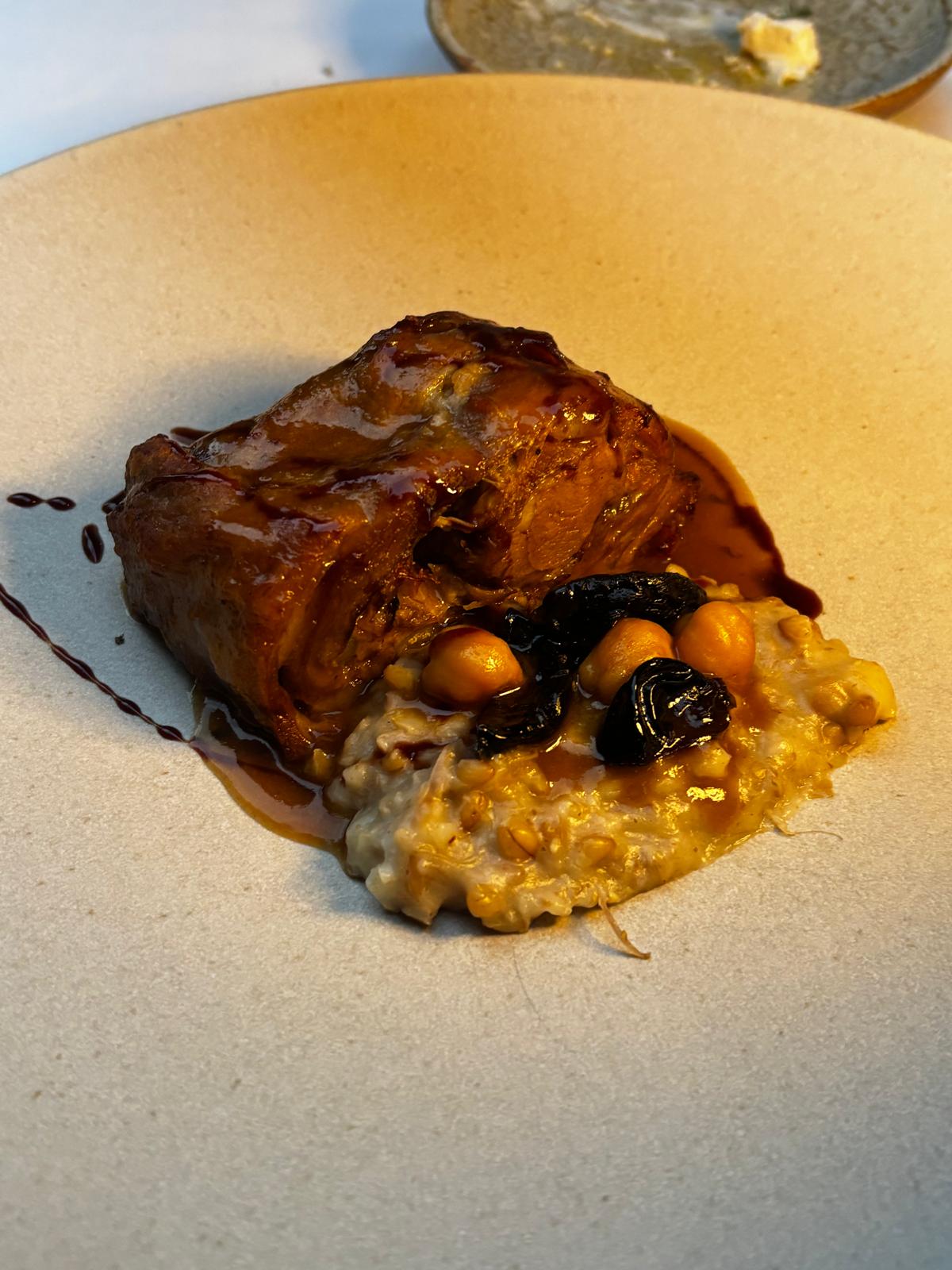
Milk-fed Kid
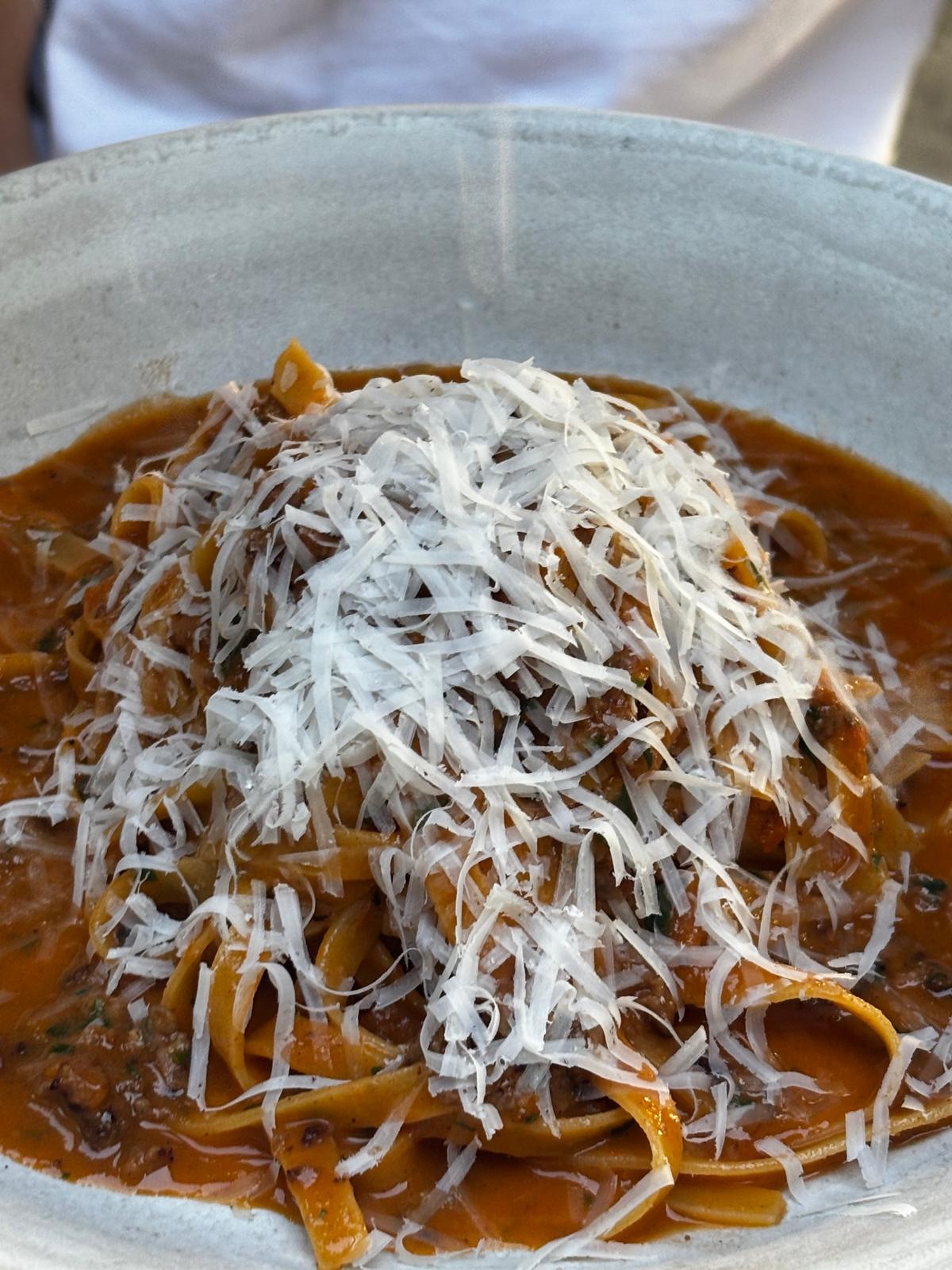
Tagliatelle Bolognese
At some point while thinking about all of this, I asked myself:
Am I exaggerating?
I went through what we had eaten again.
No.
That was how it was.
Because I am not describing a bad restaurant experience. In a way, that is precisely what makes the whole thing so frustrating.
The service is good. The setting and atmosphere are wonderful. The garden is beautiful. The wines offer good value for money. The octopus and the kid were cooked correctly. The Bolognese wasn’t bad.
But with a few exceptions, the food itself was a fiasco.
I also wondered whether we had simply been unlucky.
I don’t think so.
We seemed to have chosen dishes that are among the restaurant’s more popular choices.
I had visited Casa Lavanda around ten years ago as well, in winter, at a time when there were very few customers. Back then, I could, to some extent, understand dishes that felt as if components had been pre-cooked, vacuum-packed, and brought back for service. Winter, few customers, the difficulty of keeping a substantial kitchen operation running at full speed…
Today the situation is different.
This is the most popular part of the summer. The garden is full. The restaurant is busy.
And the prices are very high.
So why are the plates this weak?
I couldn’t work it out.
Our bill came to TRY 13,627.70.
For three people.
Food accounted for TRY 9,440, with alcoholic and non-alcoholic drinks bringing us to the final amount.
A high bill at a Michelin-starred restaurant is not, in itself, something to criticise. Good food can be expensive. Good produce can be expensive. Good service, good wine and a beautiful setting all cost money.
But a high price has to buy you something.
At Casa Lavanda that evening, I couldn’t find enough of that something on the plate.
And then, just as I was thinking about all of this, a complimentary dessert arrived.
It was magnificent.
Perhaps it was the most important dish of the evening.
Because suddenly we saw another Casa Lavanda. A kitchen with flavour, character, and the ability to make you immediately want another bite.
That dessert didn’t make me forgive the rest of the evening.
Quite the opposite.
It was tangible proof of how much better all the other dishes could have been.
So this kitchen can do it.
I have no doubt that Chef Emre Şen and his team are capable of much better. Presumably, that is also why this restaurant has a Michelin Star in the first place.
But what arrives in front of the customer is not the kitchen’s potential.
It is what is actually on the plate.
And what arrived at our table that evening simply couldn’t keep up with the beautiful garden, the good service, the high prices, or the Michelin Star at the door.
Once you have a star, the question is no longer whether the food is bad.
Even being good may not be enough.
It has to be memorable.
Unfortunately, what I remember most about Casa Lavanda is not the food.
It is the garden.
And that final dessert.
