


BERA’s Best Dishes in the Shadow of Three Michelin Stars
Berasategui, one of the leading figures of contemporary Basque cuisine, has built something of a culinary stronghold here. At its heart stands Lasarte, the three-Michelin-starred restaurant whose kitchen is actually led by Paolo Casagrande. And now I find myself at the doorway leading from this inner fortress to BERA.
We are walking up Barcelona’s famous Passeig de Gràcia, from Casa Batlló towards La Pedrera. The air smells of luxury brands. I breathe it in. Louis Vuitton, Dolce & Gabbana, Prada, the most luxurious, the most expensive, almost all standing side by side. Long queues stretch outside many of the boutiques. I walk past these elegant, attractive, wealthy people waiting for their appointments or their turn to enter. Surely, a little of their stardust will rub off on me too.
We cross the boulevard at La Pedrera and enter the five-star hotel on the corner. I cannot deny that we look a little out of place in our unbranded sportswear.
“We have a reservation at Bera?”
“This way, please!”
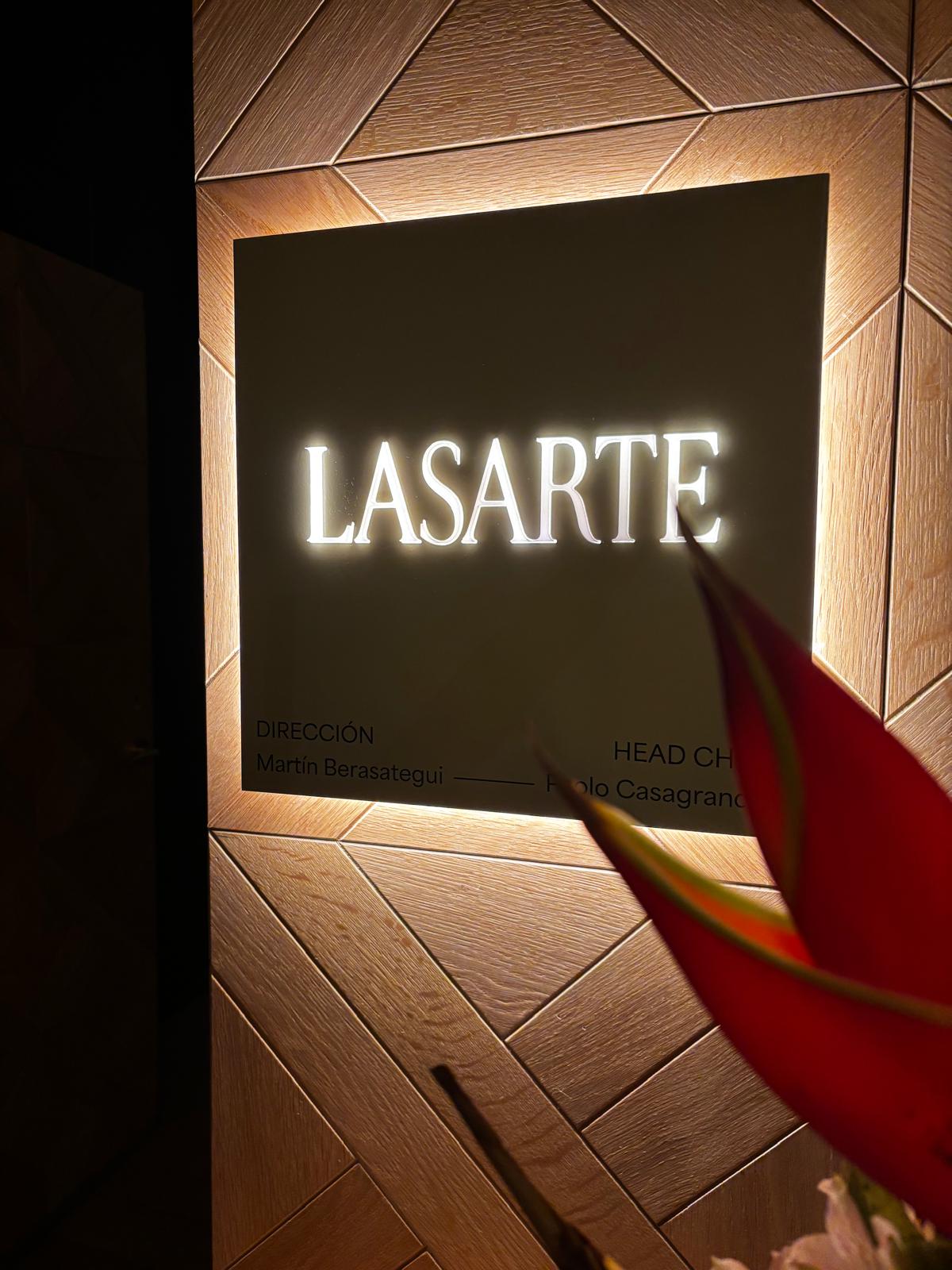
And then I notice the illuminated Lasarte sign, mounted against a beautifully crafted geometric wooden wall. I have arrived at the inner walls of Martín Berasategui’s gastronomic fortress at the Monument Hotel. Berasategui, one of the leading figures of contemporary Basque cuisine, has built something of a culinary stronghold here. At its heart stands Lasarte, the three-Michelin-starred restaurant whose kitchen is actually led by Paolo Casagrande. And now I find myself at the doorway leading from this inner fortress to BERA.
Until recently, this was home to Oria, a restaurant with one Michelin star. Berasategui gave up that star and opened BERA in its place, replacing the conventional fine dining concept with a restaurant built around sharing plates, contemporary interpretations of traditional dishes, and reasonable prices. I wonder what this legendary chef, who has accumulated as many as twelve Michelin stars, is doing with such a move. Or rather, what is he trying to do?
Am I thinking that fine dining is dead? Of course I am!
Around the same time that BERA opened, Barcelona’s three-Michelin-starred Torres brothers also opened a market stall, Parada Torres, inside Mercat de Santa Caterina. When we consider these two developments together, the question becomes difficult to avoid:
Is fine dining dead? Or is it simply changing its form? Is haute cuisine, long defined by elaborate tasting menus, impeccable service rituals, reservations made months in advance and increasingly astronomical bills, now searching for a new way forward?
Is Berasategui making a statement about the future of haute cuisine, or is he simply looking for a commercial response to changing customer expectations?
I think about the contrast. On one side is Lasarte, standing at the very top of the Michelin hierarchy. Right next door is BERA Restaurant por Martín Berasategui, bearing the signature of the same great chef, with Gabriele Milani actually running the kitchen and a menu that supposedly offers no dish priced above €25.
Yes, the restaurant’s full name is BERA Restaurant por Martín Berasategui. With such a name, inside a five-star hotel in one of Barcelona’s most expensive neighbourhoods, is it really possible to create a genuinely accessible restaurant?
Besides, I do not believe BERA is saying anything particularly new. The hotel’s other dining spaces, such as Verbena Terrace and Glasss, already represent the more accessible faces of Berasategui’s gastronomic fortress. As I said, this is already a fortress, complete with outer walls, an inner citadel, and countless towers. It has never been particularly accessible to the great majority of people. And it still isn’t.
We visited BERA twice, first on 18 September and then on 5 October. There were three of us on both occasions. Our first bill came to €149, while the second reached €242.50, with drinks accounting for a significant part of the total. Across the two visits, we tried fourteen different dishes and desserts. That works out at an average of €28 per dish and around €65 per person.
Accessible? That depends on which social class you belong to.
For middle-class tourists, yes, it is accessible. For the local middle class, rather less so. And for their children, around 30% of whom are now considering voting for the racist, anti-immigration right, it is almost entirely out of reach.
And the working class? They can only come to places like this to work!
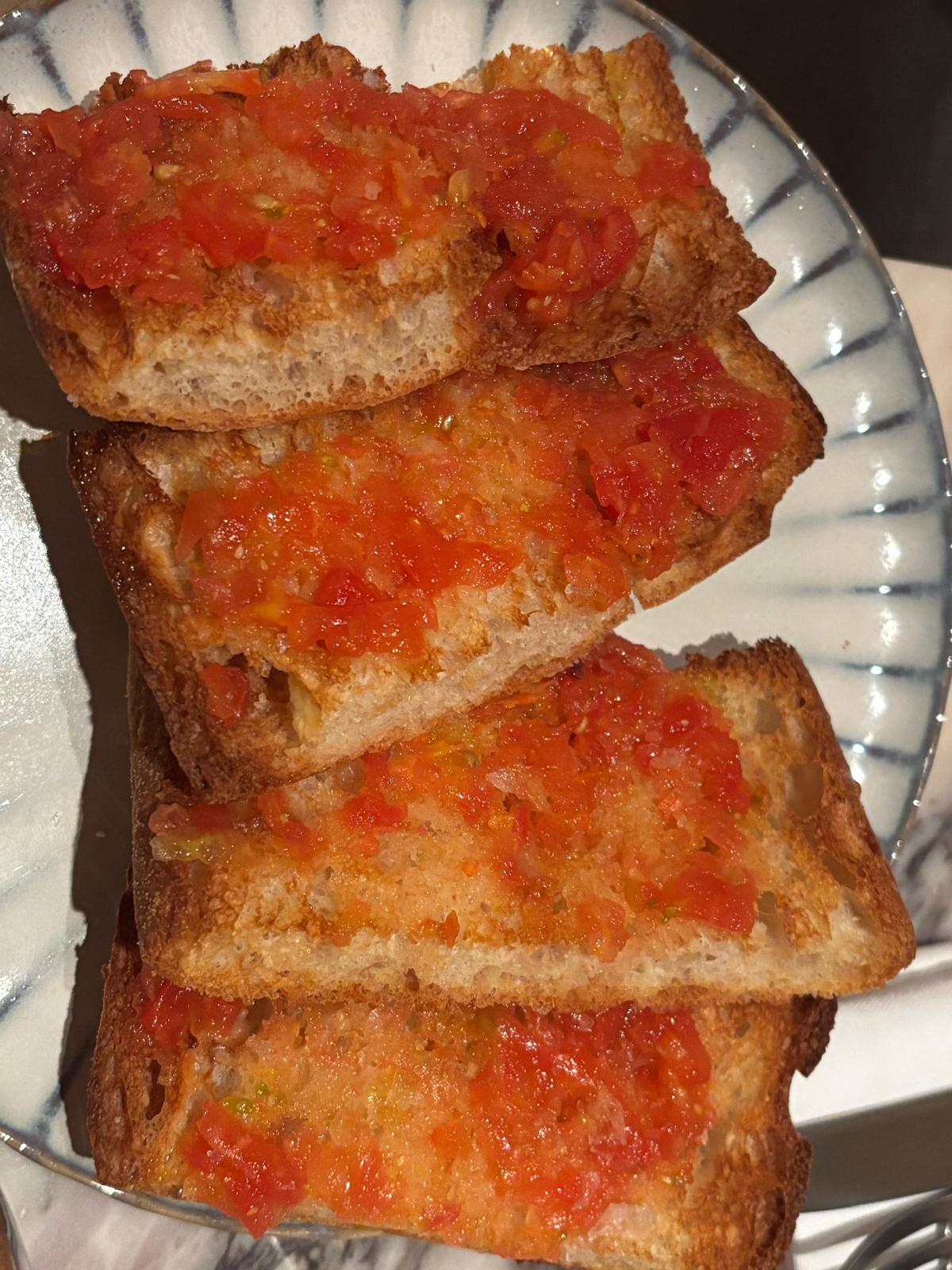
Pan de coca con tomate y AOVE Arbequina (The Catalan bread with tomato and Arbequina olive oil)
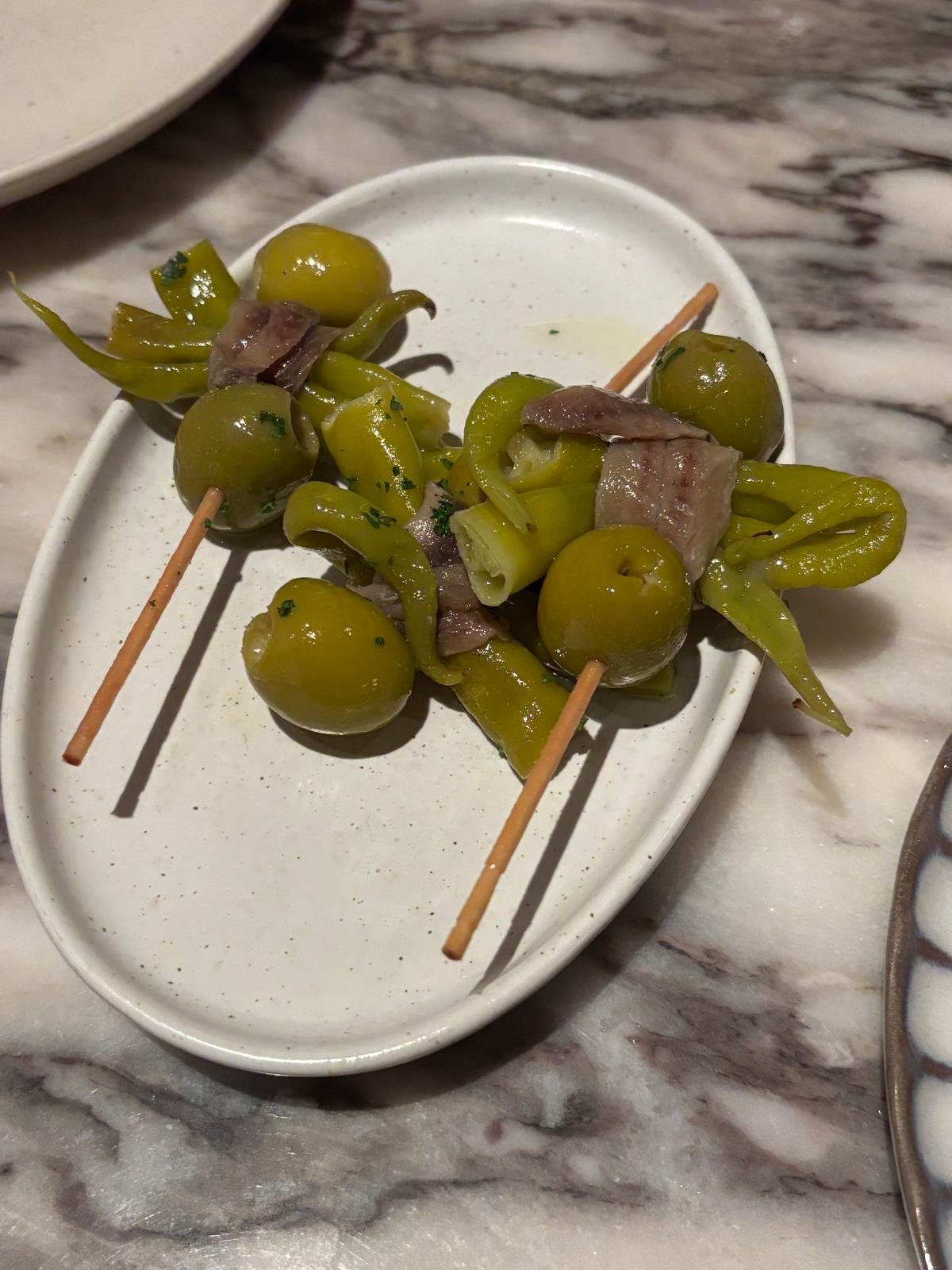
Gilda de anchoas
Now, to the food.
Naturally, our expectations were high. After all, this was not simply another newly opened restaurant. It came with the promise of presenting Berasategui’s gastronomic knowledge and experience in a more casual form.
The beginning was quite promising. First came Pan de coca con tomate y AOVE arbequina. The Catalan bread with tomato and Arbequina olive oil was very good. The Gilda de anchoas that followed was also good. But a good Gilda, especially for anyone familiar with Basque cuisine, is hardly a great achievement in itself. BERA’s version was neither more striking nor more memorable than those you might encounter in many good pintxo bars.
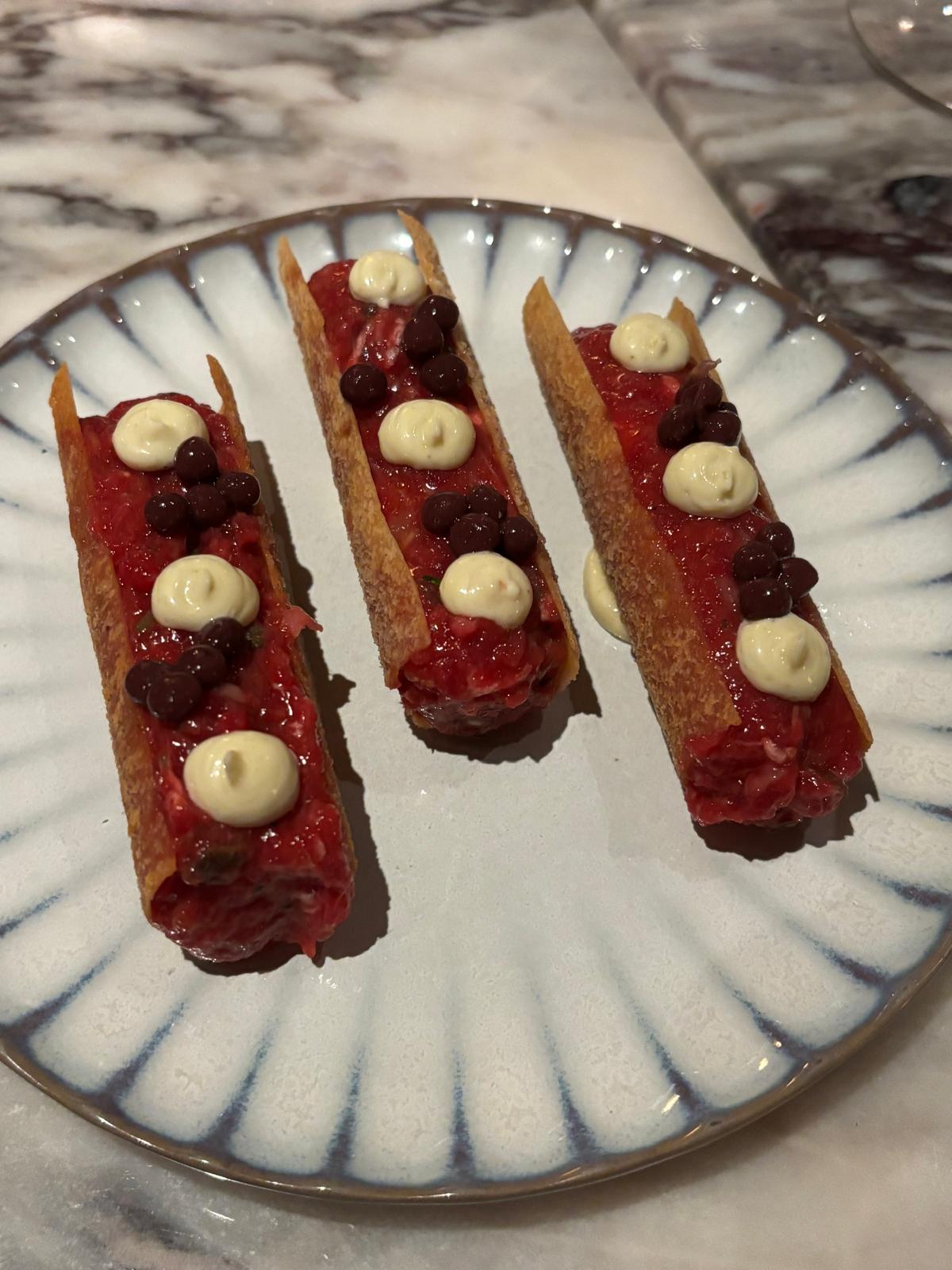
Tacos de steak tartar estilo MB con perlas de Kalamata (Steak tartare with Kalamata olive pearls)
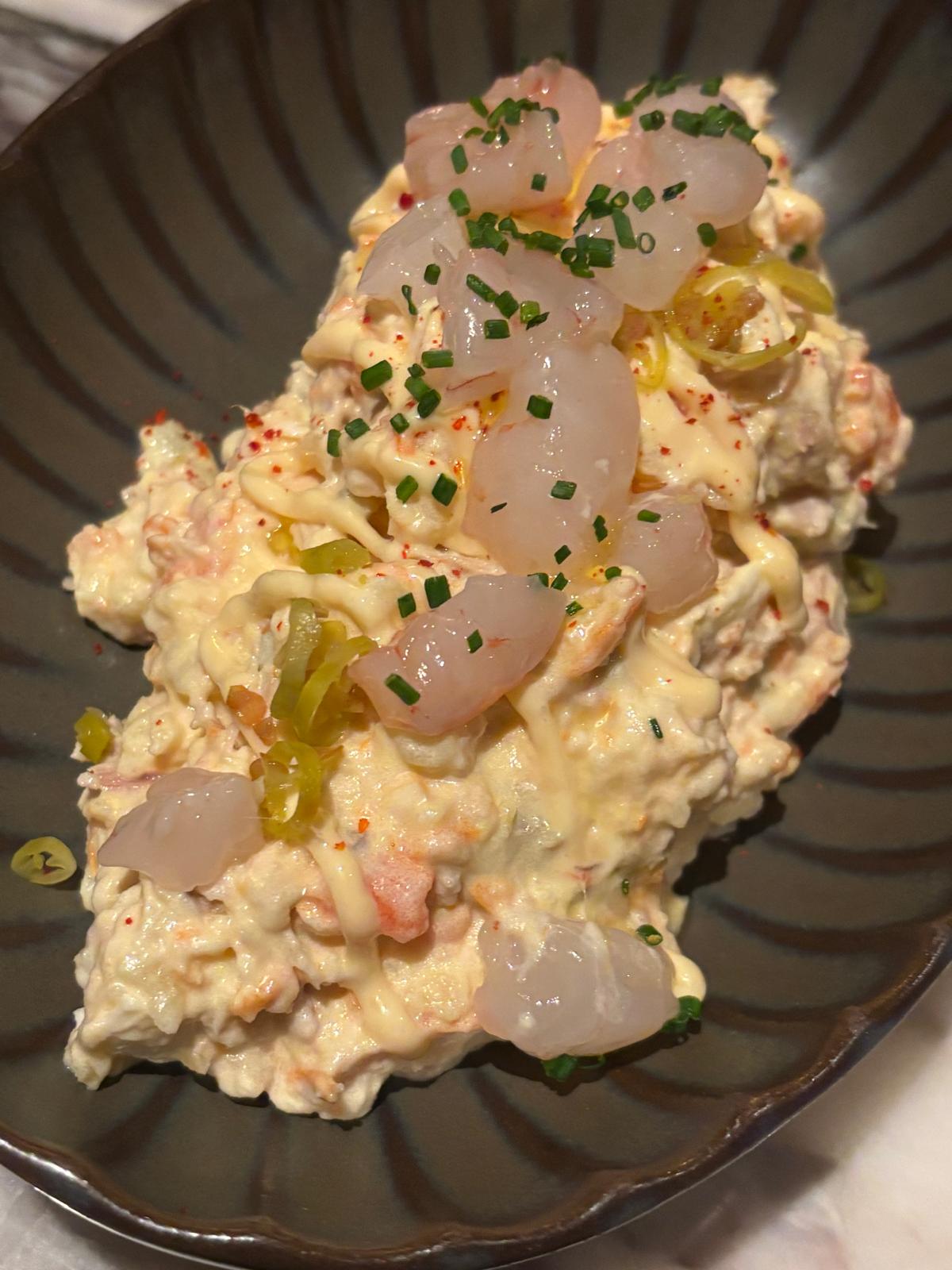
Ensaladilla tradicional con gamba curada (traditional Spanish-style Russian salad with cured prawns)
Then came Tacos de steak tartar estilo MB con perlas de Kalamata, and at that moment I thought the evening was heading somewhere truly interesting.
Martín Berasategui’s interpretation of steak tartare, served with Kalamata olive pearls, was impressive in both flavour and presentation. The texture of the meat, the balance of flavours and the coherence of the dish finally delivered the gastronomic touch we had been looking for. It was a successful example of how a contemporary interpretation can transform a classic dish into something distinctive and worth remembering.
Unfortunately, what followed did not maintain the same standard.
One of the clearest examples was Ensaladilla tradicional con gamba curada, a traditional Spanish-style Russian salad with cured prawns. The prawns placed on top seemed more crudo than curado, more raw than cured. Yet there was no meaningful connection between the prawns and the salad beneath them, either in texture or in flavour. The prawns did not complement the dish, transform it or introduce another dimension. They were simply an eclectic addition.
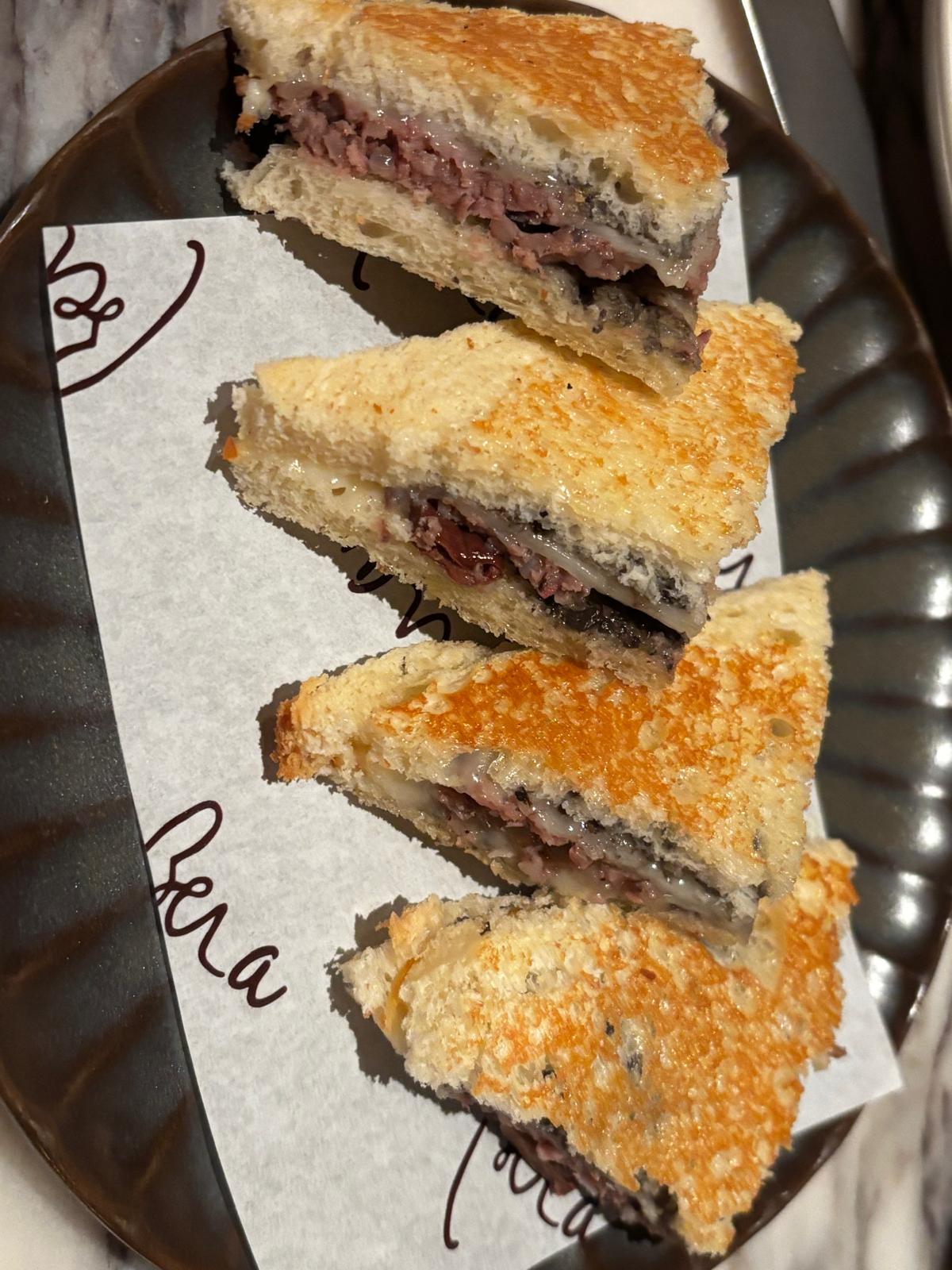
Bikini trufado con butifarra de perol y scamorza ahumada (Hot sandwich made with cooked ham and cheese)
A similar problem appeared with Bikini trufado con butifarra de perol y scamorza ahumada. Bikini, a hot sandwich made with jamón dulce (cooked ham) and cheese, is already delicious in its own right and has been a Barcelona favourite since the days of Sala Bikini in the 1950s.
In BERA’s version, I could hardly detect what the butifarra sausage and smoked scamorza cheese contributed beneath the truffle flavour. In fact, the whole idea seemed to be the luxurification of an everyday Barcelona café classic, using truffle to turn an already delicious Bikini into something that could be presented as a luxury dish.
But this wonderfully creative “touch” did not make the Bikini any more interesting from a gastronomic point of view. What they were trying to create was not really a new flavor, but a perception.
This is not always the case, of course, but here the addition of truffle did not turn a traditional sandwich into a better dish. Quite the opposite. It made the whole thing rather ridiculous.
Please, don’t turn the Bikini into a joke!
Cap i pota, on the other hand, deserves credit. This traditional Catalan offal stew was very well prepared. But in the end, it was simply a good cap i pota. Nothing more, nothing less.
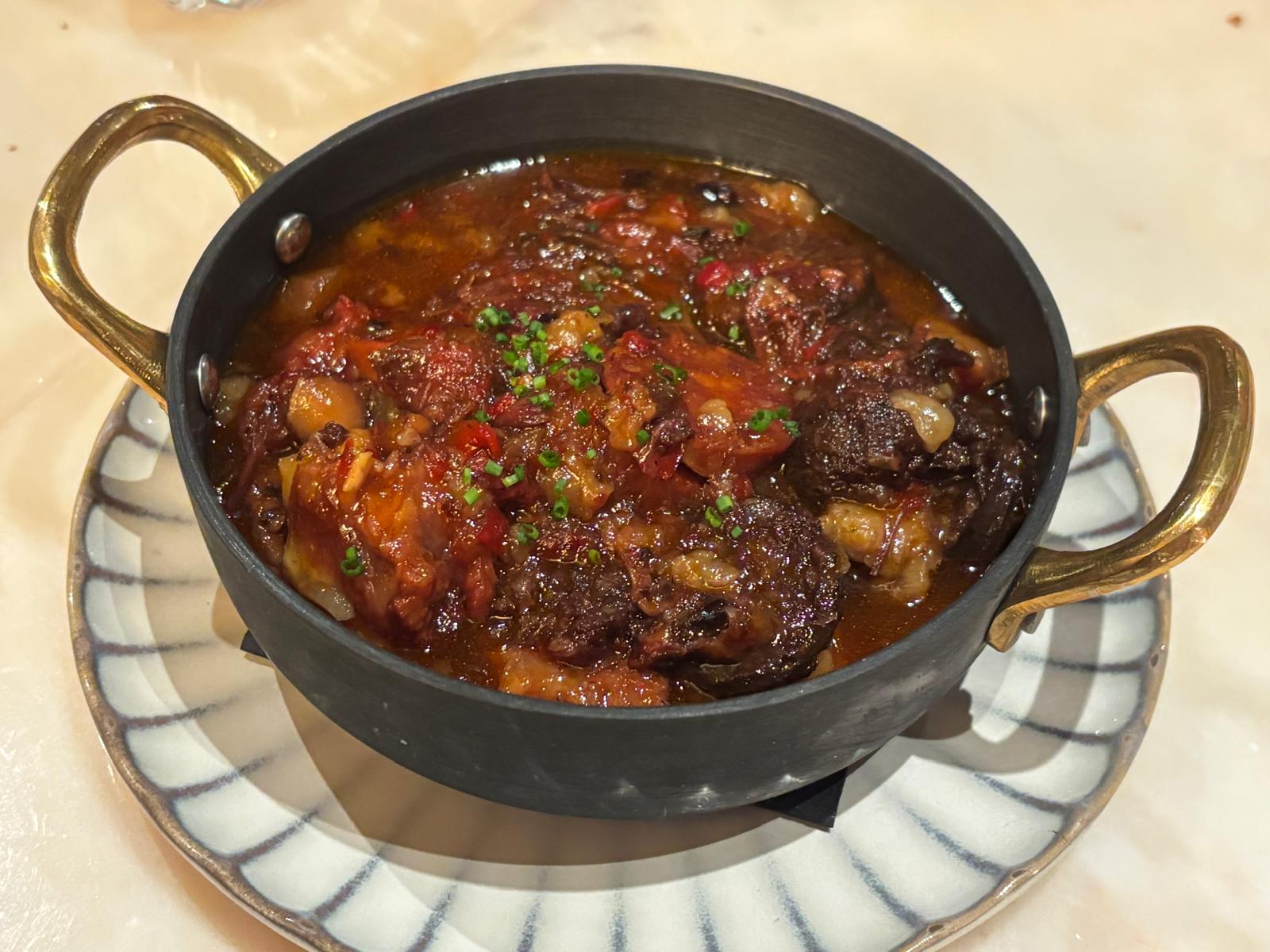
Cap i pota (Traditional Catalan Offal Stew)
Much the same could be said of the Wagyu roast beef and Tortilla de bacalao. Both were perfectly acceptable dishes in their own right, but neither offered anything in flavor or interpretation that called for particular attention.
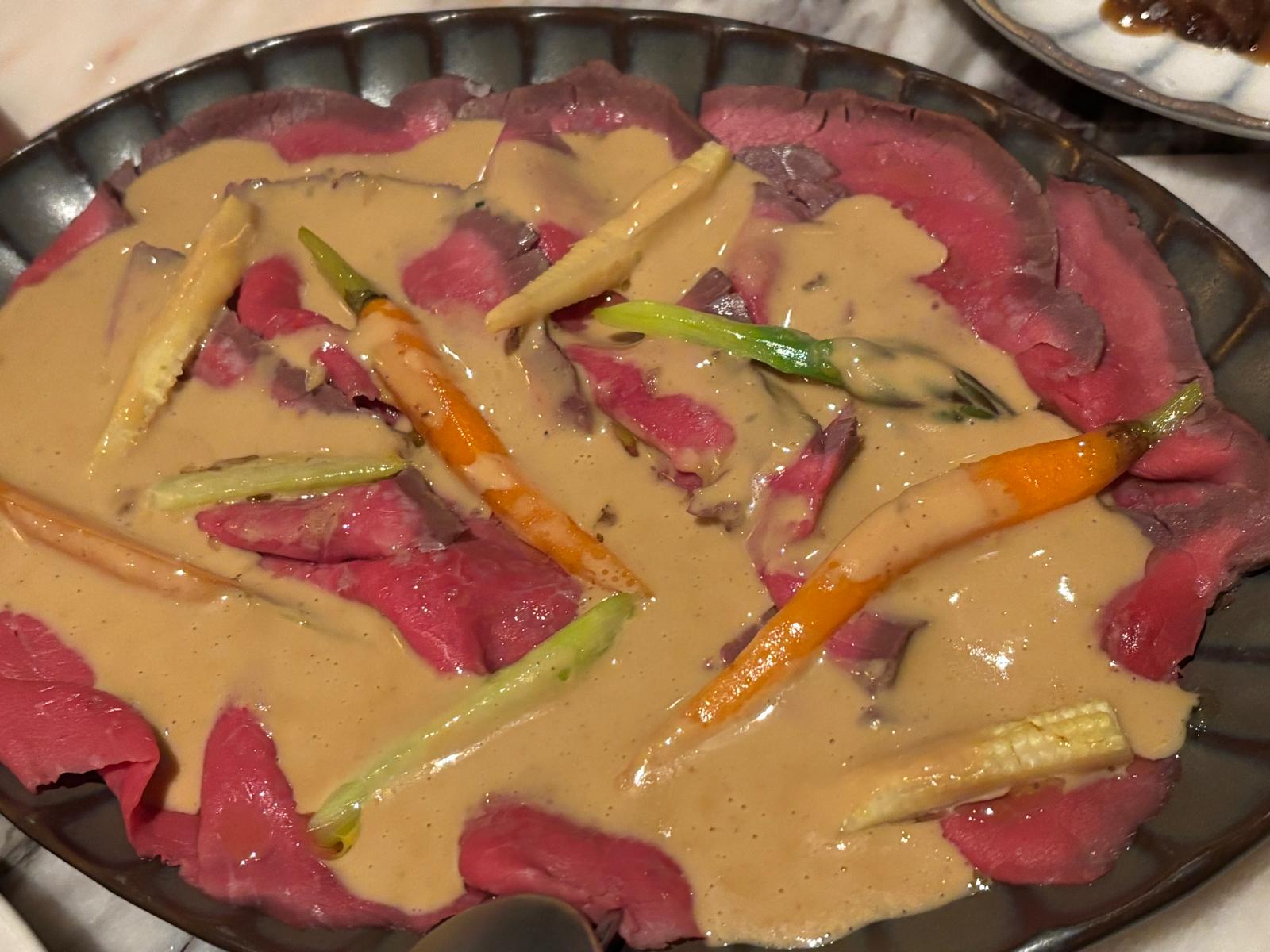
Wagyu Roast Beef
The real disappointment, however, was the Kokotxas de bacalao, which we had ordered with considerable enthusiasm.
Cod kokotxas, the delicate flesh from beneath the fish’s jaw, are among the most characteristic and refined ingredients of Basque cuisine. With their distinctive gelatinous texture and a properly prepared sauce, they can become an extraordinary dish. And considering Berasategui’s place in Basque gastronomy, our expectations were naturally even higher.
Unfortunately, BERA’s kokotxas fell well below not only what we expected from Berasategui, but also the standard we would hope to find in a good Basque restaurant.
I experienced a similar disappointment with Pochas con almejas en salsa verde, fresh white beans and clams in green sauce, another dish I had ordered with great anticipation.
I could write that the beauty of this dish lies in how the distinctive flavour of the beans and the taste of the sea carried by the clams complement each other in the green sauce. But that would sound rather pretentious.
After all, Berasategui should have been the chef shaping my expectations, leaving me open-mouthed with anticipation. I should not have been the one making simplistic judgements about his food or speaking from a position of supposed authority!
Yet in this dish, which I must emphasise was not inexpensive, I could taste neither the beans nor the clams. Both had disappeared into a sauce reminiscent of pil pil, a sauce that offered little beyond its texture.
After these two dishes, the ones I had ordered with particular curiosity, I could no longer feel any of the vibrations that the Lasarte sign, which I kept turning back to look at, had seemed to send towards BERA.
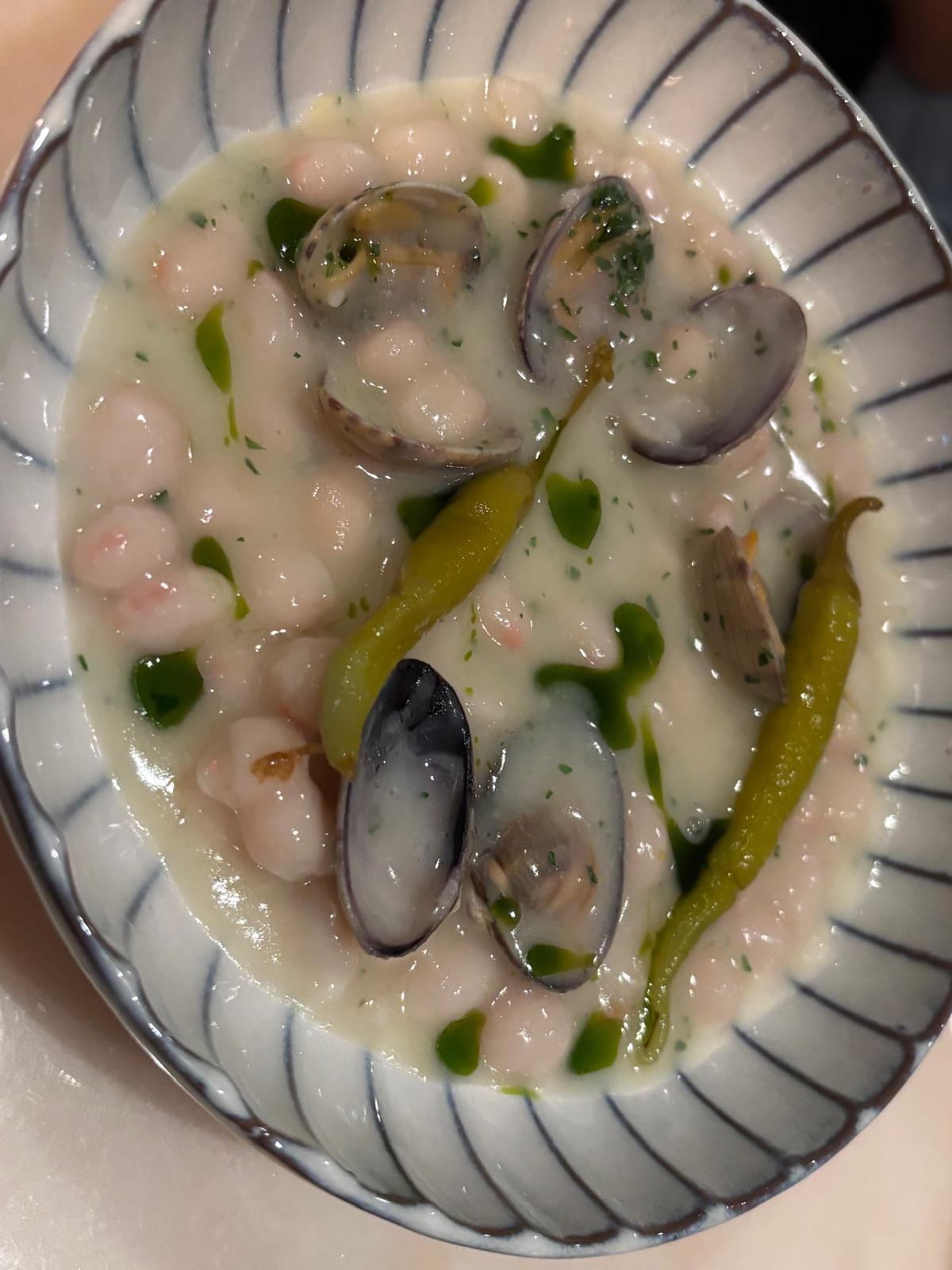
Pochas con Almejas en Salsa Verde (White Beans with Clams in Green Sauce)
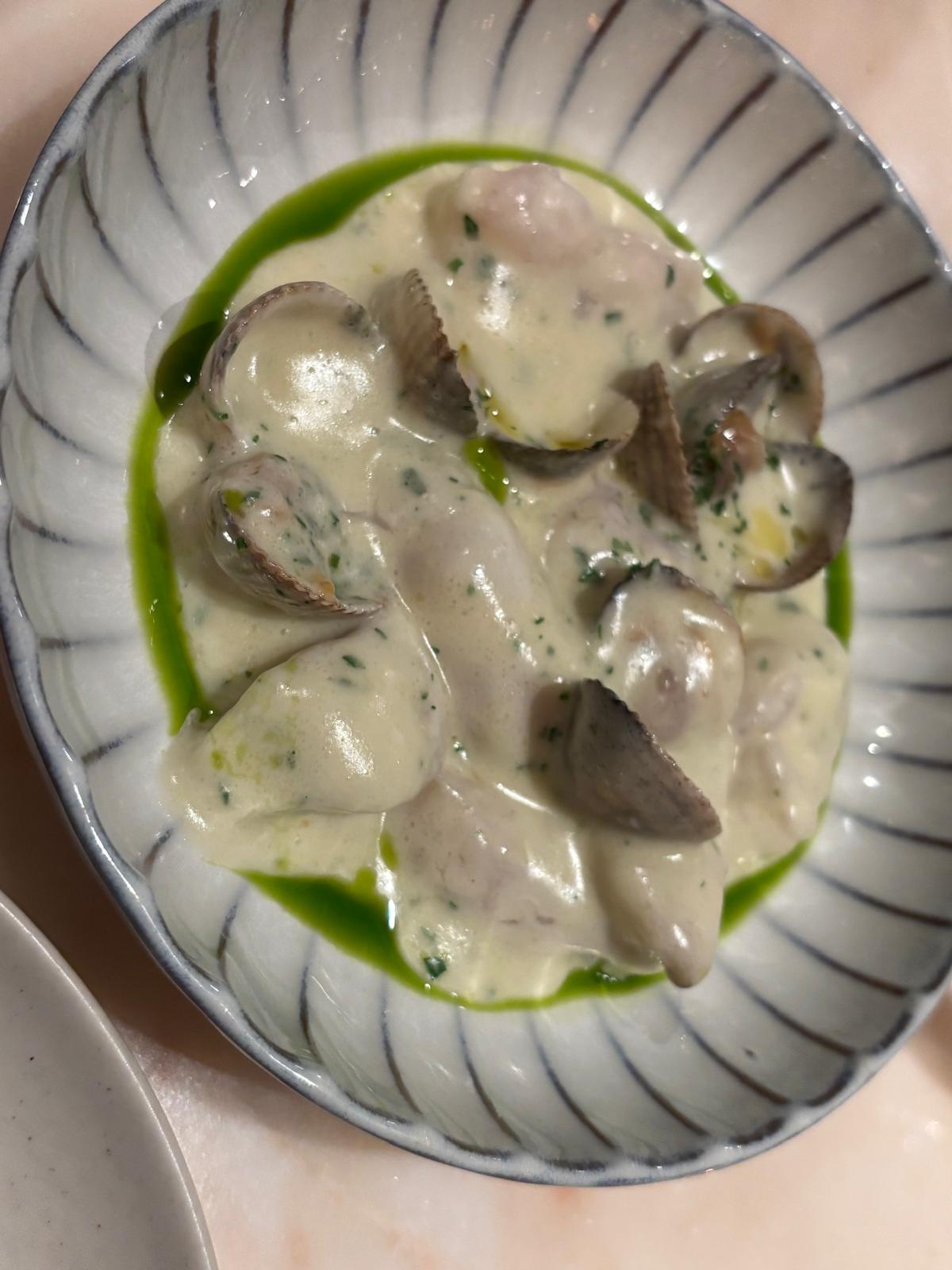
Kokotxas de bacalao (Cod Kokotxas)
After all this, I was beginning to think that the only dish from our two visits that had genuinely stayed in my memory was the steak tartare.
Until the Tarte Tatin arrived.
I have written before in United Plates about my rather distant relationship with desserts. For quite some time, I have been seriously limiting my consumption of sweets. And, to be fair, very few of the desserts I have encountered during this period have been impressive enough to make me question that decision.
In fact, I had not ordered a dessert at all. But I stole a small bite from my friend’s plate.
The flavour of the caramelised apples, the texture of the pastry and the balance of sweetness were so beautifully judged that I realised I was tasting one of the best desserts I had eaten in a long time.
I immediately ordered a portion for myself.
So, in the end, BERA left me with not one but two memorable dishes: the steak tartare with Kalamata olive pearls and the Tarte Tatin.
In fact, if someone asked me today whether I would return to BERA, my answer would have more to do with that upside-down apple tart than with the steak tartare.
Perhaps I would return just for dessert.
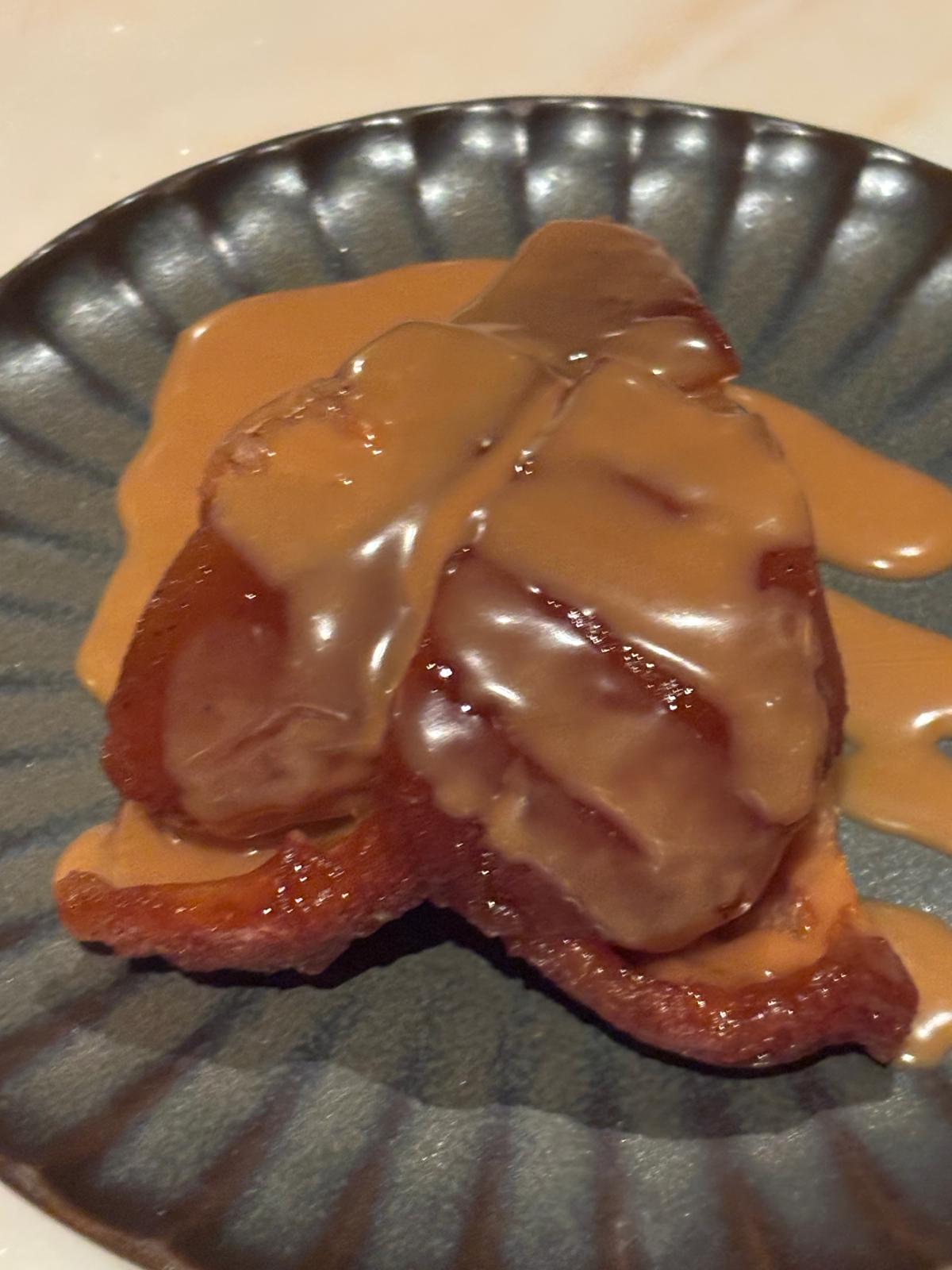
Tarte Tatin
We did not have an experience at BERA filled with bad food. Perhaps that is precisely the problem. Most of the dishes were good enough, but very few managed to offer anything beyond that.
Yet you do not visit a restaurant bearing Martín Berasategui’s name simply to avoid eating badly. You go because you want to discover what makes dishes you have encountered countless times before different this time.
You want to understand why one Gilda is different from another Gilda, why one Bikini stands apart from another Bikini, and why a plate of kokotxas should distinguish itself from the good examples you can find throughout the Basque Country. And, naturally, how it manages to taste even better.
Returning to our original question: Is fine dining really dying?
The opening of BERA suggests that haute cuisine may be searching for a more accessible form. But lowering prices, simplifying service rituals and reinterpreting traditional dishes are not enough to make that search successful.
What separates a restaurant from the ordinary is the impression it leaves in the memory of its guests.
BERA, the next-door neighbour of Berasategui’s three Michelin starred Lasarte, may therefore represent not the death of fine dining, but its search for a new identity.
Yet, at least during our two visits, it is difficult to say that this new identity has found a sufficiently convincing expression. The same can be said of Parada Torres.
