


At first glance, Luis Buñuel’s The Discreet Charm of the Bourgeoisie seems like a simple story about a group of wealthy people who can never manage to have dinner together. But beneath this seemingly ordinary premise lies a sharp critique of class, desire, and modern society.
Rather than presenting the dining table as a place where people gather and connect, Buñuel turns it into a symbol of illusion. The bourgeois characters repeatedly come together for elegant dinner parties, hoping to enjoy flawless meals in refined settings. Yet every attempt is interrupted by something absurd: they arrive on the wrong day, a military operation suddenly disrupts the evening, dreams blend into other dreams, or strange ghost stories appear without explanation. Every time they are about to sit down and eat, reality slips away, leaving the meal unfinished.
From a gastronomic perspective, what makes the film so fascinating is that food is almost never the main event. Instead, it becomes an object of constant desire—something that is always expected but never truly enjoyed. Buñuel uses the dining table to represent social status, etiquette, class identity, and the endless dissatisfaction of modern life. Beautiful tables are set, impeccable service is prepared, and everything appears ready for the perfect dinner. Yet that perfect meal never actually happens. The food that never reaches the table becomes a symbol of society’s endless desires. In the end, what is missing is not simply dinner, but satisfaction itself.
Le Charme Discret de la Bourgeoisie, 1972
The film establishes this idea from its very first scene. The audience is invited to expect a refined dinner party, only to discover that the guests have arrived at the Sénéchals’ house on the wrong day. Their hosts were not expecting anyone, and there is no meal waiting for them. This awkward misunderstanding becomes the first sign of the film’s central pattern. Throughout the story, dinner is always close, yet always out of reach. Right from the beginning, Buñuel transforms the dining table from a place of comfort into a symbol of absence, delay, and failed communication.
After this unsuccessful visit, the group decides to have dinner at a nearby restaurant instead. The group hopes the restaurant will save the evening and finally give them the perfect dinner they have been chasing. But the moment they walk in, they begin to feel uncomfortable. The place is too quiet, too empty, and, perhaps most importantly, not expensive enough. Their conversations are hardly about enjoying food. Instead, they focus on symbols of status. They debate whether Burgundy or Bordeaux is the better wine, whether Escargots cuisinés à Chablis is sophisticated enough, whether the terrine de lièvre has been salted properly, and whether the caviar is of acceptable quality.
These conversations reveal that food is not about taste but about displaying social identity. One line captures this perfectly: “A cheap, empty restaurant is rather worrying.” In Buñuel’s world, dining is not a basic human need but a ritual through which wealth and privilege are put on display.
Le Charme Discret de la Bourgeoisie, 1972
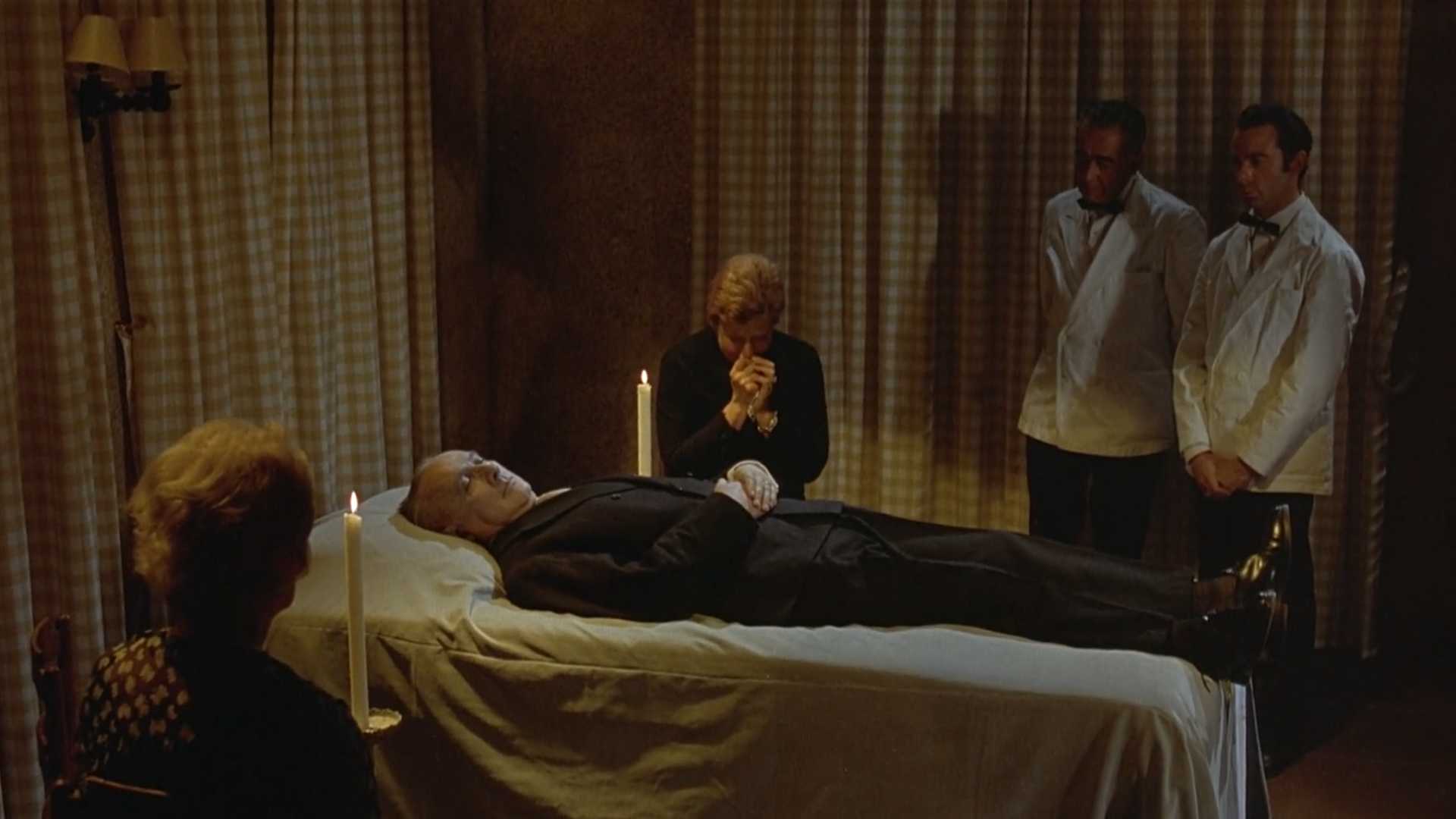
Then, without warning, Buñuel shifts the scene into the absurd. The restaurant owner has died, and his body is lying in the next room. Even so, the staff continue preparing to serve dinner as though nothing has happened.
For the guests, the real problem is not the death itself. What bothers them is that it has interrupted their evening. The employees politely insist that they are still “at your service,” despite the tragedy unfolding only a few steps away. This strange contrast exposes the cruelty hidden beneath bourgeois manners. Even death must remain behind the scenes if it threatens the comfort of the upper class.
This is one of Buñuel’s signature surreal moments. Reality suddenly cracks, allowing the absurd to take over. The dining table becomes more than just a place to eat, it turns into a stage where social hypocrisy is put on display.
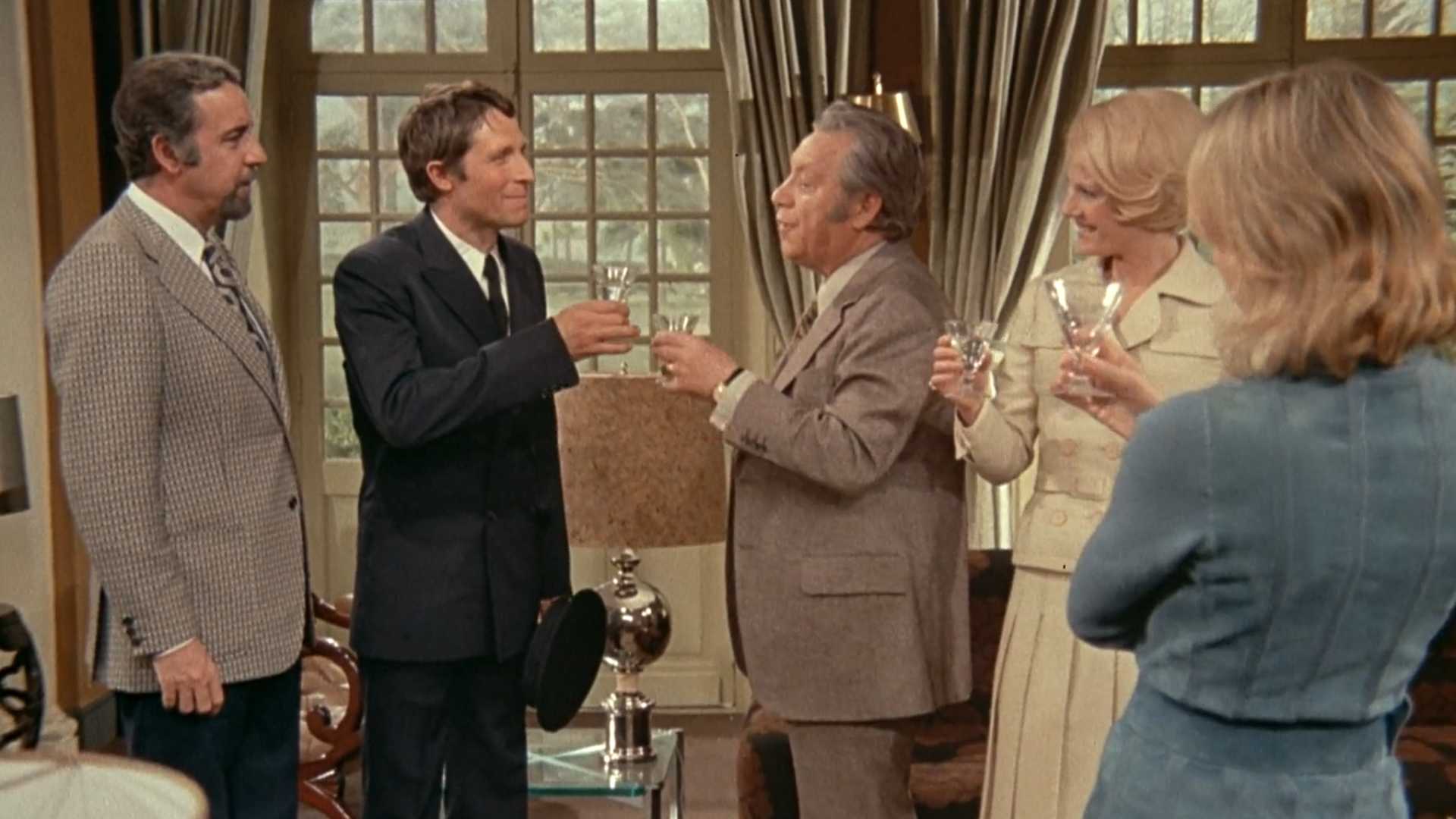
As the film continues, drinks become just as important as food in expressing class and privilege. One of the clearest examples is the famous dry martini scene, which offers one of the film’s sharpest critiques of bourgeois culture.
The discussion is not really about making a cocktail. It is about sophistication, etiquette, and who has the authority to define good taste. The characters explain the preparation of a dry martini with almost ceremonial seriousness. They discuss the correct glass, the temperature of the ice, how the gin should be chilled, and even the proper way to drink it. One character even suggests that a dry martini should be sipped almost like champagne.
These details are less about appreciating a drink and more about performing cultural superiority.
The scene becomes even more ironic when they offer the carefully prepared martini to their chauffeur, Maurice. It feels like a small social experiment. Maurice simply drinks the entire cocktail in one gulp and leaves.
The guests immediately begin making comments about how ordinary people could never understand refinement. In their eyes, even drinking a cocktail becomes a marker of social class.
Here, the martini is much more than a drink. It represents the invisible rules the bourgeoisie creates to separate itself from everyone else.
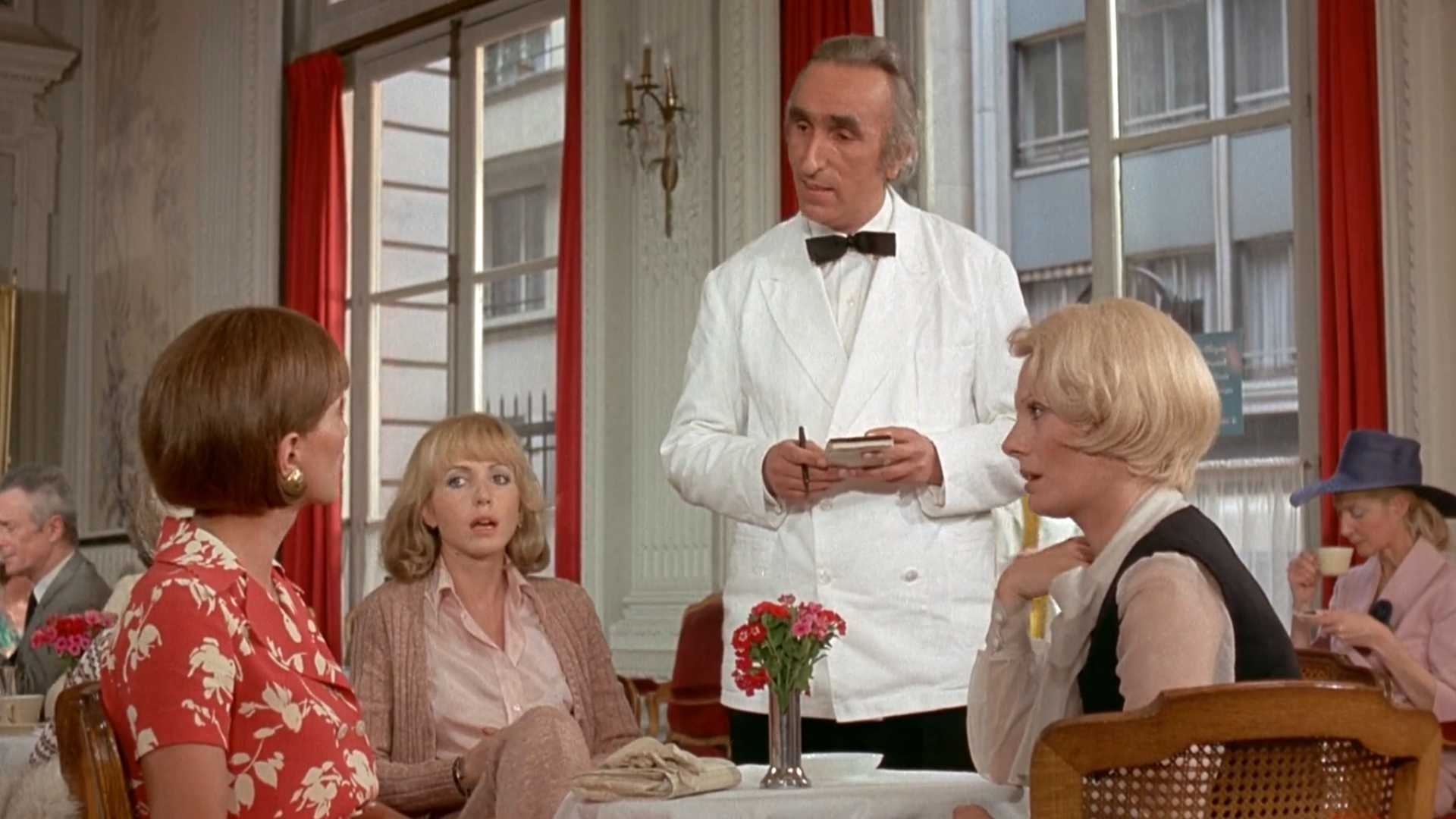
A short café scene later in the film continues this idea. What begins as a simple order for tea gradually turns into an absurd comedy of shortages. First, the waiter says there is no tea. Then he explains that there is no coffee, no milk, and not even herbal tea. Every alternative the guests ask for has somehow run out.
In the end, the only thing left is water.
The characters are not truly thirsty. Their frustration comes from losing the comfort of endless choice. Even ordering a cup of tea becomes a small class crisis. Once again, Buñuel reminds us that the bourgeoisie is never satisfied. Their hunger has little to do with food itself—it comes from an endless desire for comfort, exclusivity, and control.
Le Charme Discret de la Bourgeoisie, 1972
The encounter between the ambassador, played by Fernando Rey, and a guerrilla fighter from the fictional country of Miranda is brief, but it reveals another important layer of the film’s class critique. On the surface, it seems like a political confrontation. In reality, it also becomes a scene about how social class shapes the way people judge food.
When the guerrilla opens his bag, it contains only bread and a few basic groceries. From the bourgeois perspective, these ordinary foods almost become signs of inferiority. They carry none of the prestige associated with foie gras, caviar, or other luxury ingredients. Once again, food is valued not for its ability to nourish, but for what it says about social status.
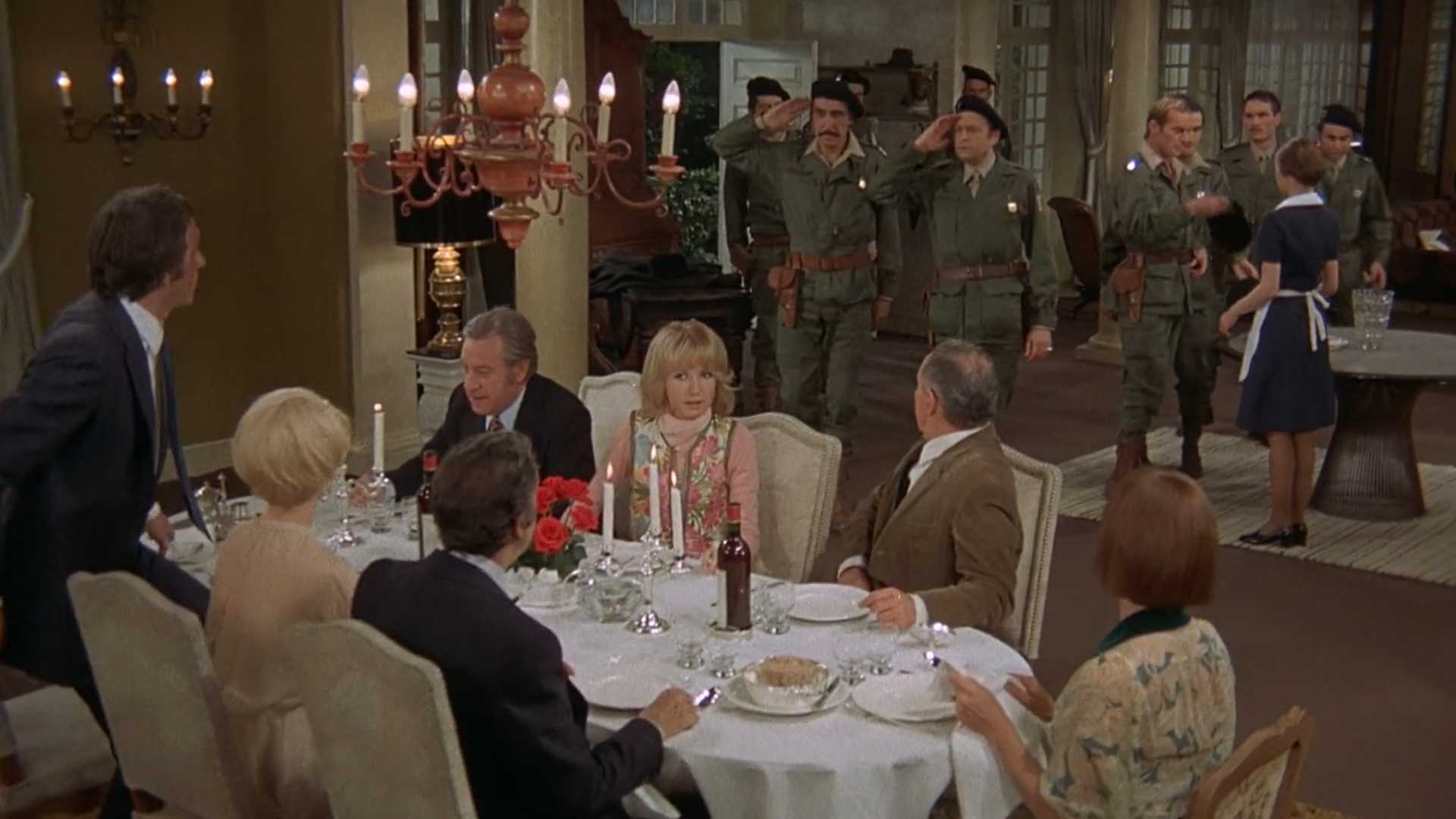
Just as the group is finally preparing to sit down for another meal, they are interrupted once again. This time, a group of soldiers unexpectedly enters the house. They explain that they were conducting a military exercise, but because it has been postponed, they need a place to stay.
In an instant, the boundary between private life and public authority disappears. The elegant dining room begins to resemble a temporary military headquarters. Once again, dinner is delayed, but this time the interruption comes not only from chance but from the presence of state power itself.
Le Charme Discret de la Bourgeoisie, 1972
Trying to restore a sense of normality, the hosts invite the soldiers to join them. They take pâté, ham, and various drinks out of the refrigerator—whisky, martinis, and vodka—in an attempt to recreate the perfect bourgeois dinner. Even in the middle of chaos, the ritual of fine dining continues.
Yet the atmosphere never truly becomes comfortable. Small conversations reveal the fragility of the social order. The commanding officer casually admits that he smokes marijuana, while the ambassador criticizes him. Buñuel uses this exchange to suggest that the rules governing power, morality, and respectability are often arbitrary and contradictory.
Although food is finally placed on the table—eggs, ham, cheese, and foie gras—it still cannot fulfill its purpose. Just as everyone is about to begin eating, the soldiers suddenly receive new orders. Without hesitation, they stand up and leave.
The dinner is interrupted once again.
This sudden departure reminds us of the film’s central pattern. Every time satisfaction seems possible, something unexpected takes it away.
After the military scene, the film moves even further away from ordinary reality. This time, the possibility of a perfect dinner seems to return when the Colonel invites the group to his house. However, by this point the boundaries between dreams and reality have almost completely disappeared.
What appears to be a formal dinner at the Colonel’s home is actually a dream within another dream.
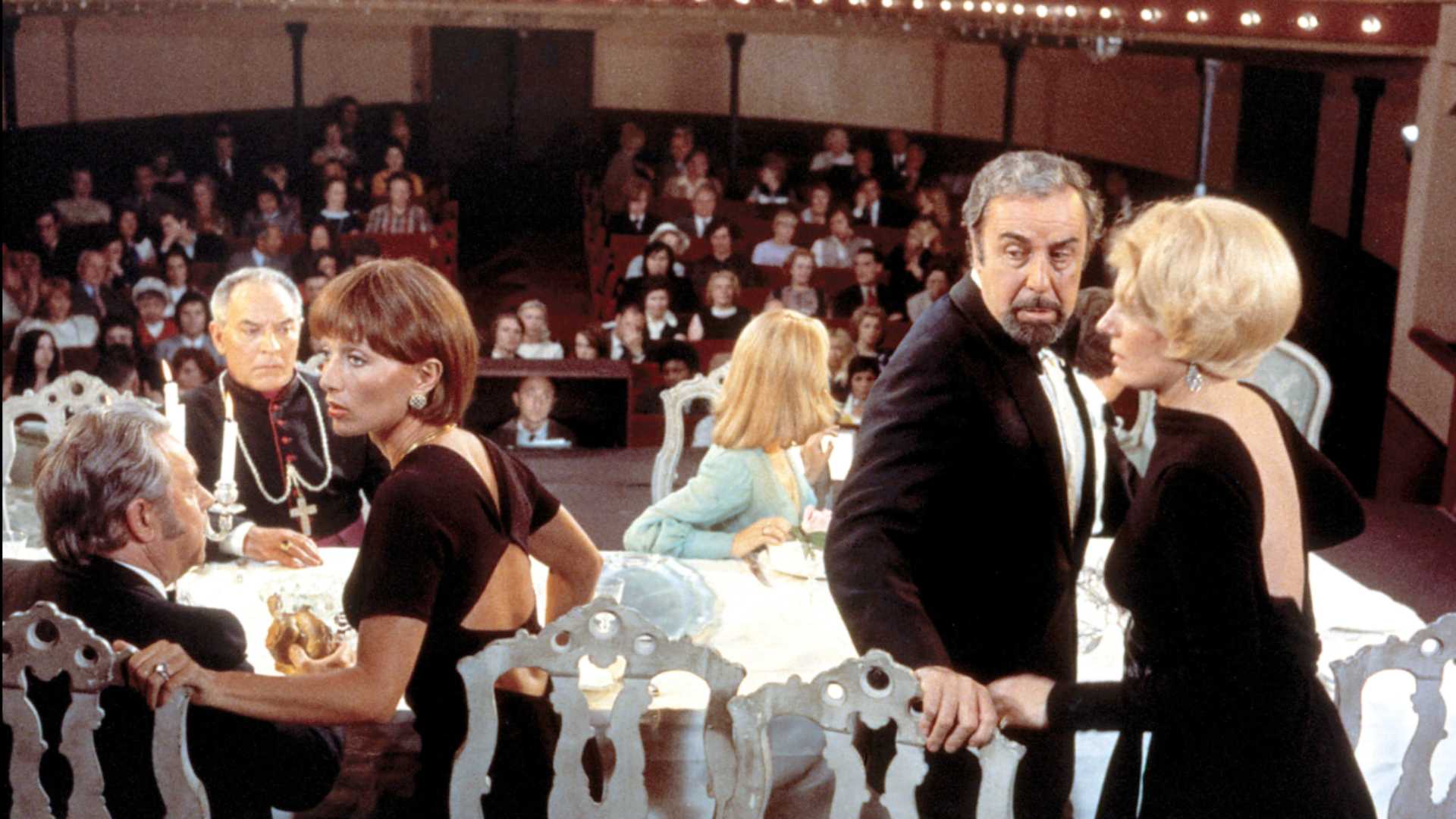
Here, the sense of anxiety surrounding food becomes stronger than ever. The guests are sitting around the table when they suddenly realize something is wrong. The wall in front of them opens, revealing that the dining room is actually part of a theater stage.
In an instant, the comfortable dinner setting transforms into an artificial stage under bright lights. The elegant table loses all sense of reality. Details such as Napoleon’s hat and the falling chicken are exposed as theatrical props.
When the curtain rises, the guests discover an audience watching them from the darkness.
This is more than a surprising change of location. It is the complete exposure of their social performance. The people who were once watching others are now the ones being watched.
Sénéchal panics and says, “I don’t know my lines.” His reaction perfectly captures Buñuel’s message. The bourgeoisie has been performing a role all along. Their manners, conversations, and elegant dinners are not natural expressions of who they are—they are carefully rehearsed performances.
Even the dining table becomes part of the stage, while the guests resemble actors who have forgotten their script.
When the audience begins to boo and eventually walks out of the theater, it feels like a rejection of the entire performance. The polished image of bourgeois life collapses before everyone’s eyes.
The brief conversations during these dream sequences reinforce this sense of artificiality. Characters comment that the whisky tastes watered down, and even the Colonel’s carefully arranged dinner fails to inspire confidence. Every detail suggests that the world they have built is fragile and ready to fall apart.
The dream then slips into yet another dream, making the story even more unstable. At the same time, the film shifts toward one of its strongest political moments. What first seemed like an ordinary dinner party is revealed to be another illusion, and beneath its polite surface lies a world defined by violence, authority, and power.
Le Charme Discret de la Bourgeoisie, 1972
At this stage of the film, the dinner table is no longer just a place where meals are repeatedly interrupted. It becomes a space where power, violence, and political authority are exposed. What begins as a polite dinner gathering slowly turns into a display of control and dominance. The guests continue talking about whisky, wine, and table manners, but these elegant conversations only serve to hide the tension growing beneath the surface. Food and drink become a social mask that conceals the violence surrounding them.
The ambassador is one of the film’s most important characters. Behind his diplomatic status, he secretly runs a cocaine trafficking operation while representing the fictional South American country of Miranda. Throughout the film, Miranda is associated with poverty, corruption, and human rights abuses. Whenever these issues are mentioned, however, the ambassador avoids giving direct answers. He responds with vague, carefully worded statements that blur the truth.
Because of this, he represents much more than a single individual. He stands for an entire political system built on appearances, privilege, and denial.
The film reaches its climax when the dinner that has been postponed over and over again finally seems ready to happen. At last, the guests gather around the table. Everything appears perfect. The meat has been carefully prepared, the soup is ready to be served, and every detail of the meal has been planned with precision.
Le Charme Discret de la Bourgeoisie, 1972
As throughout the film, the menu itself reflects the characters’ obsession with refinement. Rare and luxurious dishes such as haricots de Lima, pintade aux morilles, and vol-au-vent à la financière are presented as symbols of cultural sophistication. These elaborate meals reinforce the idea that fine dining is a sign of education, wealth, and superior taste.
Yet Buñuel reminds us once again that food is never really the point.
The characters do not care about eating because they are hungry. What truly matters to them is everything surrounding the meal—the ritual, the prestige, and the opportunity to display their social status. Food becomes both their greatest desire and their endless frustration.
Just as the long-awaited dinner is finally about to begin, armed men suddenly burst into the house.
Without warning, violence replaces conversation.
Several of the guests are shot, and the carefully arranged evening collapses within seconds. This brutal interruption is the most extreme version of a pattern that has repeated throughout the entire film. Every attempt to reach satisfaction ends in failure.
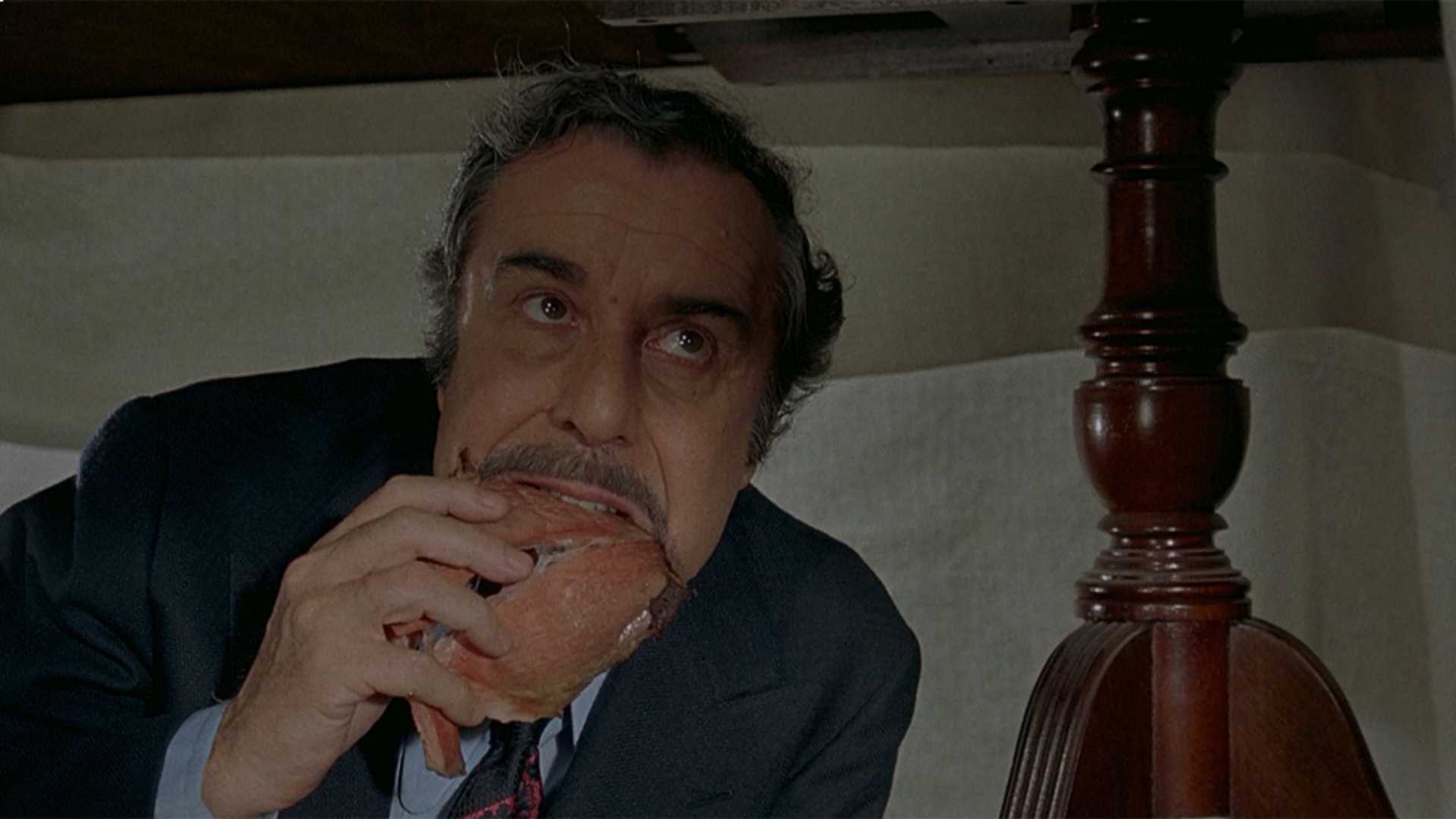
Perhaps the film’s most revealing moment comes during this attack. As bullets fly around the room, the ambassador hides beneath the table. Even then, instead of focusing only on survival, he reaches toward the piece of meat still sitting on the table.
Le Charme Discret de la Bourgeoisie, 1972
It is a darkly comic image, but it perfectly captures Buñuel’s message.
Even in the face of death, the desire to consume remains stronger than fear itself. The bourgeois appetite has become instinctive. It survives even when everything else is falling apart.
Looking beyond the story itself, Buñuel’s critique reaches far beyond the characters on screen. Throughout history, food has rarely been just about nourishment. From ancient civilizations to modern societies, banquets have often served as symbols of wealth and power, while the labor behind those meals has remained invisible.
This is why The Discreet Charm of the Bourgeoisie is more than a satire of the upper class. It is also a criticism of the historical relationship between food and power. The dining table becomes a symbol of inequality, privilege, and the systems that sustain them.
In the end, Buñuel paints a tragicomic portrait of a social class trapped by its own endless desires. The bourgeoisie spends the entire film chasing the perfect meal but never achieves genuine satisfaction. Their hunger can never be fulfilled because it is not driven by physical need. It is fueled by status, appearance, and the constant desire for more.
That is the film’s lasting message: the greatest hunger is not for food, but for a sense of fulfillment that can never be achieved.
