


René Redzepi—the high priest of Noma, the “holy land” of fine dining in Copenhagen—was forced to step down from his duties last week, just before launching a $1,500-per-head pop-up in Los Angeles.
This resignation is more than just a chef’s retirement; it is the definitive collapse of the shimmering yet decayed myth of “genius” upon which fine dining has been constructed for the last few decades. As Redzepi found himself cornered by years of allegations involving physical violence, psychological abuse, and systemic mobbing, I was reminded of Mark Mylod’s The Menu (2022). I am certain I wasn’t the only one. The film was a brutal autopsy of an ultra-luxury culture that markets dining as “performance art” while reducing its staff to robotic, terrified obedience.
Brutality Behind the Art: From Hawthorn to Noma
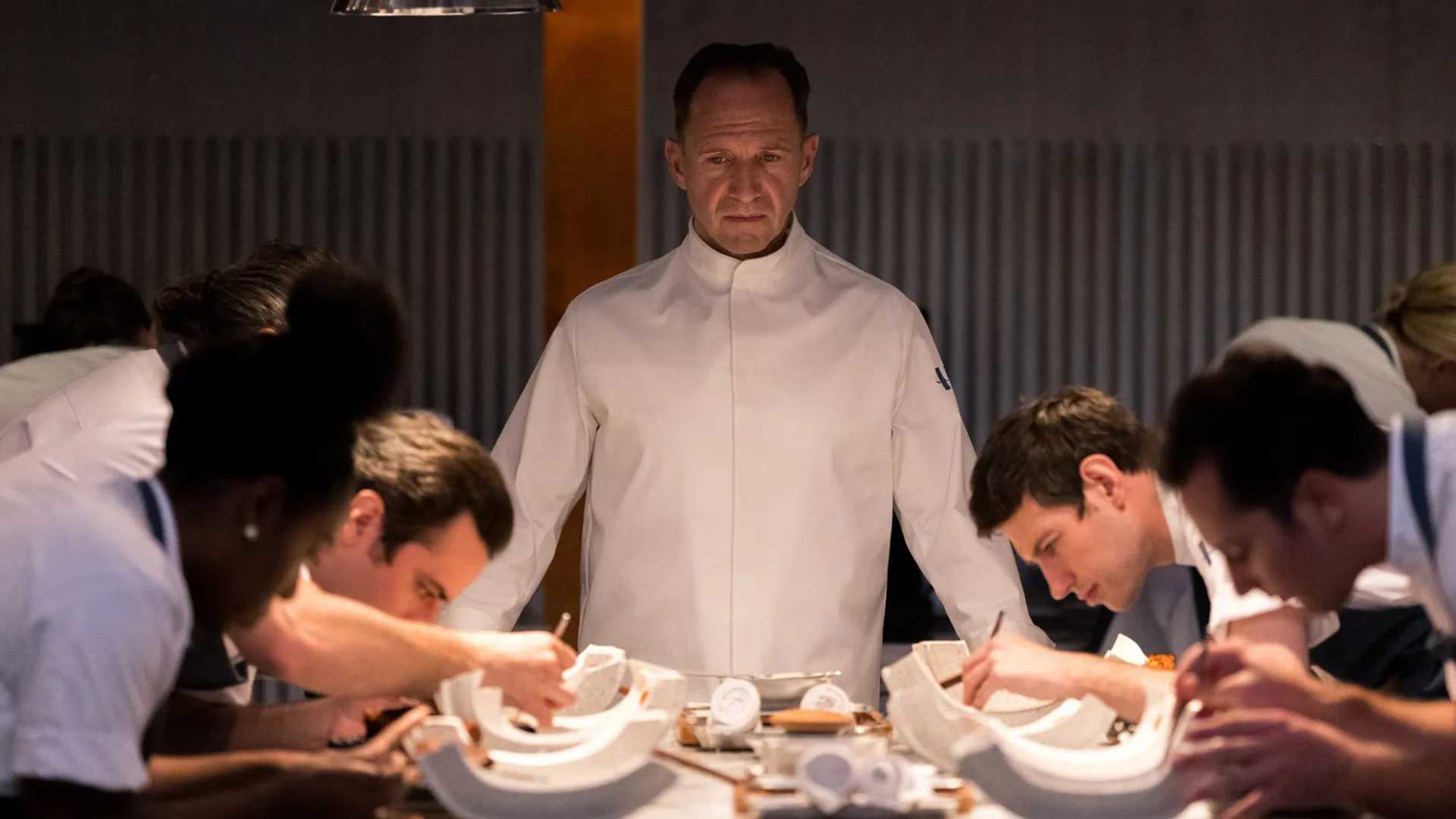
In the isolated micro-universe of Hawthorn Island, Chef Julian Slowik (played by Ralph Fiennes) wields absolute authority like a cult leader. The allegations against Redzepi suggest that this fictional horror is closer to a “documentary” than we’d like to admit. Claims of Redzepi punching employees, assaulting them with kitchen tools, and slamming them against walls draw a chilling parallel to the “kitchen brigade” system Slowik uses to maintain his empire of fear. Both figures use their power as a tool of destruction—one by literally blowing up his guests and himself, the other by bursting the sewer of exploitation that Noma had become. Noma didn’t just sell food; it sold an “experience” that evolved from the deconstructive molecular gastronomy of Ferran Adrià’s El Bulli into a machinery of human exhaustion.
The Slaves of Noma’s Kitchen
The Menu dissects the deep class chasm of the gastronomic world with the precision of a Damascus steel blade. Those at the table are the ultra-wealthy, interested less in the flavor of the dish than in its “rarity” and “price tag.” Behind the kitchen doors are the nameless workers sacrificing their lives, dignity, and bodies to sustain the illusion.
This mirrors the bone-chilling “unpaid internship” system Noma maintained for years. Under the guise of “education,” Redzepi built a billion-dollar empire of prestige on the backs of young chefs from around the world who worked for free. This is modern slavery plated with exquisite garnishes. Labor is hijacked under the mask of “contributing to art,” while the value created serves only the “genius” at the top and the elite seated at the tables.
The Exploitation of Child Labor
This predatory order isn’t confined to Copenhagen’s luxury scene; as the geography shifts, the tone of exploitation grows even darker. The recent MESEM (Vocational Education Centers) scandal in Turkey is a local and far more tragic reflection of the dark kitchen hierarchy seen in The Menu. High school students sent to factories and workshops under the promise of “education” and “employment” are being crushed—quite literally—within the gears of the system, much like Noma’s interns.
But here, the price isn’t just psychological trauma; it is direct loss of life. This system, using children as “cheap labor” in heavy industry, is no different from the suicidal discipline in Slowik’s kitchen. Whether it’s a chef candidate arranging herbs with tweezers at Noma or a student losing their life at a machine in Turkey, both are manifestations of the same global capital logic: the commodification of human life for the sanctity of capital accumulation.
Margot and Slowik: A Duel of Two “Givers”
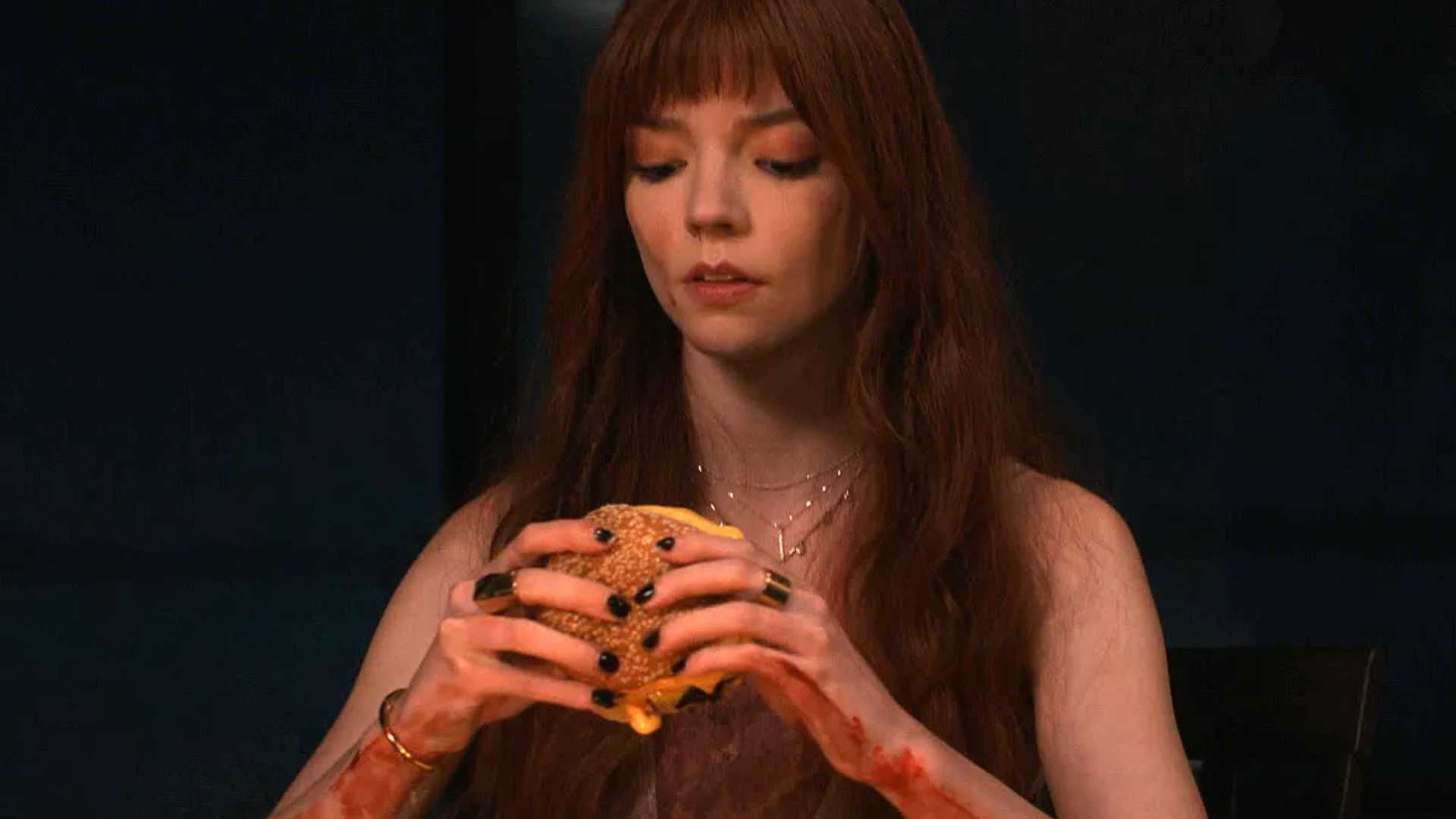
At the heart of the film lies the tension between Margot (Anya Taylor-Joy), who enters this tyranny by mistake, and Slowik. Margot is not an “eater” like the other guests; she is a “giver”—a service provider just like Slowik. When Slowik realizes she doesn’t belong, an intellectual chess match begins. To Slowik, Margot is a glitch in the system; to Margot, Slowik is a technocrat who has murdered the soul of art. This relationship represents the external eye—the conscience—that pierces through the machinery of exploitation, whether in Redzepi’s kitchen or the MESEM workshops.
The Cheeseburger: A Return to Essence
In the film’s unforgettable finale, Margot discovers Slowik’s Achilles’ heel: the artist’s original, pure passion for cooking. Slowik misses the man he was years ago, captured in an old photograph—smiling while flipping burgers. By rejecting the sophisticated, soulless tasting menu and asking for a simple “cheeseburger,” Margot drives the final nail into the coffin of gastronomic elitism.
For the first time in years, Slowik cooks with genuine desire and joy. This simple, honest meal becomes Margot’s “passport” to survival, while for Slowik and his crew, it marks a grand, ritualistic suicide. Redzepi’s resignation may look like a similar “self-reflection,” but it feels more like a rational exit strategy—a move to save what’s left of the brand before the ship fully sinks.
