


Pedro Almodóvar’s 2006 film Volver (“To Return”) focuses on the stories of strong female characters and stars well-known names in Spanish cinema, such as Penélope Cruz and Carmen Maura.
The film takes place in Madrid and La Mancha and focuses on the lives of the main character Raimunda, her daughter Paula, and her sister Sole. The film deals with themes such as family relationships, female solidarity, death and grief, family secrets, and the struggle to survive.
Raimunda is a hardworking and protective mother who tries to stay strong despite difficult living conditions. When her daughter Paula is sexually assaulted by her father, she kills him, and this secret is protected by Raimunda. The film develops around these events, while the return of their deceased mother Irene as a ghost adds a mystical dimension to the story. Irene returns after her death to complete unfinished business with her family. Alongside the melodramatic elements typical of Almodóvar, cultural references are also prominent throughout the film.
In the early scenes of the film, when Raimunda and Sole visit their aunt in the village, their aunt offers them a thin and crispy pastry called barquillo and gives them a container filled with rosquillas, traditional ring-shaped Spanish pastries usually made with anise. The fact that these snacks are commonly enjoyed for breakfast and as an afternoon snack in the region makes them more than just food, turning them into a social ritual that brings people together. Despite their aunt’s dementia, Raimunda and Sole are surprised that she has prepared barquillo and rosquillas, and that she is still able to maintain her daily life to the point of keeping her pantry stocked with food. Their neighbors believe that Raimunda and Sole’s deceased mother cooks for their aunt and leaves money for people to buy bread.
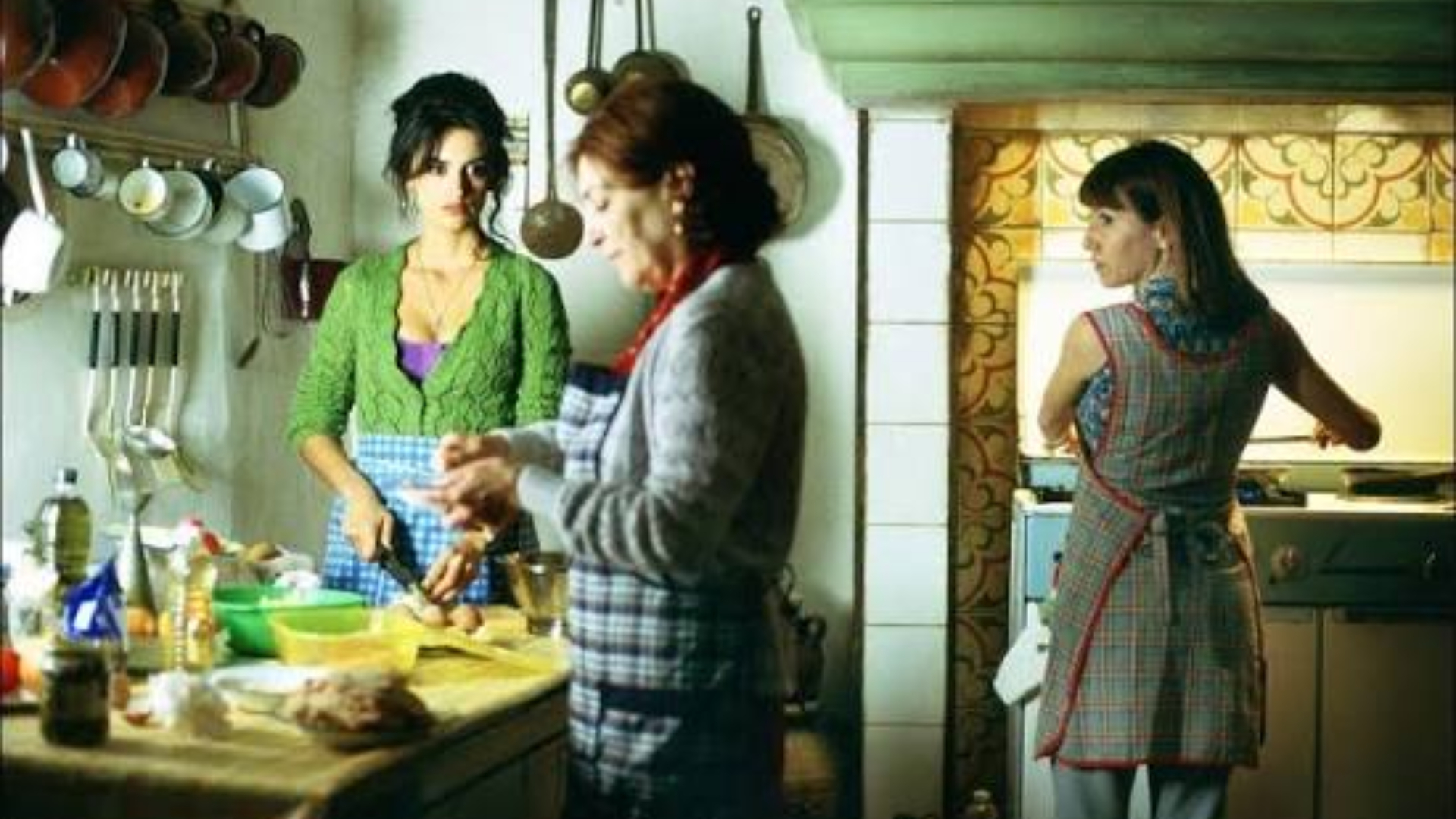
In Alcanfor de las Infantas, a small village in La Mancha, the fact that women are still cooking and taking care of children or elderly people even after they die, and that nobody finds this surprising, tells us about the role of women in society and the family dynamics in the village.
When Raimunda returns home, however, she encounters the world of men. Her husband Paco sitting motionless in front of the television and drinking cans of beer at home works almost like a visual summary of his character. The Spanish beer brand Sol del Sur, a cheap beer from Andalusia, represents the everyday, ordinary, and inexpensive consumer culture in the film.
After Paco is killed following his attempt to sexually assault his daughter, Raimunda starts cleaning the kitchen to get rid of the body. As she washes the blood-covered knife in the sink, the blood flows over the dirty dishes. This places an ordinary kitchen task next to the horror of murder. In this way, violence is shown as something that is attempted to be hidden within the ordinary routines of domestic life.
When Raimunda starts running the restaurant belonging to her neighbor, she makes an arrangement with a film crew that is continuing to shoot nearby. We learn that Raimunda buys eight kilos of potatoes to prepare tortilla española. After shopping at the greengrocer, she borrows aguja de puerco, which her friend had bought for €10.80. From another friend, she gets morcilla and mantecados manchegos. With these limited ingredients, she prepares the first menú del día in the simple and crowded restaurant, consisting of tortilla española y morcilla, carne de cerdo, ensalada and mantecados manchegos.
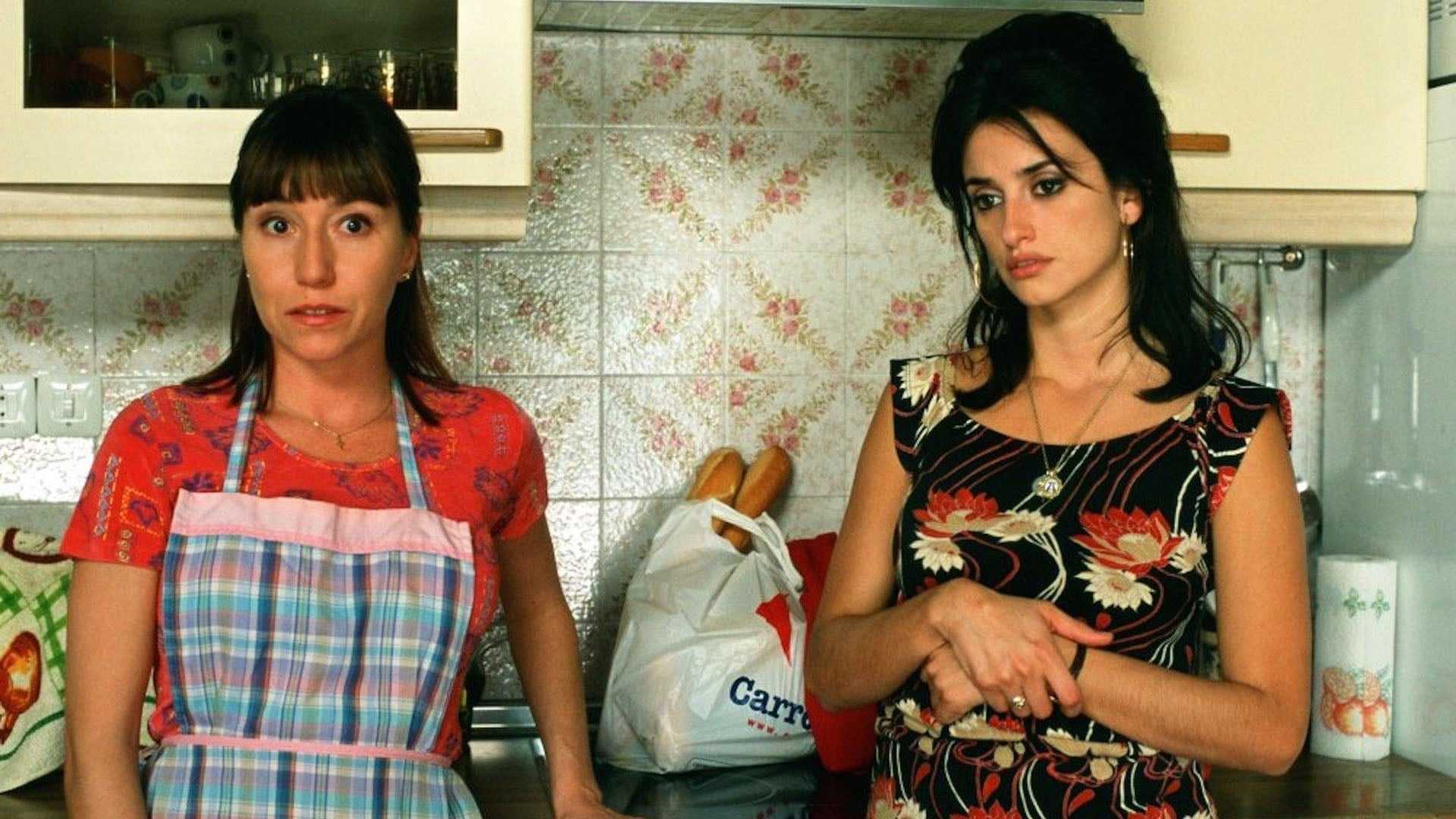
The choice of these dishes in the film is not accidental. Tortilla española, served as the starter, is a basic home-cooked dish found in almost every region and household in Spain, made with simple ingredients such as potatoes, eggs, and olive oil. Morcilla, served alongside it, is a traditional blood sausage made with pork blood and fat and, depending on the region, rice or onion. Carne de cerdo, served as the main course, is a fatty and flavorful cut from the neck and front shoulder of the pig. We see the relatively economical aguja de puerco sliced and served. The dessert, mantecados manchegos, are traditional cookies from Castilla-La Mancha made with flour, pork lard (manteca de cerdo) and sugar. They are crispy and crumble in the mouth.
In the following scene, Sole goes to the velatorio, the wake for her aunt, where an atmosphere of mourning dominates. However, a traditional cocido/puchero meal is also prepared to feed the people gathered at the wake. The meal served to Sole reflects the three-stage serving style of cocido: the first stage, or primer vuelco, is strained broth (caldo); the second stage, or segundo vuelco, consists of chickpeas and vegetables; and the third stage, or tercer vuelco, consists of beef, chicken, pork, and meats such as chorizo and other embutidos.
In one of the following scenes, Raimunda is seen enharinando, or coating, round meatballs in flour. Albóndigas are one of the classic dishes of Spanish cuisine and are usually prepared by mixing minced beef, pork, or lamb with bread, garlic, and various spices before shaping the mixture into meatballs. Because they are made with simple and economical ingredients, albóndigas are particularly common in home cooking and family meals, and they can also be served as tapas in restaurants and bars.
When considered independently of the film’s plot and dialogue, these food scenes also shed light on Raimunda’s sociological position in society and her role in everyday life. While all this food preparation is taking place, Paco’s body is still waiting in the freezer in the restaurant’s kitchen.
Thus, the kitchen becomes a place that both feeds people and keeps life going, while at the same time becoming a place where death and a hidden crime are kept.
The role of chef that Raimunda takes on by chance also becomes a sign of her financial independence and emotional recovery. At first, Raimunda cooks for the film crew simply to make a living. When filming ends, however, she takes on the task of preparing a much more extensive menu for the party held to celebrate the end of the shoot. Putting her own troubles aside, she dresses carefully and convinces her daughter to join the party.
One of the most noticeable gastronomic elements of the party is the mojitos, which are clearly visible in the frame. On the buffet, although it cannot be seen clearly, there also appears to be an appetizer similar to slices of melon wrapped in Jamón Serrano. This combination, especially popular in Spain during the summer, brings together the sweet and juicy character of melon with the salty and aromatic character of Jamón Serrano. Its simplicity and the way it highlights the natural flavors of the ingredients reflect the Spanish culinary approach of creating balanced flavors with simple ingredients.
In this scene, cooking is no longer simply a job that allows Raimunda to make a living; it also becomes a way for her to return to social life and regain control over her own life.
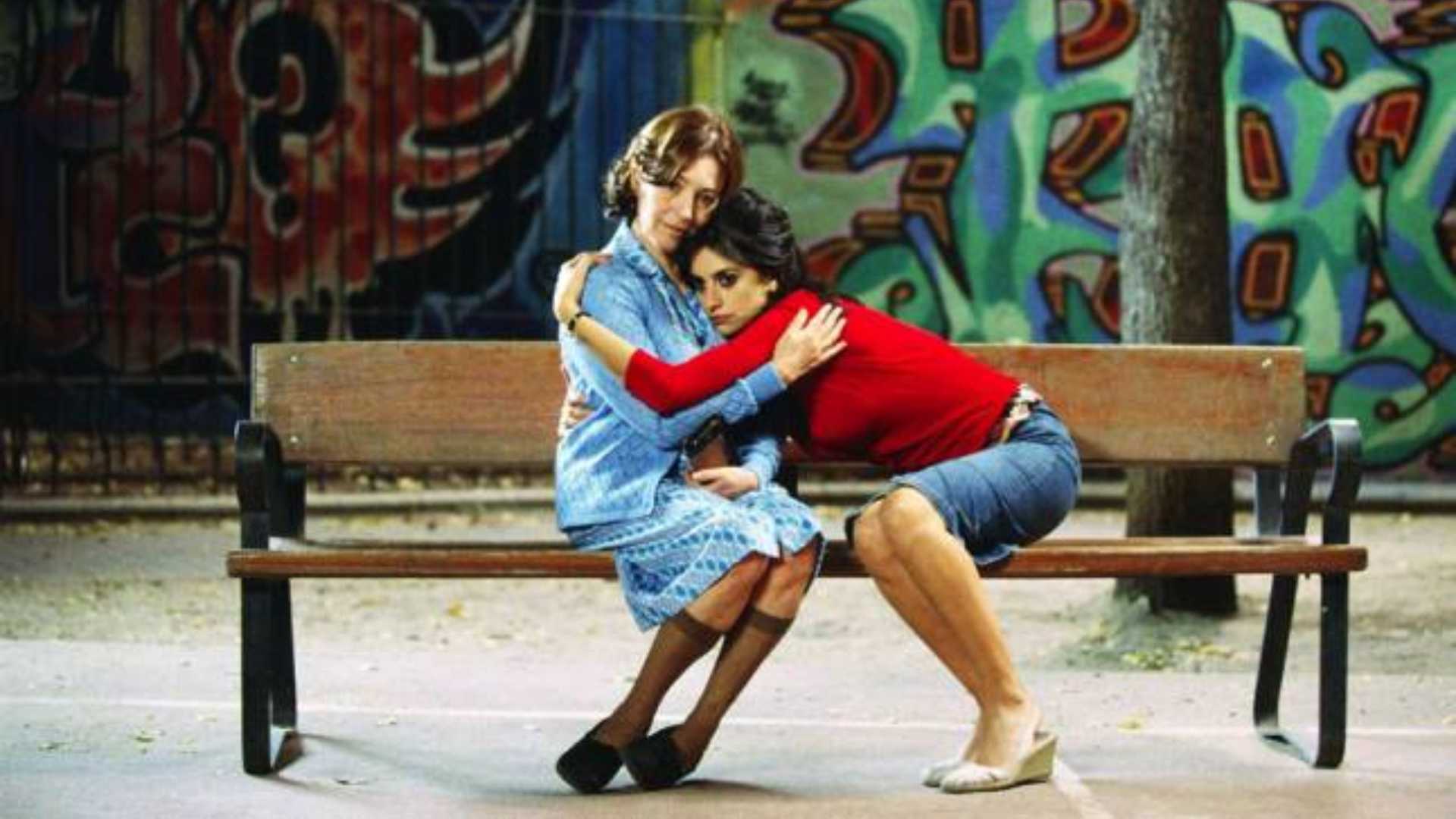
Toward the end of the film, we see Raimunda at Sole’s house turning over a large mold of flan, a traditional Spanish milk-based dessert made with eggs, milk, and sugar and served with caramel sauce. Although flan is usually prepared in small individual portions, taking it out of a large mold in this scene once again emphasizes the film’s themes of sharing and living together.
In one of the most touching moments of the film, all the women in the family gather at their aunt’s house to cook as they try to make peace with one another. We see them preparing traditional Spanish-style Pollo Empanado, chicken coated in egg and breadcrumbs and then fried. At the center of the table they have prepared, there is once again Tortilla Española.
The food scenes and gastronomic details in Volver enrich the viewer’s sensory experience, making the film more powerful and meaningful. Almodóvar’s decision to constantly bring food to the center of the frame is not accidental: a close-up of a bowl of soup, flan, the dishes prepared by Aunt Paula, and the countless dishes Raimunda cooks in the restaurant all make the continuity of life visible.
Volver feels almost like a film in which a mother tells us, “You have to eat,” because we have to survive, and the world is cruel.
