


Cooked by Geography, Kneaded by the City
When you step into a street in Mardin and walk between its stone walls, you do not merely traverse a city, you follow the traces of time. The same compelling experience is repeated when you sit at a table.
The plate placed before you is not simply a recipe; it is the accumulation of thousands of years, of trade routes, and of the shared memory of the peoples who have breathed in this geography.
However, to properly and fully evaluate Mardin cuisine, one must first move beyond the modern world’s frameworks of “national” or “ethnic” cuisines and, at the same time, abandon the notion of considering it merely as a “local cuisine.” The widespread tendency to attribute dishes to races, lineages, or ethnic identities leads us to overlook the most fundamental sociological truth of gastronomy: cuisine does not belong to races, but directly to geography and ways of life. Beliefs, political authorities, class differences, and degrees of settlement certainly shape cuisine; yet all these dynamics rise upon the boundaries drawn and the possibilities offered by geography. Moreover, throughout history, Mardin has been a crossroads of trade routes, a transitional zone that brought together the flavors of different geographies, and it has, to some extent, earned the title of “the cuisine of merchants.”
The following statement in the introduction of my book provides the key to understanding this cuisine: “You cannot make sense of the taste of its food without knowing the history of Mesopotamia and understanding its culture.” For this reason, when approaching Mardin cuisine, one must think first not of recipes, but of routes, geography, trade, and movement.
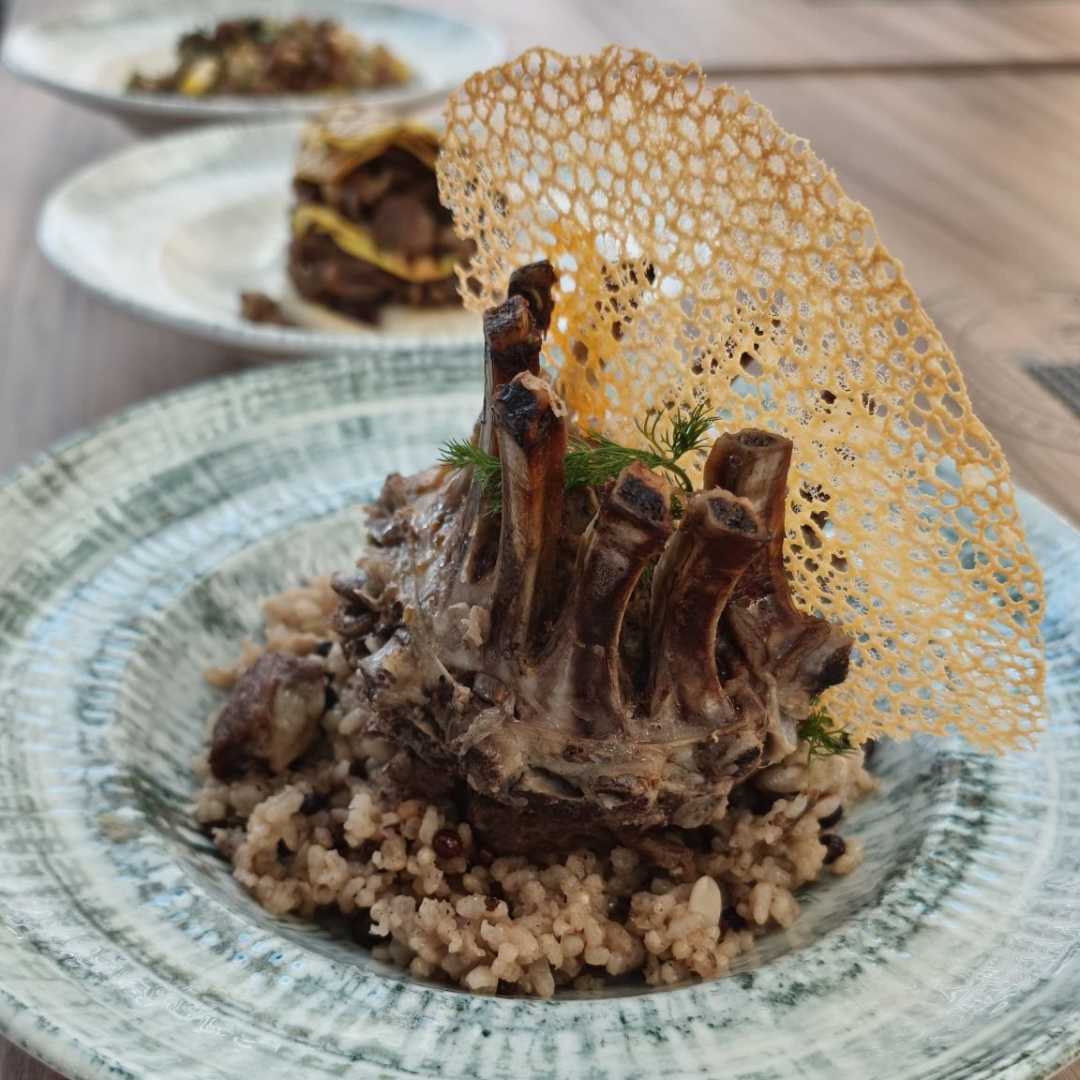
Stuffed Lamb Ribs
The city is a transition point between the Diyarbakır plateau in the north and the Mesopotamian plain in the south. At the same time, it lies at the intersection of historical routes connecting the Eastern Mediterranean to Mosul, Baghdad, and further east via Urfa and Harran. This geographical position has turned the city into a center not only for the transfer of goods but also of habits, techniques, and flavors. The gradual displacement of ancient bulgur by rice arriving via the Silk Road along the China–India–Iran route, or the integration of intense spices carried by trade caravans into the DNA of the local cuisine, are both results of this interaction. Therefore, the richness of Mardin cuisine is not the product of a single people’s ingenuity, but of the routes and winds that have passed through this geography.
“Mardin is a center where historical trade routes and networks of cultural relations intersect.” Because routes do not only carry people and goods. They also carry habits, techniques, and tastes. A merchant’s load is not limited to fabric or spices; what comes with it is the memory of another cuisine. “Food culture reaches a universal integrity through the climate, geographical structure, and deep-rooted past of regions” (Lokman, 2015). This universal integrity is, in fact, a result created by trade routes.
One of the most distinctive features of Mardin cuisine is its intense use of spices. This cannot be explained solely by taste preferences. Behind it lies a network of trade and interaction that has lasted for centuries.
Here, spice is not merely an element of flavor. It also:
- Adapts to the climate
- Carries the traces of trade
- Reflects cultural identity
For this reason, the use of spices in Mardin cuisine is not only about taste, but also a historical memory.
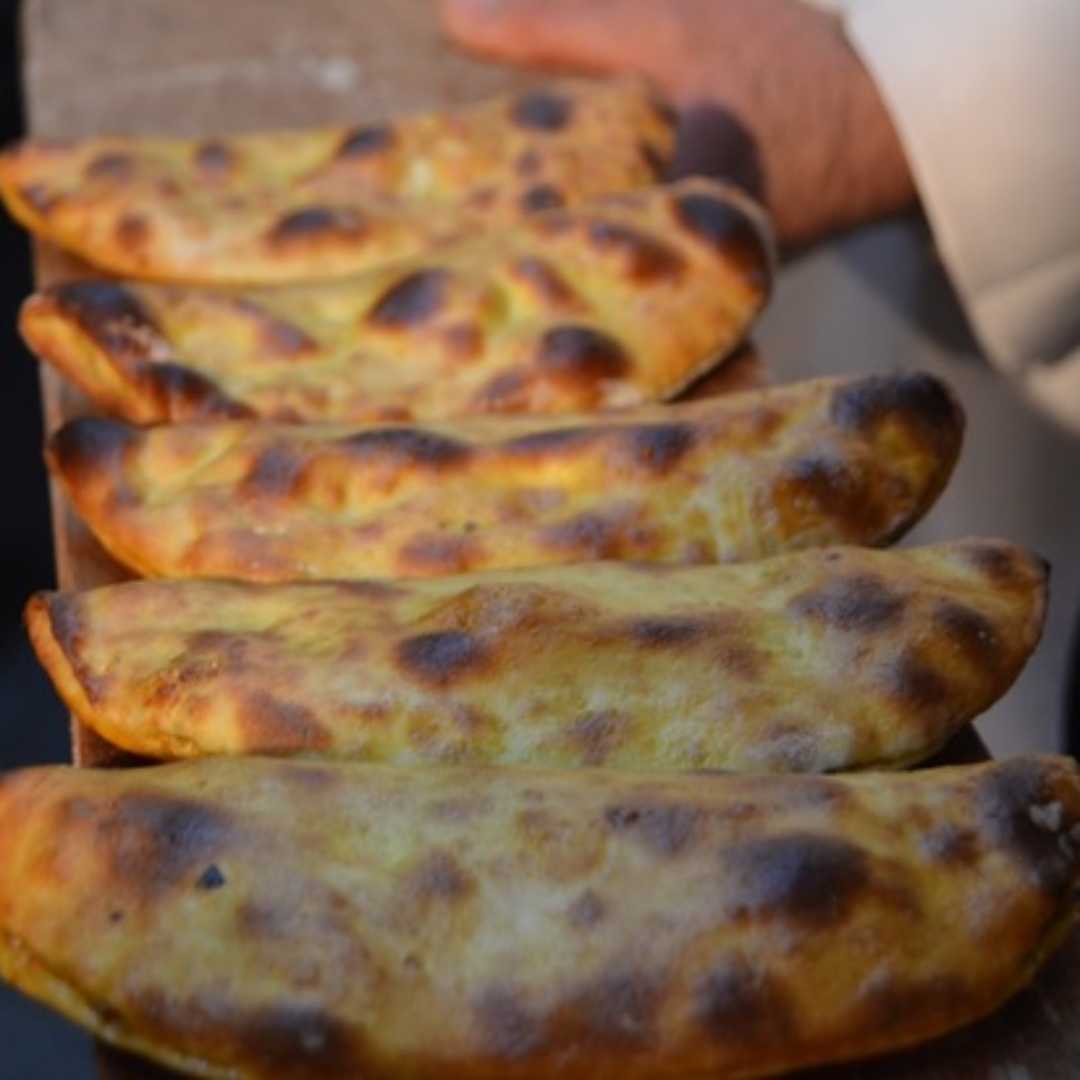
Sembusek (Closed lahmacun)
The Cuisine of Merchants, the Cuisine of the People
Another element that makes Mardin cuisine particularly interesting is the coexistence of two distinct dynamics: the cuisine of merchants and the local cuisine.
“On one side, it has been the cuisine of merchants; on the other, it has been nourished by the culture of the geography in which it exists.” There is a constant interaction between these two structures.
Today, when we look at Mardin cuisine, it is almost impossible to find dishes strictly separated by sharp boundaries as belonging only to Syriacs, only to Kurds, or only to Arabs. Flavors that emerged as part of a communal culture have, over time, become the shared property of the entire geography, transcending languages and religions. The clearest example of this can be seen in festive and mourning rituals. The Syriac Easter bun, Kliçe, which symbolizes Easter celebrated after the Great Fast in the Syriac faith, is no longer baked only in Syriac homes. Muslims also prepare and distribute this bun during funerals and mourning periods. Similarly, the bitter coffee known as Mırra, associated with Arab culture and requiring great patience to prepare, has become a symbol of shared sorrow in the mourning houses of both Syriacs and Kurds. This situation is the most concrete proof of how beliefs and rituals, rather than drawing rigid boundaries in the kitchen, bring people closer together.
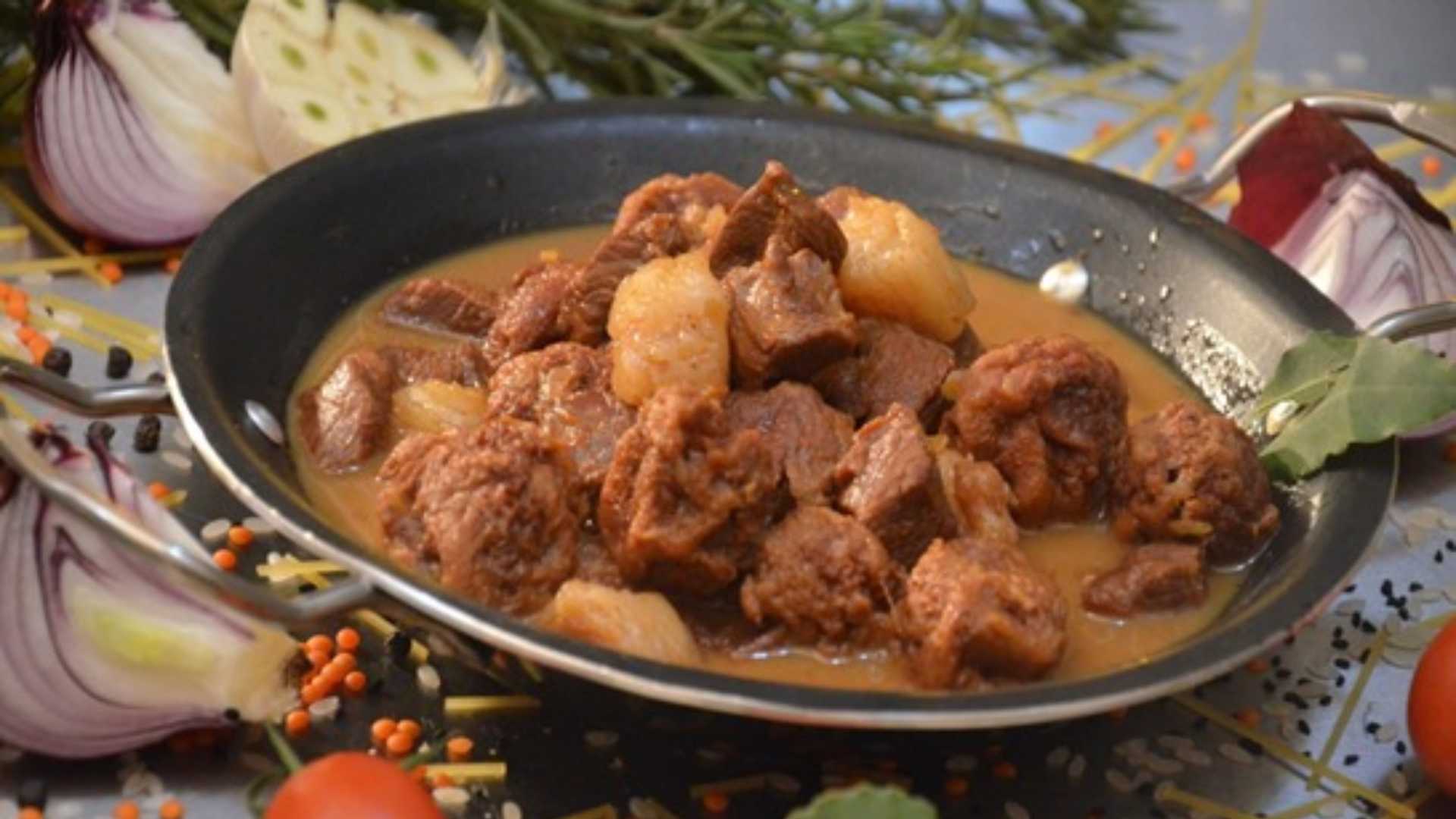
İncasiyê
Cuisine of a Lifestyle, Not Race: The Fertile Plains and The City
Instead of seeking culinary distinctions in ethnic origins in Mardin, one should look at how people live and where they are positioned within the geography. For example, rather than calling the famous lamb dish Dobo a “Syriac dish,” it is sociologically far more accurate to describe it as an “urban dish of Mardin.” Likewise, instead of labeling Merga Alokan, made with turkey meat, as a Kurdish dish, it is closer to the truth to call it a dish of the plains. The same sociological rule applies to Hamis, a bulgur-based dish with meat and broth.
The main factor determining the character of dishes is the way of life. For a peasant woman working on the Mesopotamian plain, time is the priority. Amid the intense labor of the fields, vineyards, childcare, and housework, she cannot devote much time to cooking, nor can she always access every ingredient she needs when she needs it. Her aim is to combine the ingredients she has at hand as quickly and as fillingly as possible and place them before her household. When access even to basic foodstuffs such as meat and vegetables is limited, not to mention exotic spices, culinary experimentation is not an option.
In contrast, urban life presents a completely different situation. For the urban woman, the kitchen is a primary space of prestige. She has ample time to devote to cooking and easy access to spices brought by caravans.
Thus, while urban cuisine develops through more complex, slow-cooked, and elaborate dishes, the cuisine of the plain focuses on practicality and sustenance.
Products arriving first through historical trade routes and later through modern agriculture and import systems appear initially on the tables of merchants, then among other urban groups, and finally reach the rural kitchen. Sometimes, they disappear before ever reaching it. This process allows the cuisine to remain both open to innovation and rooted in tradition, giving it a distinctive character.
For instance, in the preparation of Mardin’s çiğ köfte known as Acin, coriander is used not merely as a spice but almost as a primary ingredient, and the prepared mixture is served with the addition of an egg cooked in a pan. This traditional dish has been reinterpreted under the influence of trade routes. Likewise, the fact that ingredients now considered indispensable, such as tomatoes and eggplants, were actually introduced into the cuisine at a later stage is one of the clearest examples of this transformation.
Borderless Dishes
Another way to understand Mardin cuisine is to evaluate it not in isolation but as part of the broader geography of Mesopotamia. “Mardin shares the same culinary trajectory with Antep, Antakya, Aleppo, Erbil, and Mosul” (Lokman, 2015).
This contradicts the modern understanding of national cuisines, because in this region, food does not recognize borders. The same dish continues to exist in different cities with various adaptations. For this reason, Mardin cuisine should be considered not merely as a city cuisine but as part of a wider gastronomic network.
The changes of the last century have also affected Mardin cuisine, but this effect is not one-directional. “Globalization, while evoking cultural degeneration, can also lead local communities to rediscover their own culture” (Lokman, 2015).
In particular, gastronomic tourism has made Mardin cuisine visible once again. This creates a bridge between past and present.
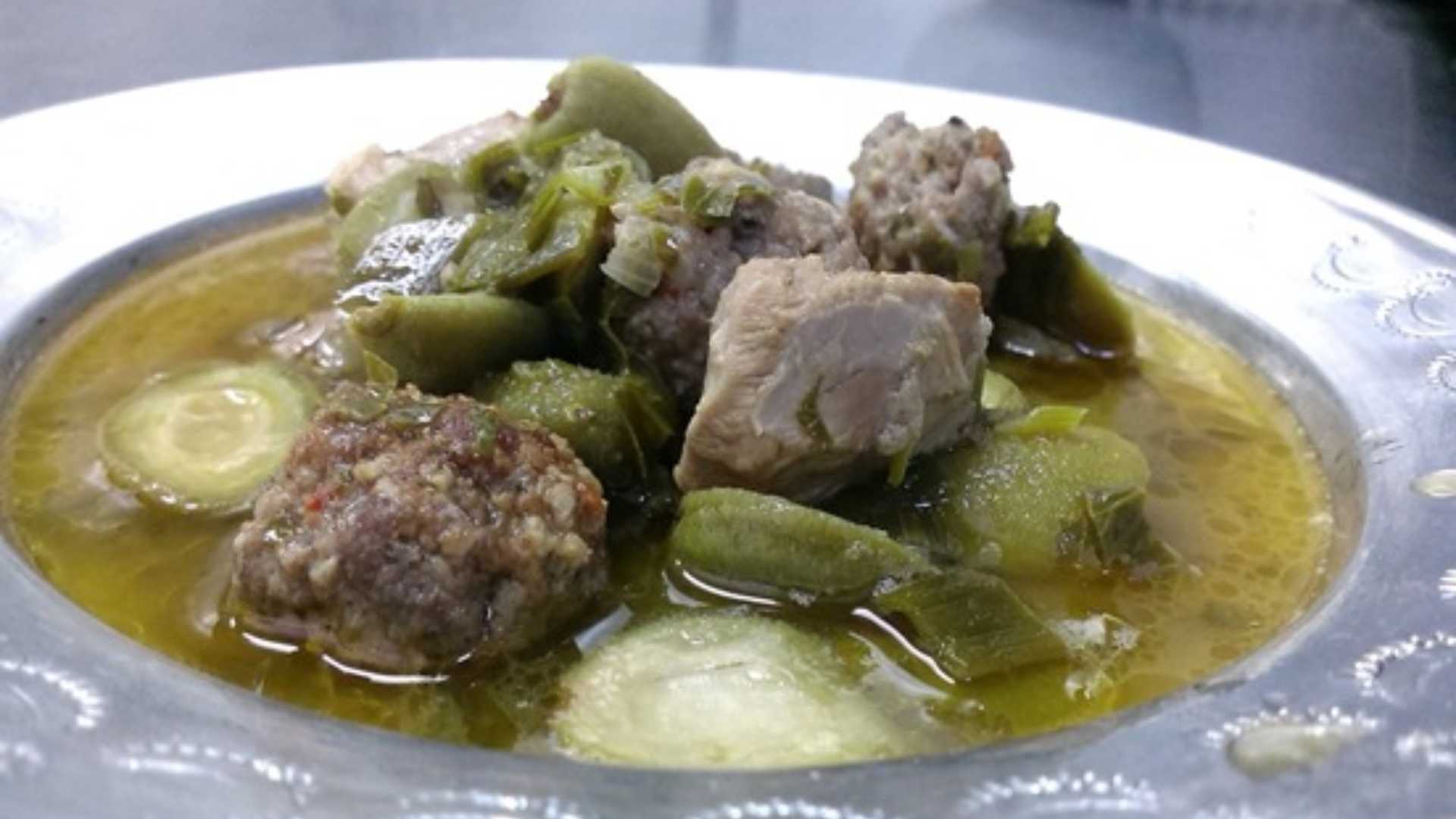
Firkiyê
Not the Cuisine of a Place, but of a Route
Mardin cuisine is not a fixed and frozen set of recipes. It is a living organism in motion, constantly nourished by interaction. As demonstrated in my book Mardin and Food Culture, regional cuisines are enriched through mutual exchange.
In this ancient city, where people sharing the same land and climate have, over time, also shared their cooking pots, almost all flavors, with the exception of wine, are the common property of all communities. Wine, produced for centuries only by Syriacs and distinguished by the use of mahaleb for its characteristic taste and aroma, remains a notable exception. Therefore, sitting at a table in Mardin is not merely a biological necessity or a touristic activity. In that plate, you taste the power of geography, the dust of the Silk Road, the friendship of a freshly baked Easter bun, and a human history without borders.
“Regional cuisines have been enriched through mutual exchange.” For this reason, eating in Mardin is not the product of a place, but of a route.
When you sit at a table, you find yourself in the middle of a journey. Because that food has passed through many places before reaching you, has come into contact with many cultures, and has acquired many meanings.
And perhaps for this reason, eating in Mardin is not simply about being full.
It is about tasting history.
