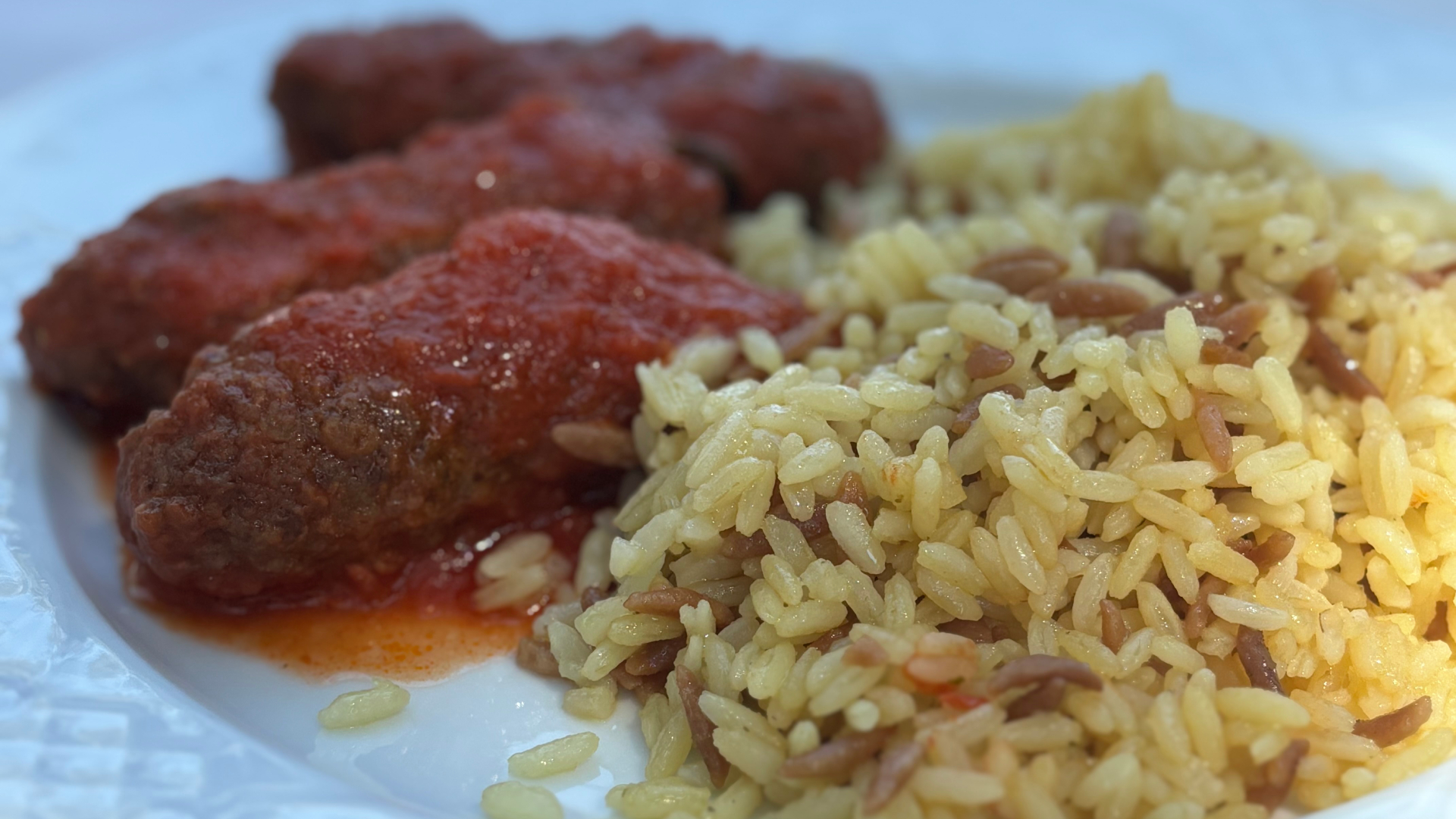


Eating a Greek Island Cooked by Grandmothers
I give thanks for that unforgettable lunch at Ta Platania — a table I will carry with me always. And I wish long life to the grandmothers who keep the island’s traditions alive with their hands, their patience, and their love.
May they live forever.
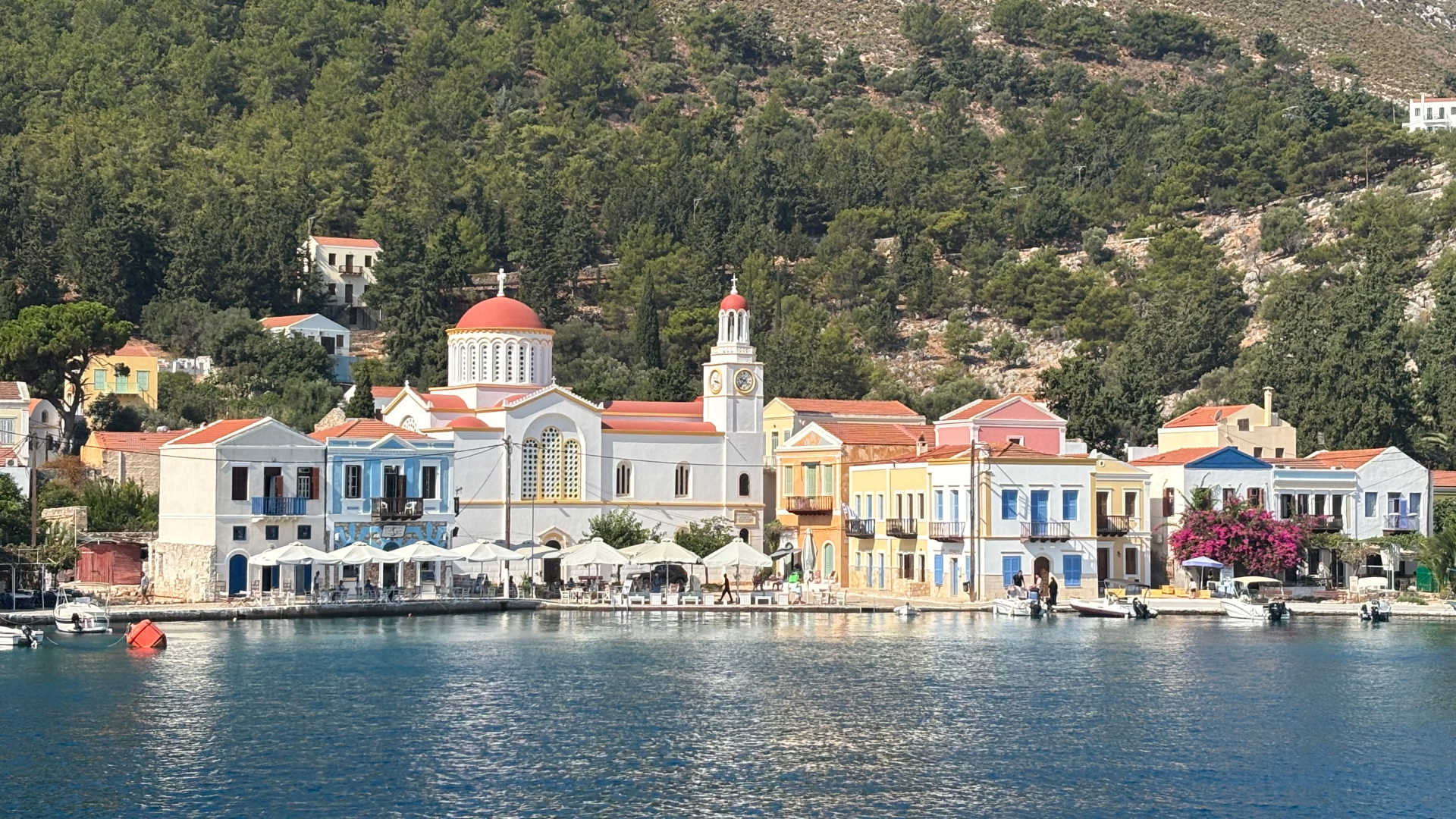
Far beyond the Aegean, set adrift in the Mediterranean, lies Kastellorizo, (Καστελλόριζο; in Turkish, Meis) — a small, solitary island. It is as distant from the Greek mainland and Rhodes as it is close to Anatolia. From the Turkish town of Kaş, it takes no more than ten minutes by ferry to cross the strait. Geography says Anatolia. Politics says Greece. History — by name, by spirit — whispers Italy.
It is a place easy to forget, wintering with scarcely five hundred souls, yet impossible to erase. For it is famous. Oscar-famous. Yes, that Oscar —the Academy Award. The prize was given to Mediterraneo, a film set and shot here, where Italian soldiers stranded during World War II slowly rediscover their humanity, stripped of weapons and softened by friendship, love, and the rhythms of the island.
Gabriele Salvatores’ 1991 masterpiece carries the melancholy beauty of peace born amid destruction, and in 1992, it won the Academy Award for Best Foreign Language Film. A small island, carrying a great history.
But we had not come for nostalgia. We came to swim. And above all, to eat.
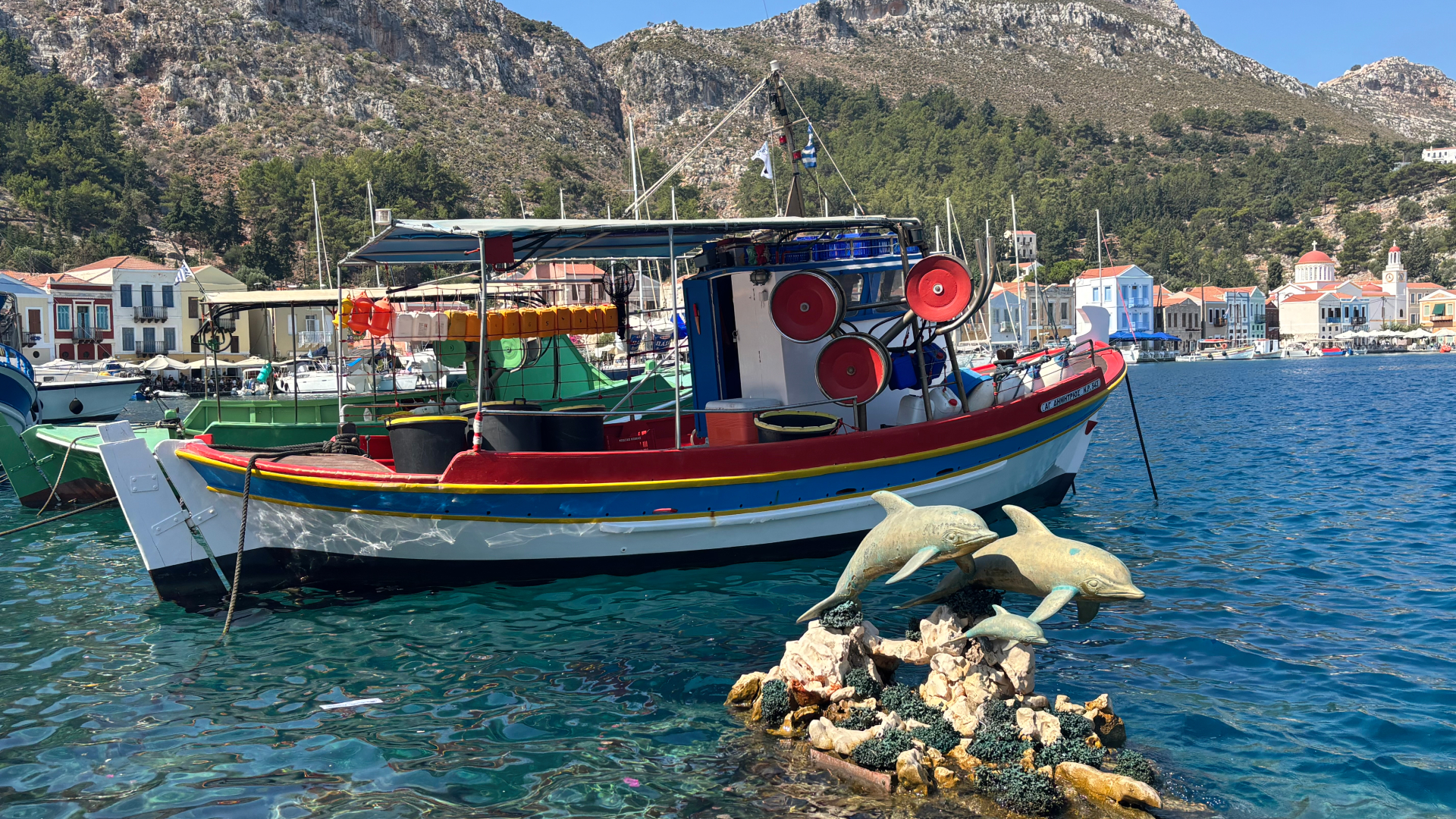
The ferry from Kaş docks at the island’s only real settlement. These clean, calm, and quiet streets immediately tell you you’ve arrived at a well-preserved, charming Greek island. If you follow the shoreline out to sea, you’ll reach the Red Castle, which gives the island its name and where Italian soldiers set up headquarters in the movie. From there you can see both the harbor and the bay behind it, Mandraki Beach — don’t miss it.
We chose to swim at Mandraki, the shallow beach where the soldiers landed in the film — eight men, two boats, and one donkey — though another option is Saint George Beach, where in the movie the villagers hid their weapons in a cave. They say the sea is nicer there, and at least you don’t have to walk 200 meters through water before you can start swimming!
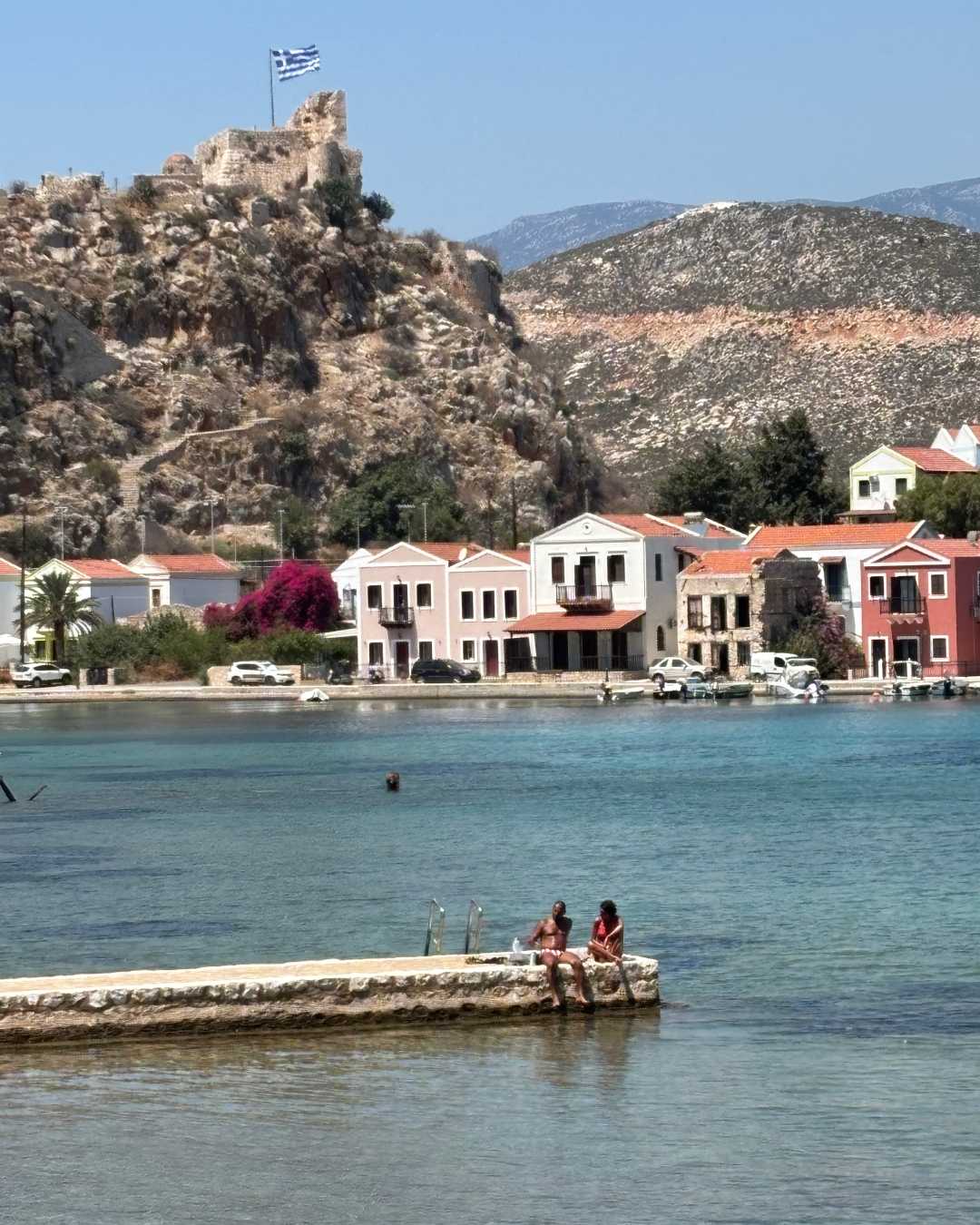
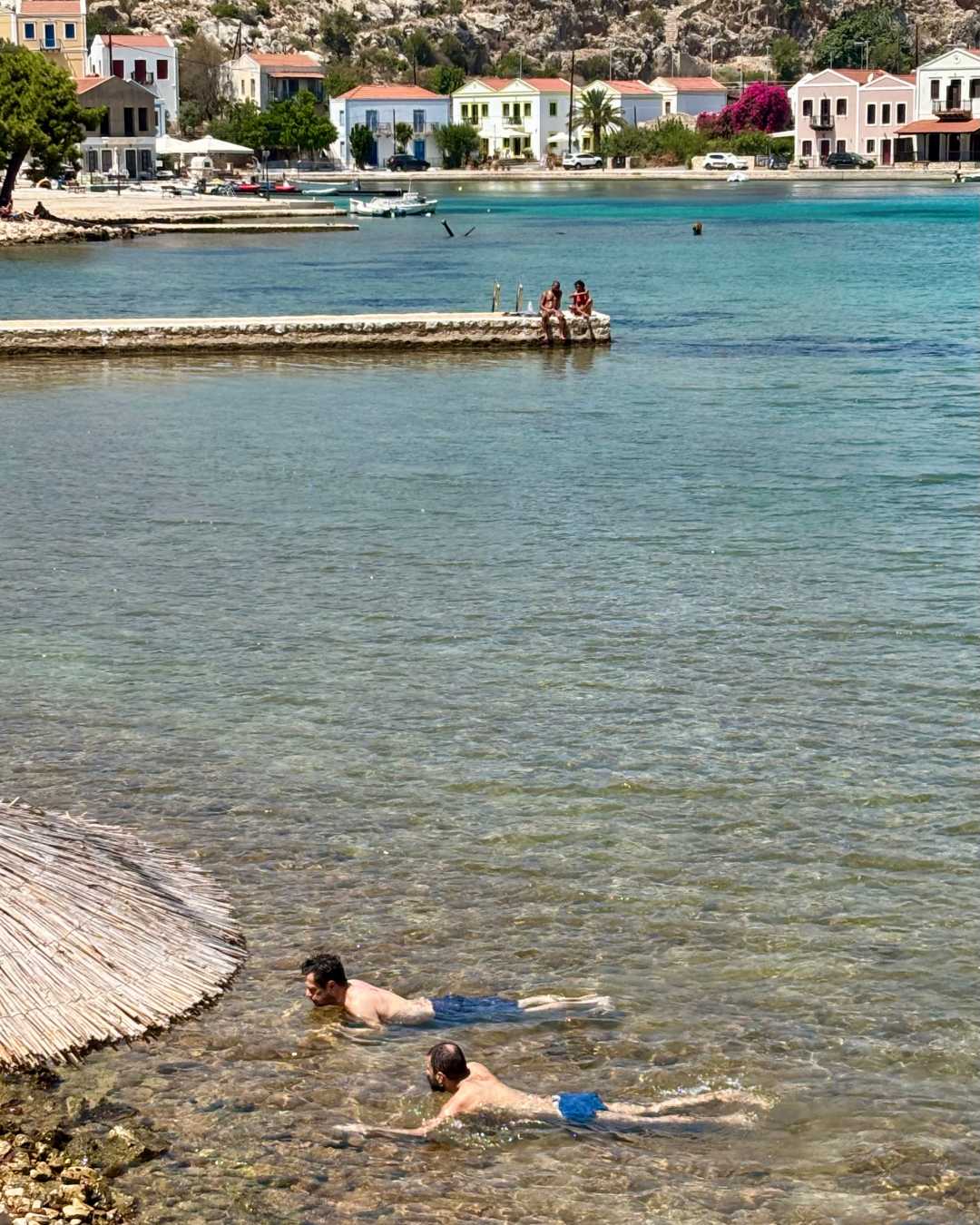
We chose Mandraki because from there you can climb back up the gentle hill toward the village square, and easily reach Santrape Saint George Church. Right beside it, under the trees, awaited our lunch spot: Ta Platania! The very place where the film’s knot — and its wedding — scene were shot.
For the last time in the film, they all danced, drank ouzo, and stood between returning or staying, reflecting on their lives and hopes: Ta Platania…
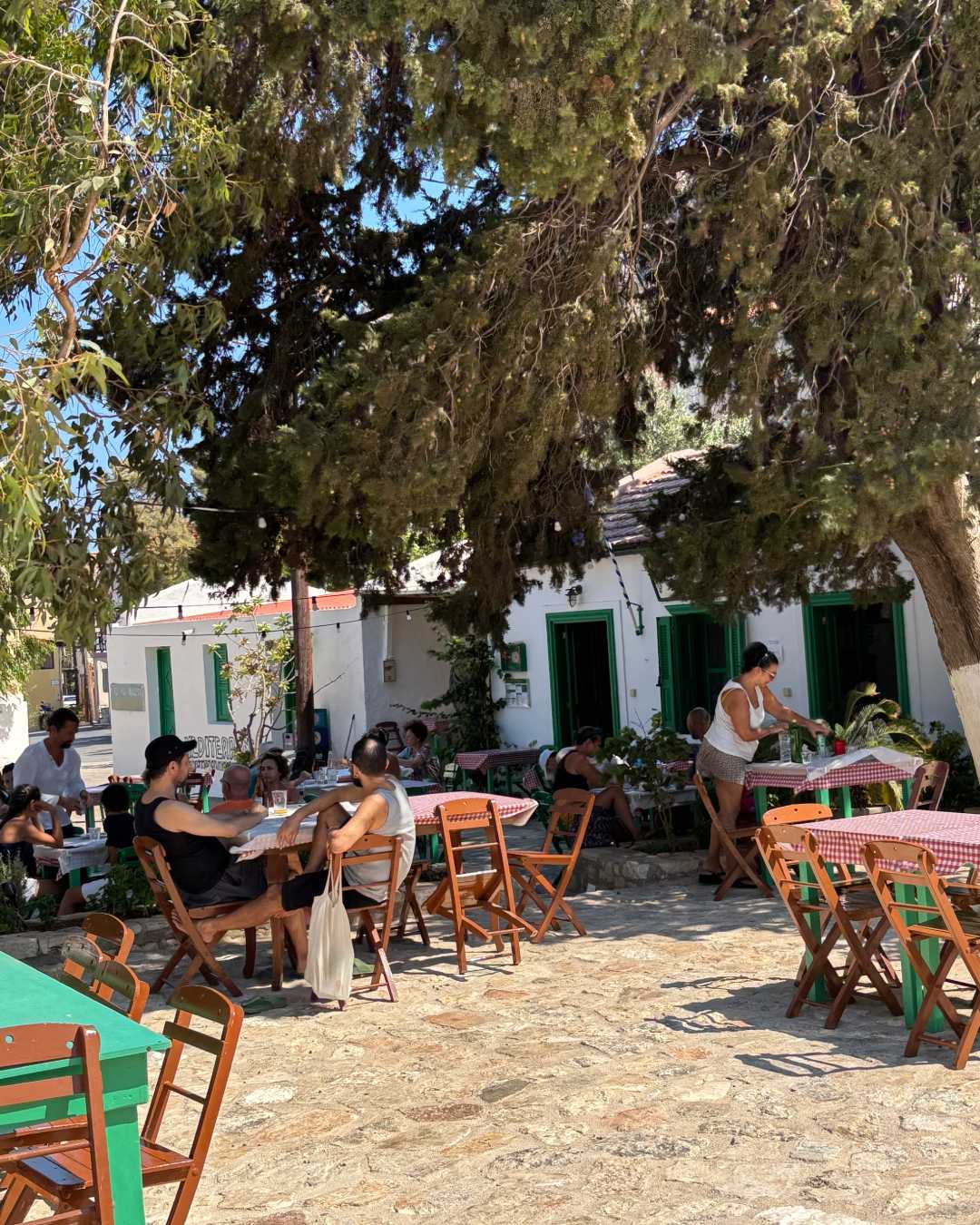
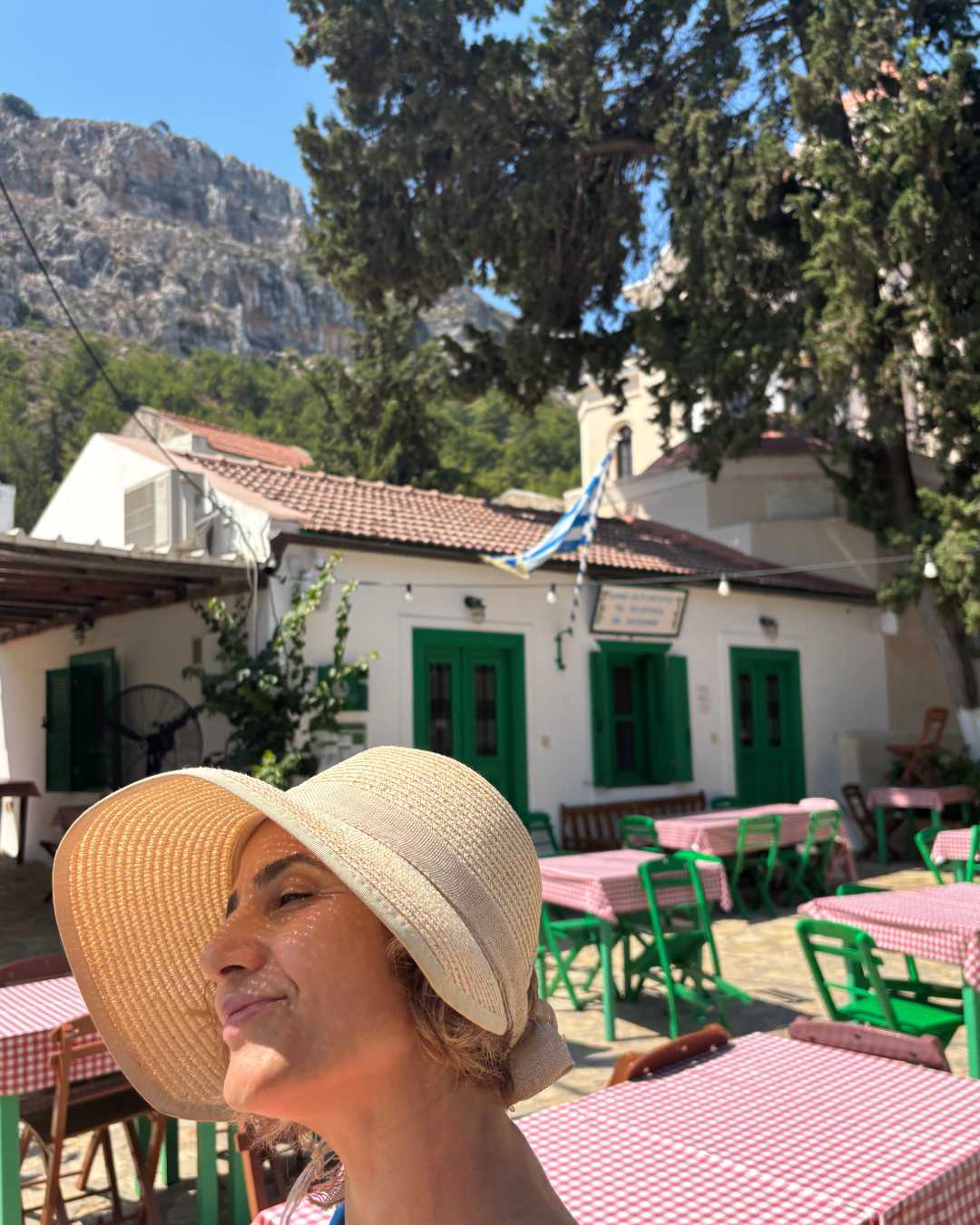
When you arrive at the square, you’ll know you’re in the right place from the tables under the trees. Don’t be late — we made it just in time to see the grandmothers preparing stuffed onions for lunch!
How rich can the cuisine of such a tiny island be? Rich enough.
Can unforgettable flavors be born in a place so often forgotten? They can. You’ve come to the right table.
Islands know how to live with scarcity. Years ago, I spoke with Emine Tahsin, who was not yet a professor of economics, a Cypriot herself, who convinced me that Thomas Malthus — the islander who gave voice to the law of diminishing returns —owed his insight to his island roots. Scarcity is an island’s teacher. Whether or not you believe in Malthus, the second island is England, which sparked the Industrial Revolution and built an empire. And the first island? To me, the greatest achievement belongs to Cuba — the last socialist island, resisting with dignity despite having no natural wealth. Proof that even the smallest, poorest island can feed all, if it chooses, and bring happiness instead of be great.
The kitchen of Kastellorizo is no exception. Its foundation is scarcity — but not only of fish or seafood. To be an islander is to belong to the land. Soil is more faithful than sea. Poseidon can starve you; the earth never will. The land feeds, roots, and shelters. Islanders learned to tame plants, to adapt them, to survive.
Consider the zucchini (Cucurbita pepo). Born in Mexico, carried through Ottoman lands and Italy, it found its greatest home on the rocky soils of the Aegean. Here it gave body to meals, added sweetness to scarcity, became the emblem of survival. The most famous zucchinis — Cretan, Samos, and the almost-black mavrokolokythi— all come from islands like Kastellorizo.
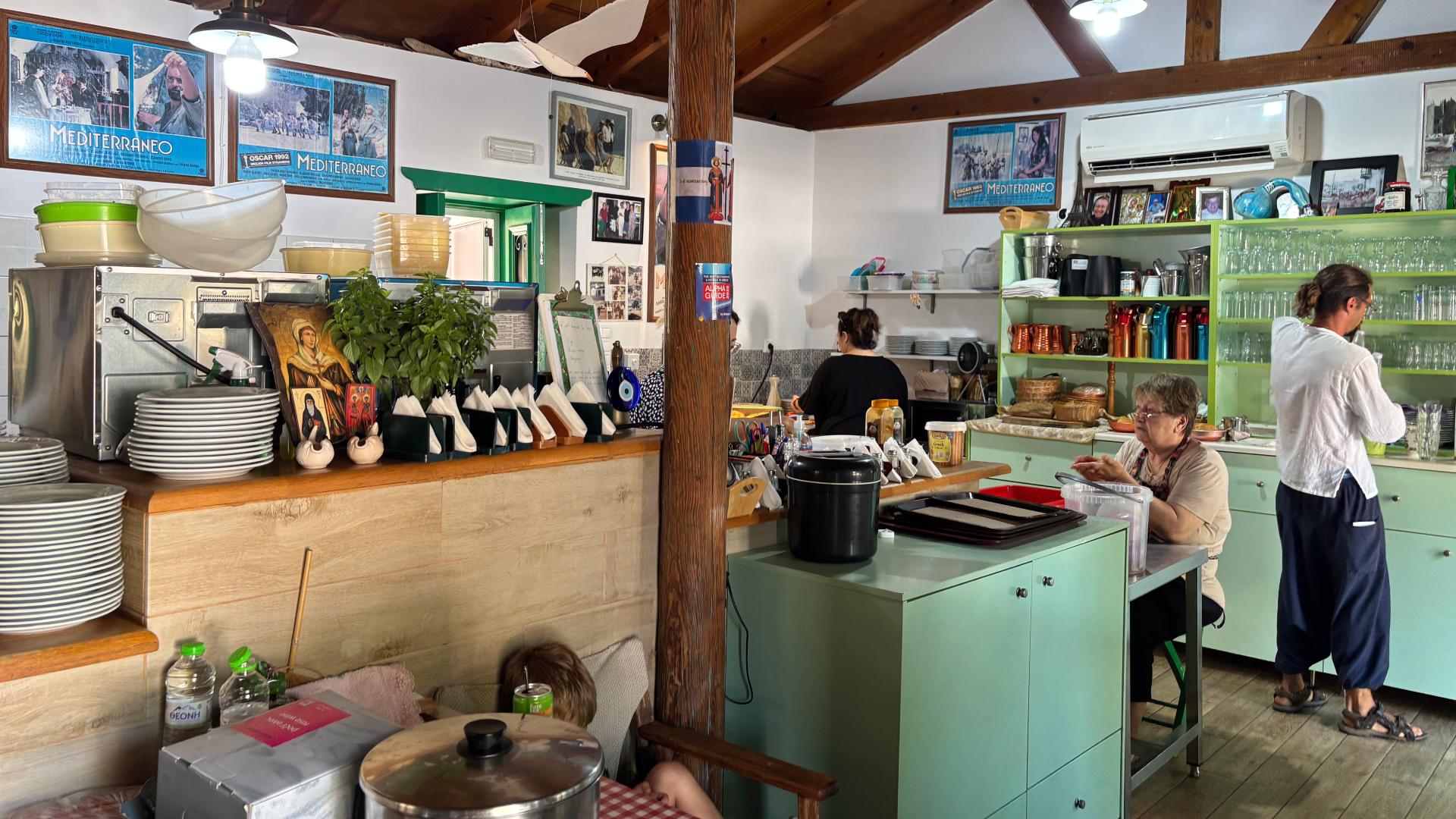
And so at Ta Platania, the grandmothers served us the island’s proudest dish: stuffed onions, added some dark zucchini to stuffing.
The vine leaves too were extraordinary — thick, yes, but softened with the tang of verjuice, some zucchini again. Dolma and sarma are always good. But here, they were unforgettable.
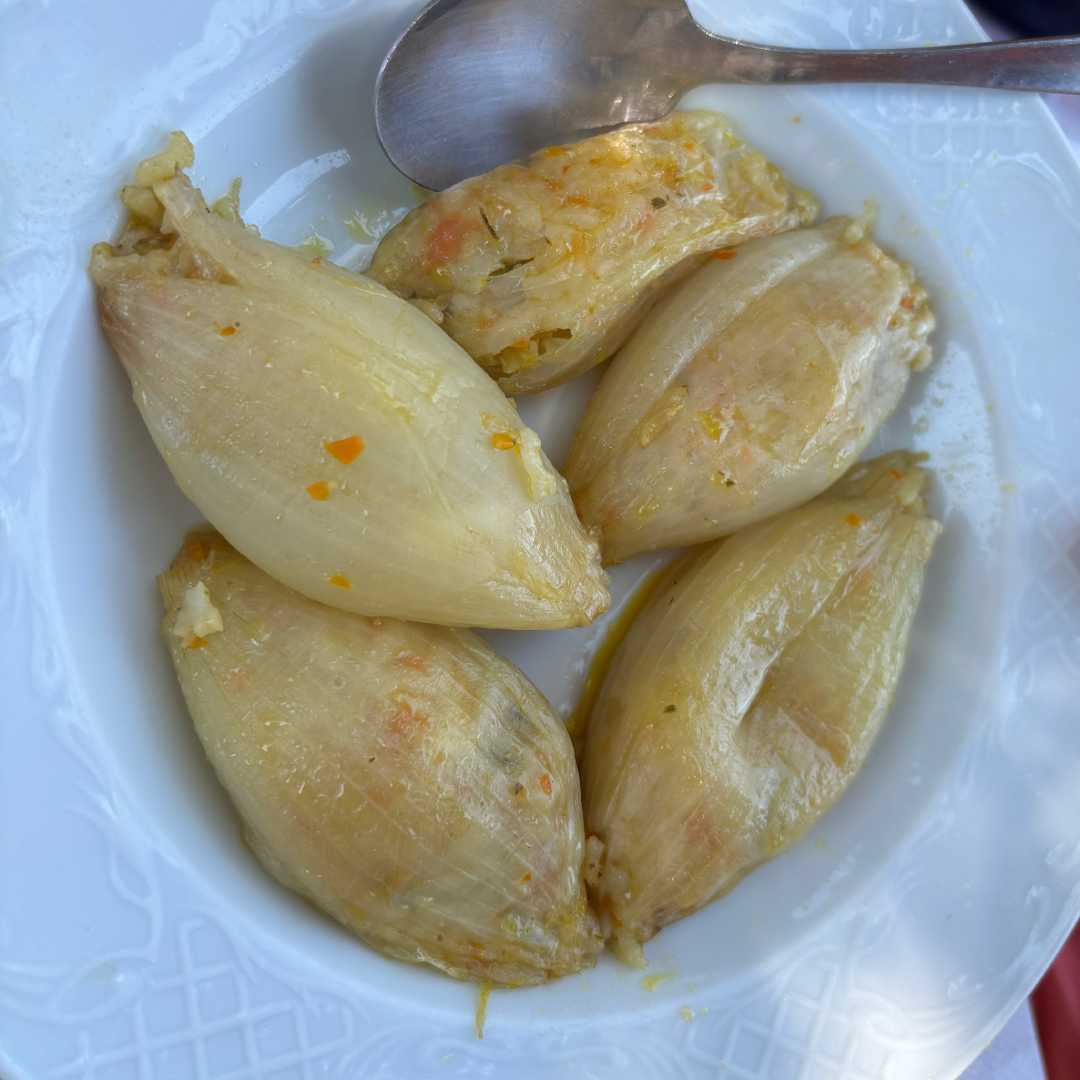
Stuffed Onions
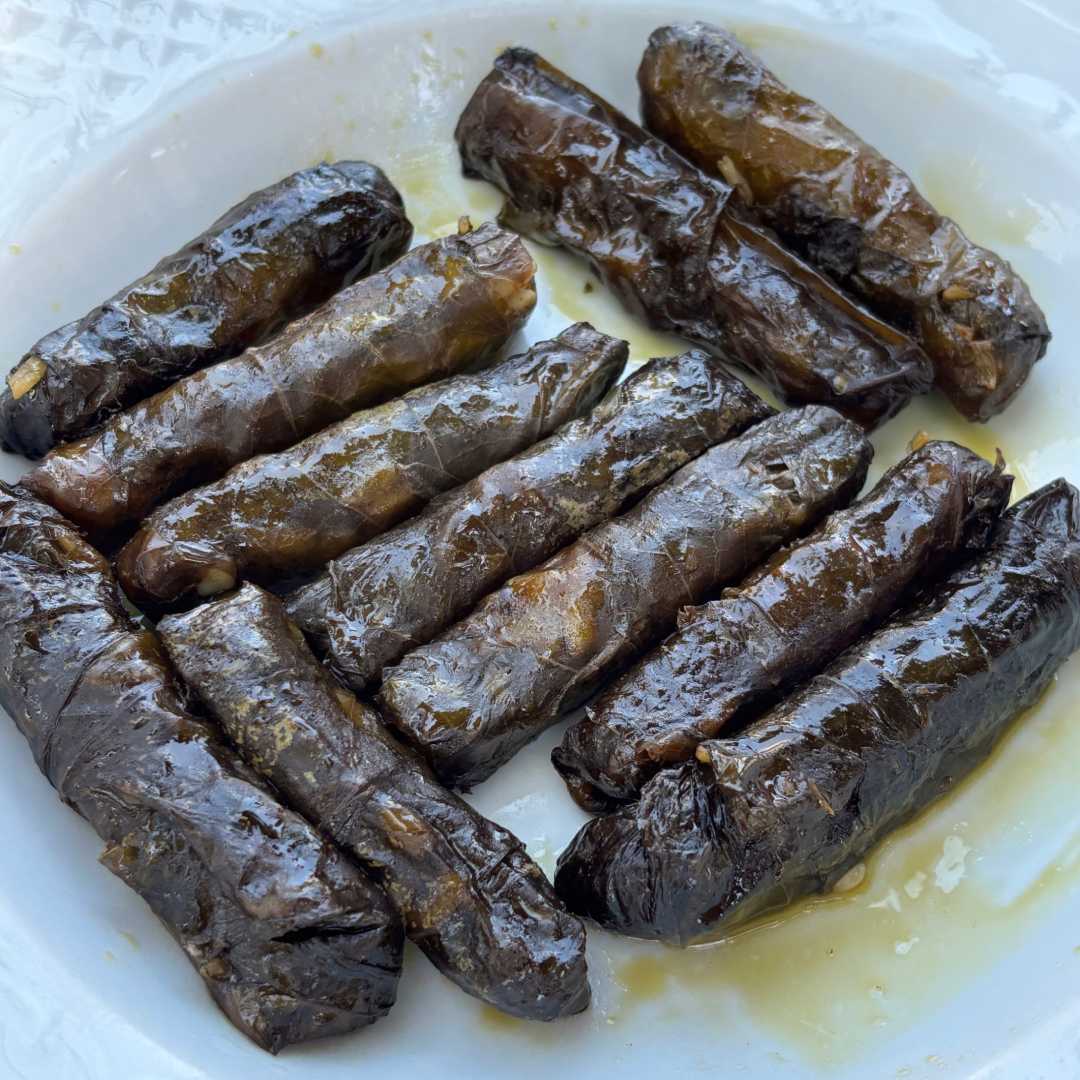
Vine Leaves
Saganaki, too often ordinary, revealed its greatness. The best fried cheese I have ever eaten.
And the roasted kid? Excellent, though outshone by its humble companion — the potatoes, so delicious they nearly eclipsed the goat itself.
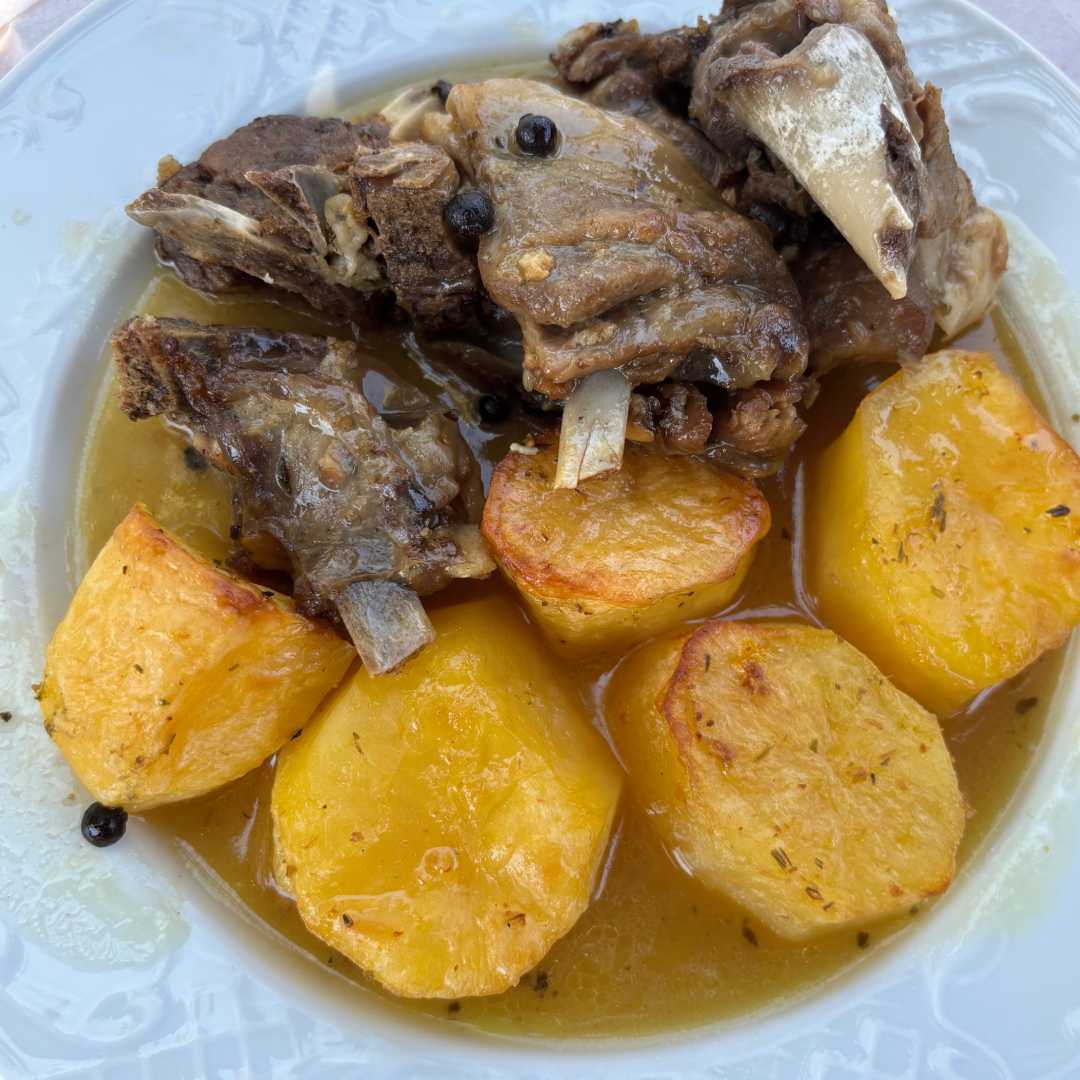
Roasted Kid
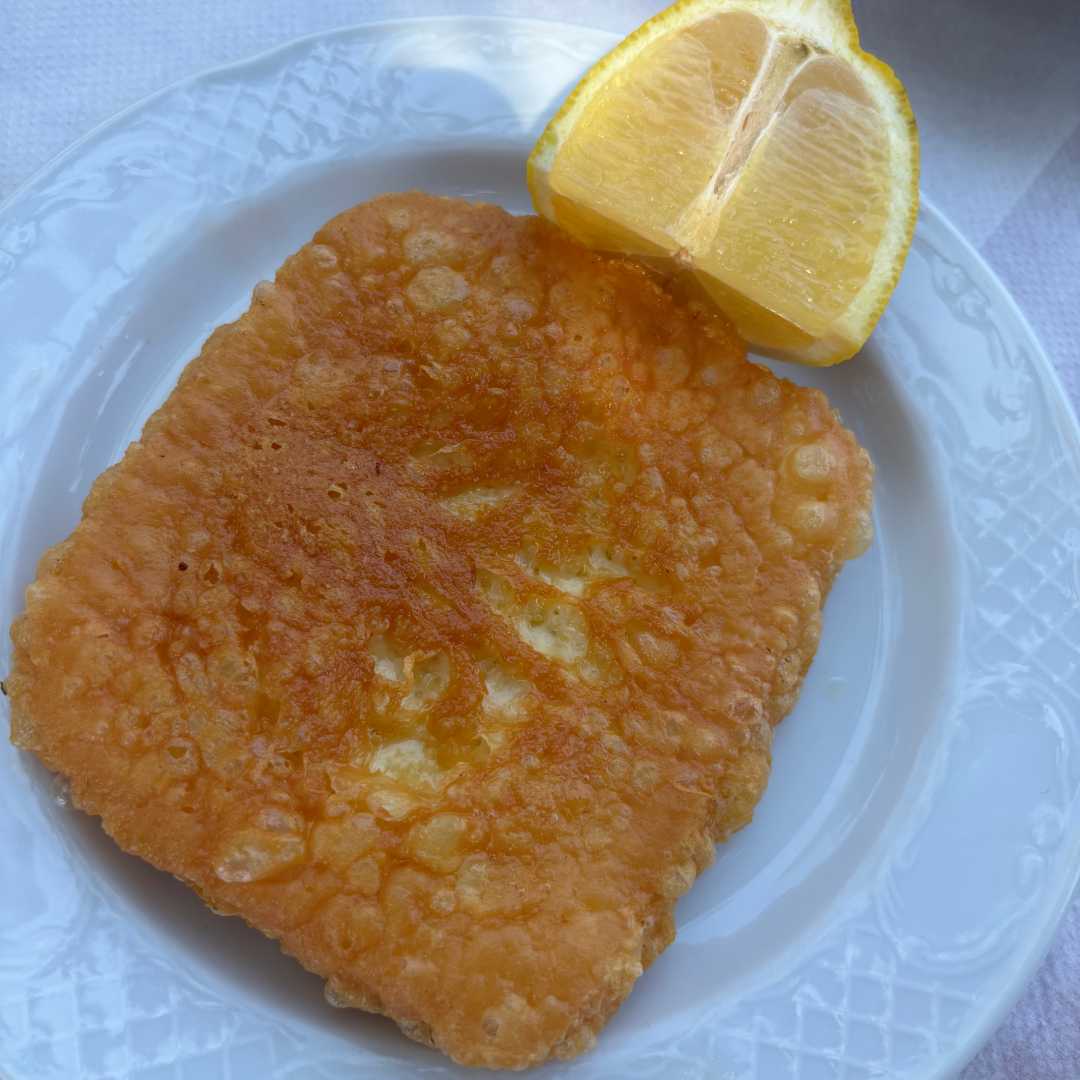
Saganaki
To the grandmothers in the kitchen, I send my blessings. May you live many, many years — like my own mother — feeding the world with memory, with patience, and with love.