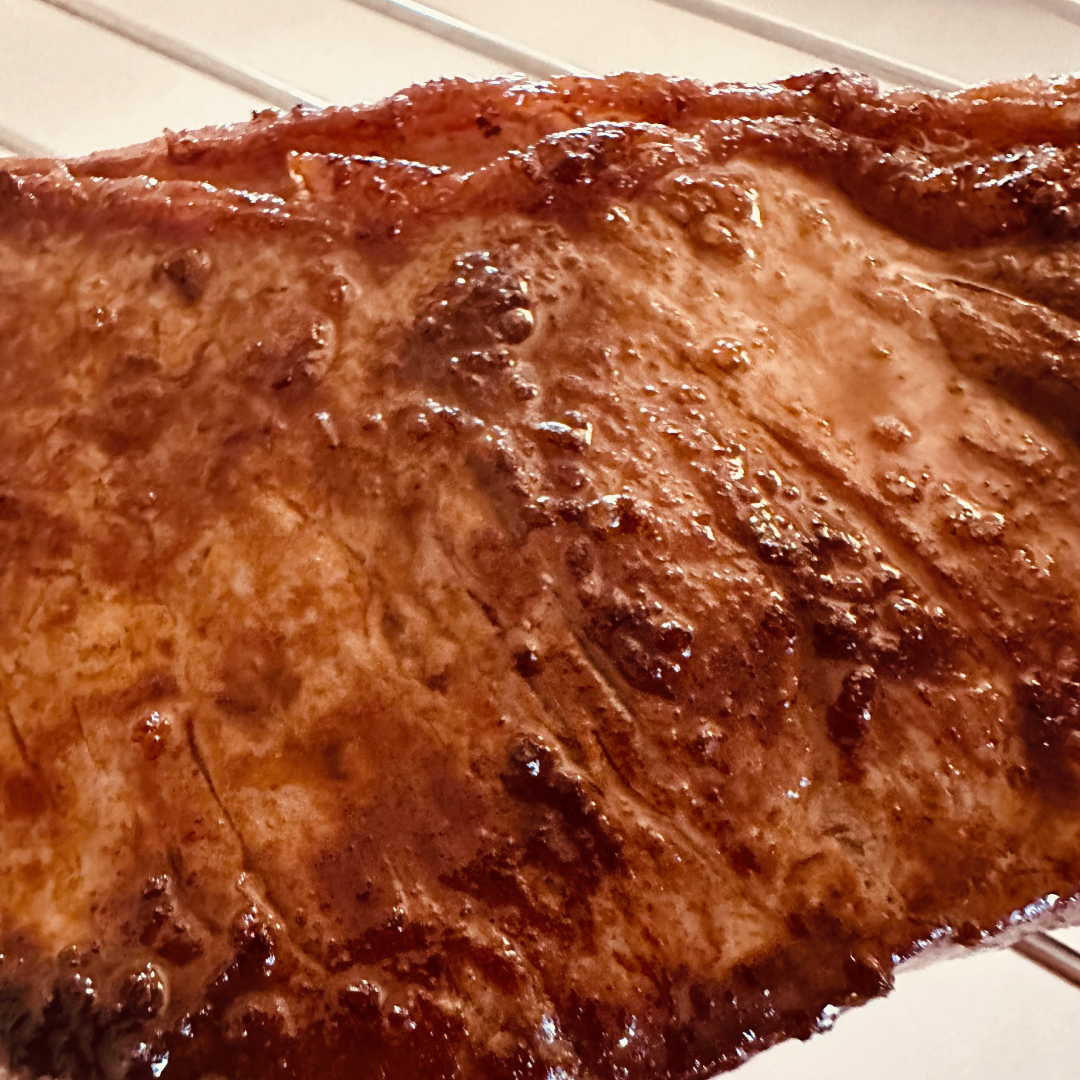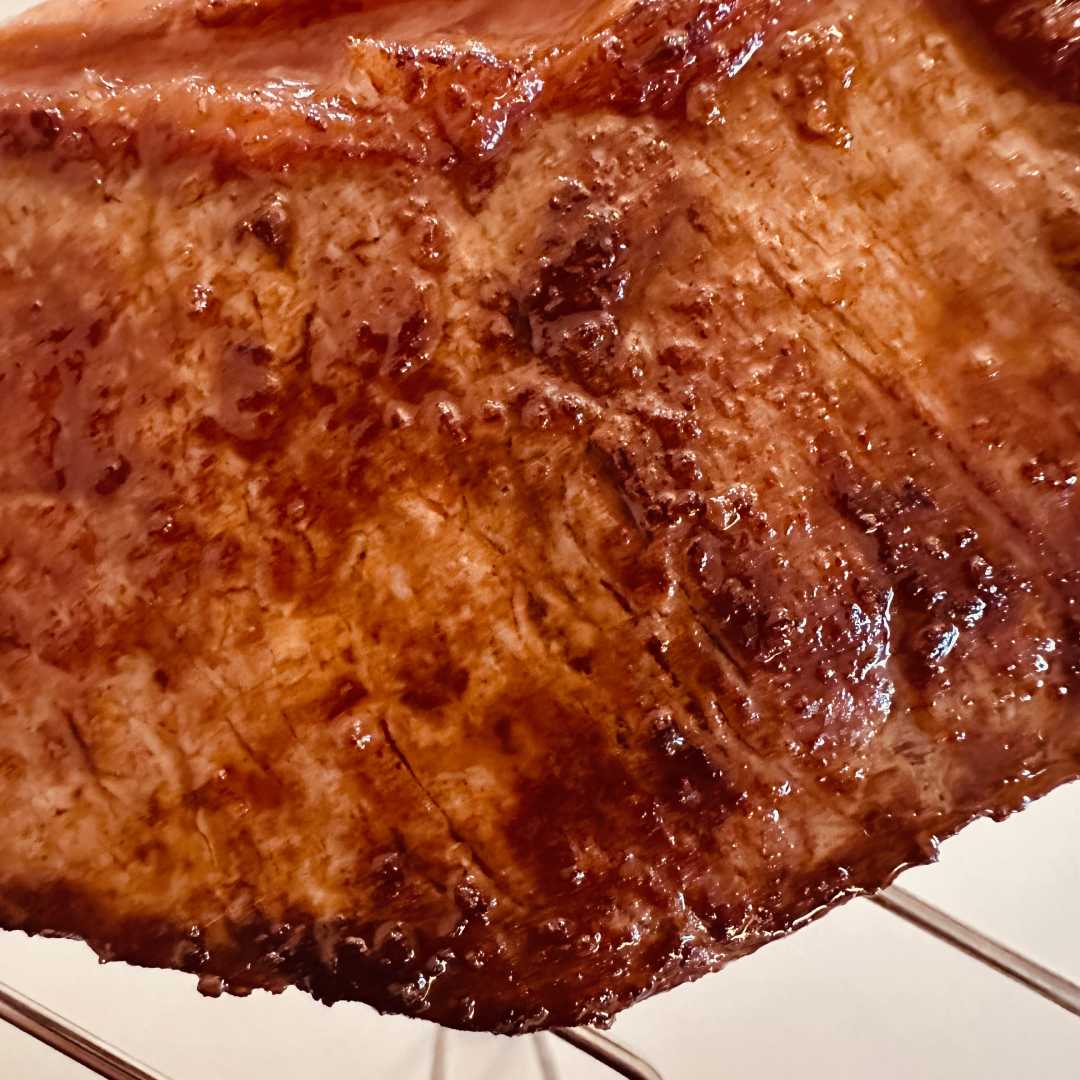


Meat Paradox
Before the stars began to shine, in a vast emptiness where time and space had yet to stir, a woman and a man dwelled. Behold, they were granted all that could be dreamed and all that had no name. Yet one thing was kept from them: the forbidden food, barred by sacred will. This sin was the fount of wisdom—a gift and a curse, granting knowledge of good and evil, the original sin that marks the soul of humankind.
That’s a beautiful, poetic story, although there was another one, not as beautiful as that one, which started in East Africa about two million years ago. The Earth had already come into being, and the stars had shone for countless years. Life was already thriving in countless species. There was a place, somewhere near modern- day Kenya, where the most significant turning point in history was about to begin. The place didn’t have candy floss mountains, angels playing harps around, honey rivers either chocolate rocks. It was wild as f**k. The game was brutal .Every single species was trying to survive. Our distant ancestors were among them. They were already walking on two feet, but still rather muppets, merely wandering about and eating leaves.
Finally ,evolution has chosen them. They were about to become omnivore. Somehow those guys committed first sin. The forbidden food has been discovered. First bite of bloody juicy meat!!! It was not just tasty and powerful, more importantly it was beginning of hundreds of thousands years brain evolution . Proteins from meat, absorbed by every human cell, nourished the mind and body, sparking cognitive and physical evolution beyond mere satiety. Human ancestors began to distinguish good and evil more clearly. They had gained more wisdom. Their brains had grown by almost 30% over 2 million years, and they became the scariest predator on the planet. That first bite, through thousands of years, caused humanity to seriously mess up the Earth’s natural equilibrium.
Evolution had already created its Neo’s. Against this two-million-year saga, there was a wise man. The philosopher Buddha embraced the principle of “Ahimsa”. Not killing animals, not eating meat, and not harming living beings are the physical dimension of Ahimsa. At the same time, Buddha caused one of the most remarkable paradoxes in human history. Buddha’s doctrine condemns the consumption of meat, yet without humanity’s dependence on it, evolution could not have attained the sophistication required to produce a Buddha. This unveils a profound paradox. Of course, I don’t dispute that a sharp mind can see going meat-free as a proper noble virtue.
Perhaps it is not a virtue, but rather a question of whether one can resist the pleasure derived from meat.Rejecting this pleasure requires strong willpower. The first system that comes into play here is Buddha’s teaching, which is based on belief. This was also seen in ancient Greece. Pythagoras and his followers stated that in order for reincarnation to progress in a healthy cycle, animals should not be killed, laying the foundations for modern vegetarianism. Historians have recorded this as the Pythagorean diet.
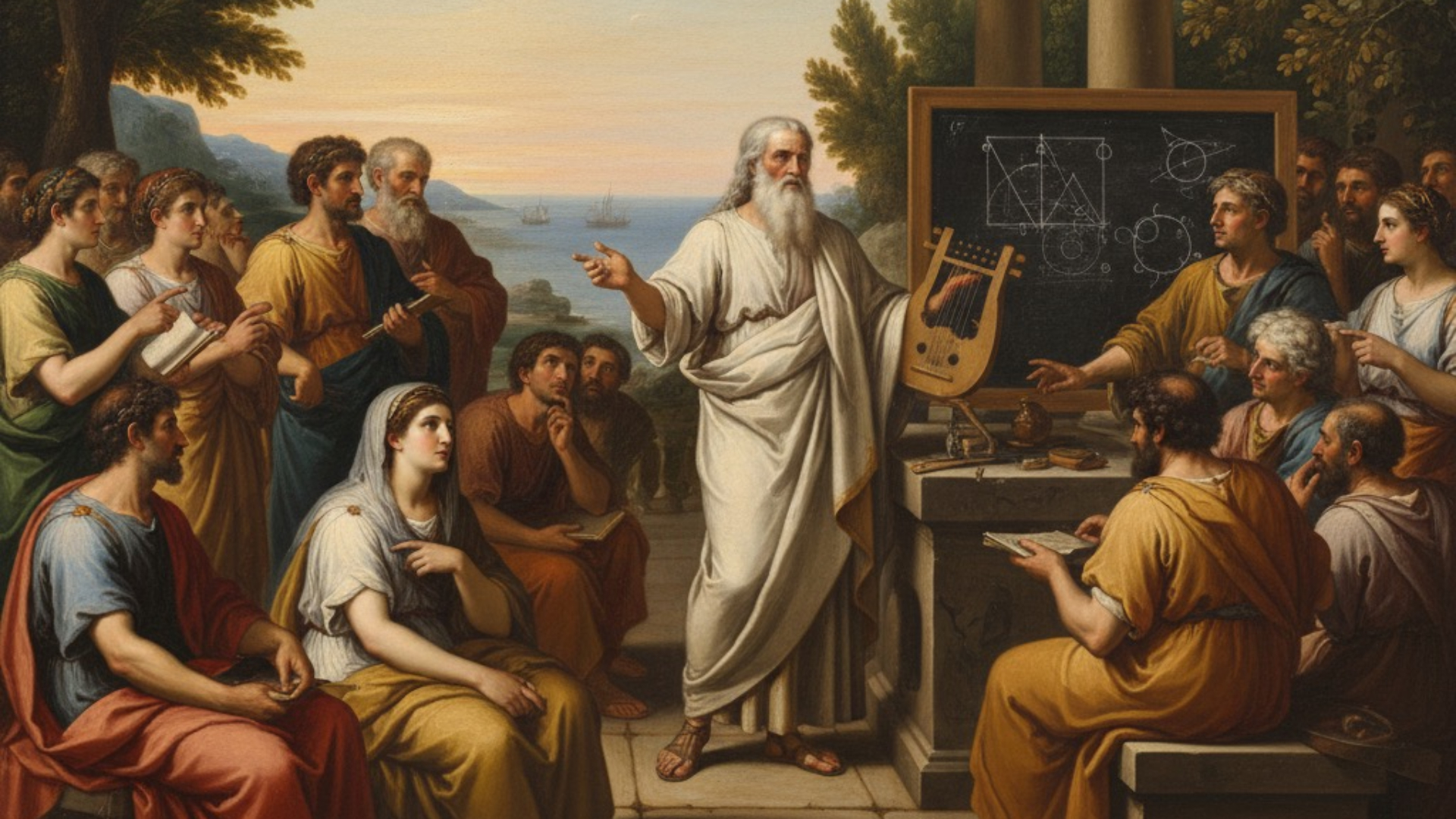
Pythagoras, Created by Ai
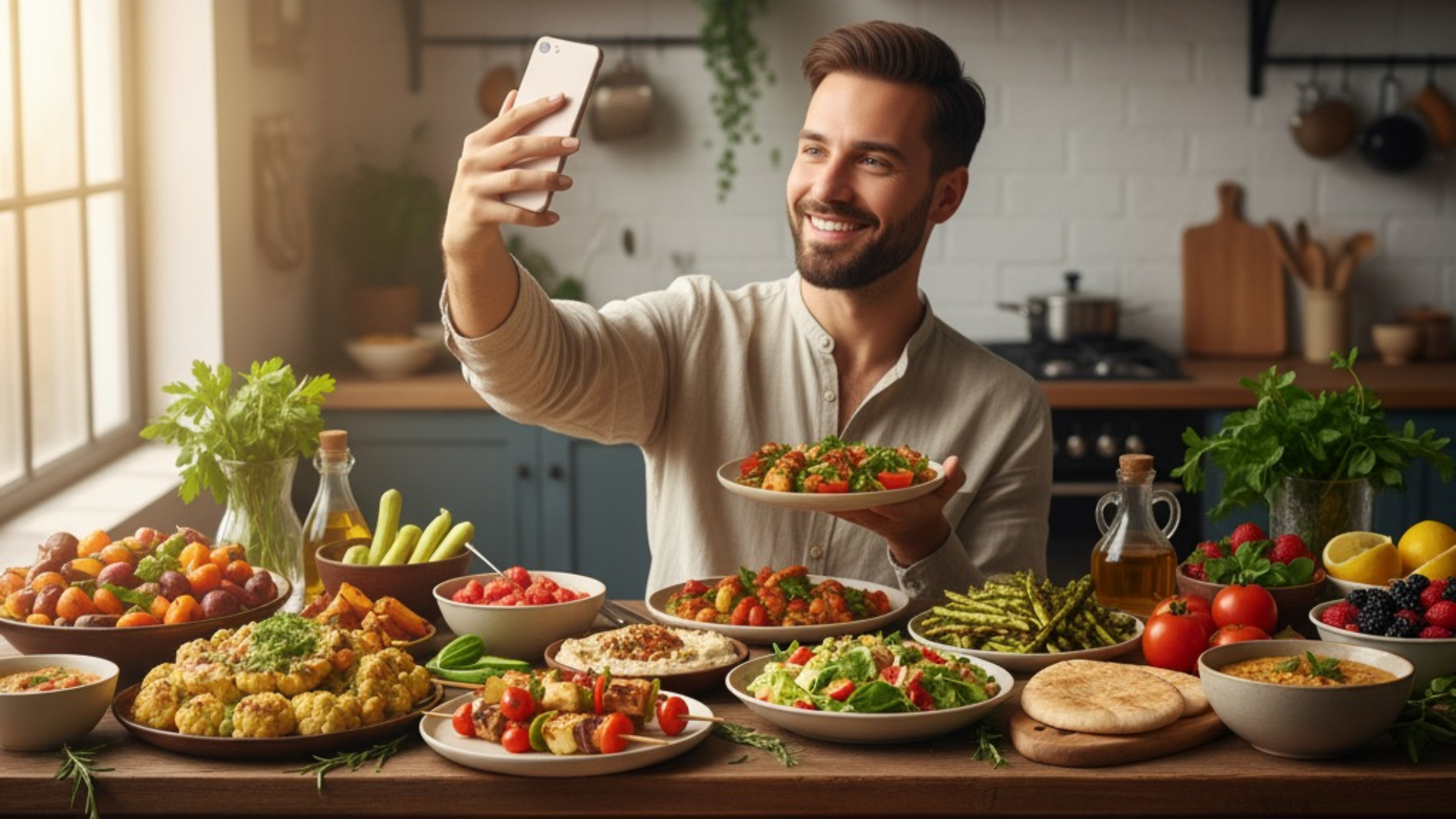
Of course, one does not need to follow any faith or philosophy to become vegetarian or vegan. People choose such diets for many reasons: to avoid being complicit in animal suffering, to follow a fashionable trend, to pursue “healthy eating,” or simply because their favourite” influencers” do so. Any such choice should be weighed carefully, not only against its supposed moral appeal but also against the real benefit — or harm — it brings to animals.
Milk and eggs are still consumed by many vegetarians. “That’s nice !”, and we like to think that no suffering is involved. Yet a cow living freely may live 15–20 years, whereas a dairy cow typically lives only 4–6 years. During this time, she often suffers from mastitis, is kept standing almost constantly to maximise milk production — causing chronic joint pain — and endures environmental monotony that keeps stress hormones permanently high.
The suffering endured by chickens is comparable to, and often worse than, that of cows. Calcium depletion and the harsh conditions of egg farms subject them to severe physical and psychological distress.
Undoubtedly, the gravest act is depriving a creature of its right to life. In Europe, the most common practice is to induce irreversible loss of consciousness, carried out swiftly: consciousness is shut down completely, and then the animal is slaughtered.
Although this may seem incredibly ruthless, our empathy lasts only as long as it takes to read these paragraphs. Eating is one of our most basic needs after breathing. It is hardwired into the brain.
Imagine you are going to a wonderful French restaurant for an important celebration. You leave work, thinking about which suit to wear, the exquisite French dishes you will eat, and the magnificent wines you will drink. On your way home to get change, you accidentally run over an animal. Let us say it is a young one, to make the scene more dramatic.
Normally, most people would take the injured animal to a veterinarian, no doubt. The real magic begins after that.
After leaving the vet, you go home to get changed and head to the restaurant. The waiter brings you an excellent Pinot Noir because you chose a very special dish for the celebration from the menu: “Tartare de coeur de veau”: raw veal heart. As extreme as it seems, a person who saved a young animal two hours earlier can, without guilt, enjoy a veal heart tartare with fine wine in a two-star restaurant. You are capable of doing this not because you are a psychopath, but because your brain has little tricks.
The remarkable human brain is an incredible mechanism that combines human cruelty, innocence, hypocrisy, and compassion into a perfect balance.
When we see a living animal suffer or die, the brain reacts much as it does when witnessing human pain. Regions such as the anterior insula and the anterior cingulate cortex light up — the same regions involved in empathy and emotional pain. But when we look at processed meat — a steak on a plate or a heart tartare — those centres of empathy no longer respond. The brain no longer links the meal to the living creature. It registers only “food”, “pleasure”, not “someone suffering”.
This is the essence of what is known as the meat paradox: most people genuinely care about animals and do not want them to suffer, yet they delight in eating meat. The brain resolves this conflict by separating “animal” from “meat”, allowing people to enjoy their meal without being haunted by guilt. A convenient psychological trick. Perhaps it is not the human heart but the human brain that cannot resist meat.
And because we love meat, we find ourselves searching for flaws in vegans, as though to justify our own indulgence. Are they truly so angelic while we can be so devilish? Photosynthetic organisms, appearing 3.5 billion years ago, predate nearly all life on Earth. Somehow, we’ve likely harmed them too, though how remains unclear.
Anyone familiar with Cosmos will know Dr. Neil deGrasse Tyson, the brilliant host of StarTalk, a show where pop culture meets scientific debate. In one episode, Tyson shared a wild idea: imagine a highly advanced, plant-based civilisation — sentient flora with technology beyond our comprehension — landing on Earth, furious at our mistreatment of their kind.
They would be livid at our felling of trees, picking of fruit, cultivation of micro-greens, and boiling of vegetables without a second thought. As bonkers as it sounds, Tyson suggested it was both plausible and profoundly improbable — an ethical puzzle worthy of consideration. Neil unleashed the cosmic cauliflower invasion —now, the question is, how would it all end?
Pythagoras, with his defiant vegetarian principles, would have been the last person capable of saving us—his commitment to sparing animals faltering against foes who champion plants. Instead, I would nominate Dr. Hannibal Lecter, humanity’s envoy and our most unlikely savior. Lecter represents the primal hunter within us, stripped of illusion or moral hesitation. He does not empathize; he calculates. He does not moralize; he survives. Where Pythagoras would plead for mercy, Lecter would coolly remind the invaders that humanity is not a race of saints but of predators who have always shaped the world by tooth, fire, and cunning.
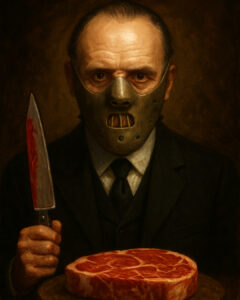
Dr. Hannibal Lecter, Created by Ai
His devotion to meat is not simple appetite but ritual — an art form that transforms survival into ceremony. Hannibal’s strength lies precisely in his refusal to romanticize life. His nihilism becomes a weapon: nothing is sacred, nothing is safe, and therefore everything is negotiable. In this light, the plant invaders would see humanity as something they can work with — dangerous, yes, but manageable under the guidance of someone who understands the game of survival better than anyone.
Survival, in the end, is a brutal feast, and Hannibal Lecter is the chef who serves it.
Yet, not all humans embrace this predatory feast — some rebel against it, choosing to reject meat entirely. Refusing to eat meat is not just a dietary choice but an act of rebellion. Sparked around 3,000 years ago by Pythagoras, this defiance gained formal recognition in England, where vegetarianism entered the literature in 1847, marking its official rise. Yet, this once-radical stance has been tamed by capitalism, its revolutionary edge dulled into a marketable trend.
The sales of vegetarian and vegan products have risen from nearly 20 billion dollars to almost 70 billion dollars over the last 25 years. The number of restaurants in the service sector has also increased from a few thousand to 80,000. Every supermarket sells vegan products, and companies pour money into them.
Meat producers now pump out vegan goods, using profits from slaughtered animals to build plant-based factories — what a brilliantly twisted system. Social media is packed with influencers preaching veganism while scarfing down 1 kg tomahawk steaks in secret. Restaurants push “ethical” vegan menus. Billboards show off plant-based burgers next to butcher shops, blurring the lines for profit. Animals still suffer because capitalism doesn’t care if you’re vegan or a meat lover; it’s all money. Veganism began as a stand against animal cruelty, yet it often feeds the very system it fights — a sad drift from the dreams of figures like Buddha, where ideals evolve like people, shaped by eating and social habits, reminding us that craving meat is natural too, and the key is avoiding judgment on either side.
We are left to wonder if killing for taste is really a moral question, or simply a truth we have already accepted. The beauty of meat — in its flavour and perfect texture — makes the quiet, deliberate process that brings it to the plate seem, in its own dark way, worth it.
Beef is among the top three most consumed meats globally, and gastronomically, it is arguably the most important. Its dominance in cuisine comes from muscle structure, ability to dry age, manageable pathogen risks, fat marbling, and its central place in French gastronomy. The greatest source of gelatine for sauces comes from cattle collagen and connective tissue; large muscles require long cooking to extract dense gelatine, which subtly enriches sauces — even many French fish sauces rely on veal stock for this. Salmonella in chicken and Trichinella in pork are well known, making steak the safest choice to serve rare or medium- rare. From a chef’s perspective, beef anatomy is an art: umami peaks higher than in other meats due to specific amino acids and nucleotides. Offal offers over 80 cuts, each with its own flavour and texture, justifying the animal’s death. Each cut requires proper treatment—tenderloin, low in collagen, dries out with slow cooking, while brisket’s dense collagen transforms into gelatine, trapping moisture and enhancing taste.
Fat, muscle fibres, and collagen vary between breeds, such as Angus and Wagyu. You may have heard of the famous $1,000-per-kilo Kobe beef. Wagyu and Kobe are sometimes confused; “Wa” means Japanese and “gyu” means cow. Wagyu is a Japanese breed with a slightly different fat distribution, spreading like small rivers through the meat.
Their feeding is more costly and highly specific. Kobe beef comes from Tajima-gyu cattle raised in Japan’s Hyōgo region and must meet strict standards to earn certification. Its fine marbling gives it exceptional tenderness and a rich, buttery umami flavour. Fewer than 5,000 certified carcasses are produced each year, making it the best beef in the world. The most disciplined chefs in the world are Japanese, and this care shows in their cooking, with those preparing these special meats holding the title Yakiniku Shokunin.
When it comes to cooking a piece of steak, books on meat are among the most written-about topics in culinary literature. YouTube channels, TV shows, and social media accounts provide thousands of resources. I am nothing compared to those who have spent years mastering just grilling steaks. What is uniquely mine are my own experiences, or rather, my mistakes. Cooking meat is purely physics and chemistry, with every step corresponding to physical and chemical processes. To cook the perfect steak, you need perfect meat, which is 50% of the task. You must have a good, reliable butcher. Without seeking any unnecessary adventure with Wagyu or other premium breeds, it is perfectly fine to get Angus at a reasonable price. Angus, a Scottish breed, has well-marbled fat and excellent flavour, and a reliable piece will do the job perfectly.
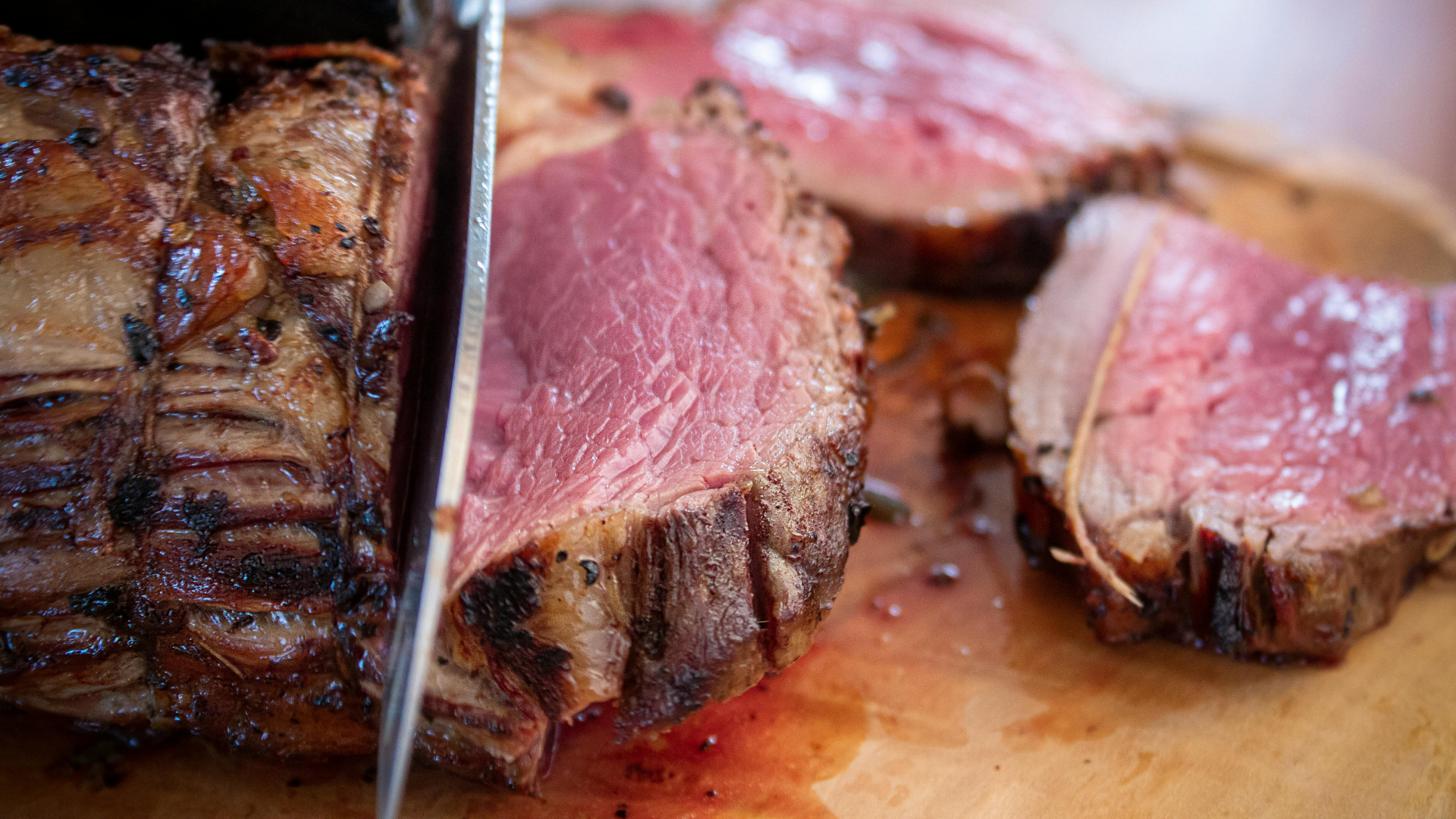
Among prime cuts without bones, three widely available options stand out: tenderloin, sirloin, and rib-eye. Tenderloin is low in collagen, has the thinnest muscle fibres, is the most expensive prime cut, and the easiest to cook at home. Its neutral taste makes it ideal for sophisticated dishes for fine dining. In the mid 2000s, when i was young chef, heavily influenced by French cuisine, it appeared frequently on menus with various purées, vegetable garnishes, and rich sauces. Nowadays, the Turkish “lokum” dish spoils my those beautiful memories: fillet mignon not properly cooked, sliced, and boiled with half a kilo of butter—an absolute disaster for me as a chef. And let’s not even mention the silly cherry tomatoes! Escoffier’s Le Guide Culinaire (1903) mentions basting meat with butter in a pan. This technique has been refined over the years: first caramelise the meat, then continuously baste with butter — similar to having soup with spoon, but in reverse and faster — while adding fresh herbs and garlic on top of the meat. It requires practice and should ideally be taught in person, which explains why adaptations like the Turkish “lokum” dish often go hilariously wrong. That said, culinary pleasure is deeply personal. What fails for me may delight someone else, and eating is both necessity and pleasure. As professionals, we can only guide, not judge.
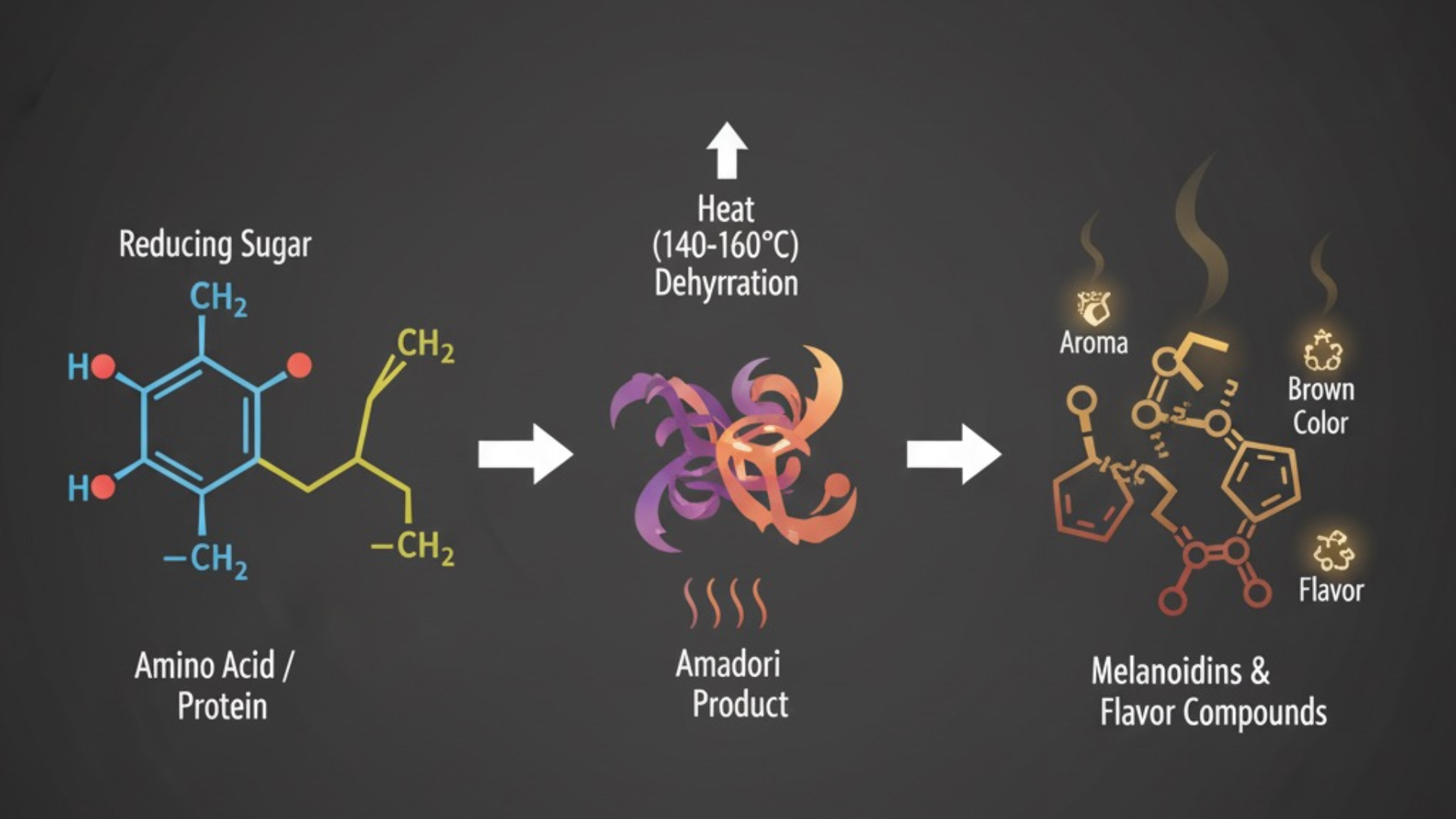
Maillard Reaction (Reducing Sugar + Amino Acid + Heat = Complex Mixture (Flavour, Aroma, Color))
The famous Porterhouse combines tenderloin and sirloin, separated by a bone. Above the tenderloin is the sirloin. In the United States, sirloin is often called the New York strip. The top has thick fat, marbling is minimal, and the muscle fibres are thicker than those of the tenderloin but very flavourful. Trust in your butcher is crucial for such cuts. Sirloin suits all cooking methods. One of my favourite steaks is the third option — rib-eye, with its beautifully marbled fat. I would cook it on a charcoal grill to bring out its full smoking flavour, allowing the marbled fat to melt and infuse the meat with a rich, juicy taste.
I will be cooking sirloin, which I find to be the most suitable cut for home cooking, combining technique, flavour, and value in the most balanced way.
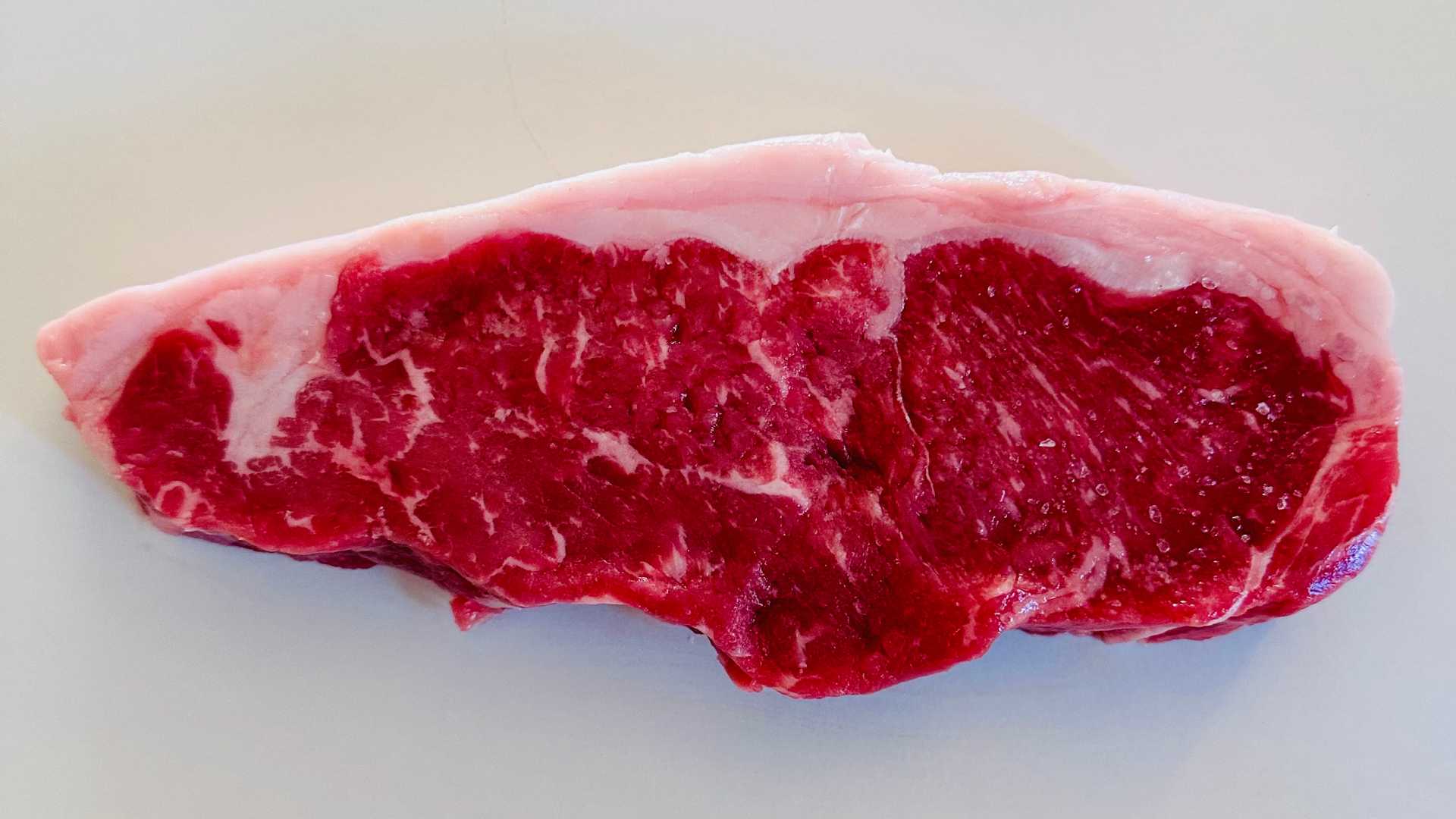
Sirloin
Perfect Steak
Ingredients:
- 350–400 g Angus sirloin, 4–5 cm thick
- Sunflower oil
- Fine salt
We’ve already solved 50% of the job by getting a good cut of meat. The next 25% comes from resting the meat properly. Resting the meat before and after cooking is just as important as the cooking itself. After spending time in the fridge, meat produces a significant amount of condensation once taken out. Depending on its fat content, a cut of meat is roughly 70% water. When brought to room temperature, the water inside redistributes evenly back to its original state, leading to less liquid loss during cooking. Cold meat has tense muscles; relaxed muscles help it cook more evenly. The myoglobin — often mistaken for blood — reacts more aggressively when cold. A sudden heat shock causes excessive liquid loss. Simply by letting the meat rest, we’re already getting close to the final stages of a great steak.
- Now we need a good pan. Never use the same pans you make omelettes in for cooking meat. For a beautiful steak, a thick-bottomed stainless steel pan is the best choice. Season your meat generously with salt and let it sit at room temperature for over 30 minutes. The salt will be absorbed, the proteins will begin to break down,
and the flavour will be enhanced. One of my favourite quotes from the legendary chef Ferran Adrià is, “salt is the only product that changes cuisine”. And he’s right — with just a pinch, salt can completely transform a dish.
- Turn your stove to full heat. Whether gas, hob, or electric, think of a heat scale from 1 to 10, and never go below 7. Oil your steak generously. Sunflower oil is neutral in flavour and has a higher smoke point than olive oil, which is ideal for very high temperatures. Heat your pan until it is really hot — just until smoke starts to rise.
- Gently place the meat in the pan. Using your fingers, press it down lightly without moving it. When the meat first meets the heat, it will try to curl away— press it gently. The goal is to achieve the perfect Maillard reaction: that golden-brown crust on the outside of the meat. Heat is your best friend — or your worst enemy. You need it just right to get that Maillard magic. Too low, and you’ve got grey hospital food. Too high, and you’ve got charcoal with a pulse. Ride the line carefully: that’s where flavour lives.
- 0–2 min
Start at heat level 10 and do not move the meat — let the crust form. After at least 1.5 minutes, lower the heat to 7. Just before the 2-minute mark, raise it back to 10. This keeps the pan hot enough for a beautiful sear. Use the meat to scrape up the fond before flipping.
- 2–4 min
Cook the second side exactly the same way. If the pan looks dry, add a splash of oil — but always at high heat, never at low.
- 4–5 min
Now sear the fat cap. Hold the steak upright with tongs and let the fat render gently. Do not press too hard — that squeezes out precious juices. Keep adjusting heat between 7 and 9; every flip requires high heat again, as any cool surface touching the pan will drop its temperature.
- 5–6.5 min
Time to drive the heat into the centre of the steak. Alternate between heat levels 9 and 7: start at 9, drop to 7 after one minute, then back to 9 before flipping again. Shorten the intervals slightly to build internal temperature evenly.
- 6.5–8 min
Final stage — heat stays between 7 and 9. Lightly touch the steak with your fingers — really gently. At this point, it should feel close to rare. Those popular “finger tests” (thumb and index finger trick, etc.) can be a starting point, but they’re not universal. Every animal, every cut has its own texture — a rib-eye will feel softer than a sirloin at the same doneness, and a grass-fed cow might feel firmer than grain-fed. The only way to get it right is to practise, to touch steaks at each stage and commit that sensation to memory. Use a thermometer sparingly — ideally just to double-check yourself — and aim for a core temperature of 40 – 42°C when removing it from the pan. Over time, your fingertips will become your most reliable tool.
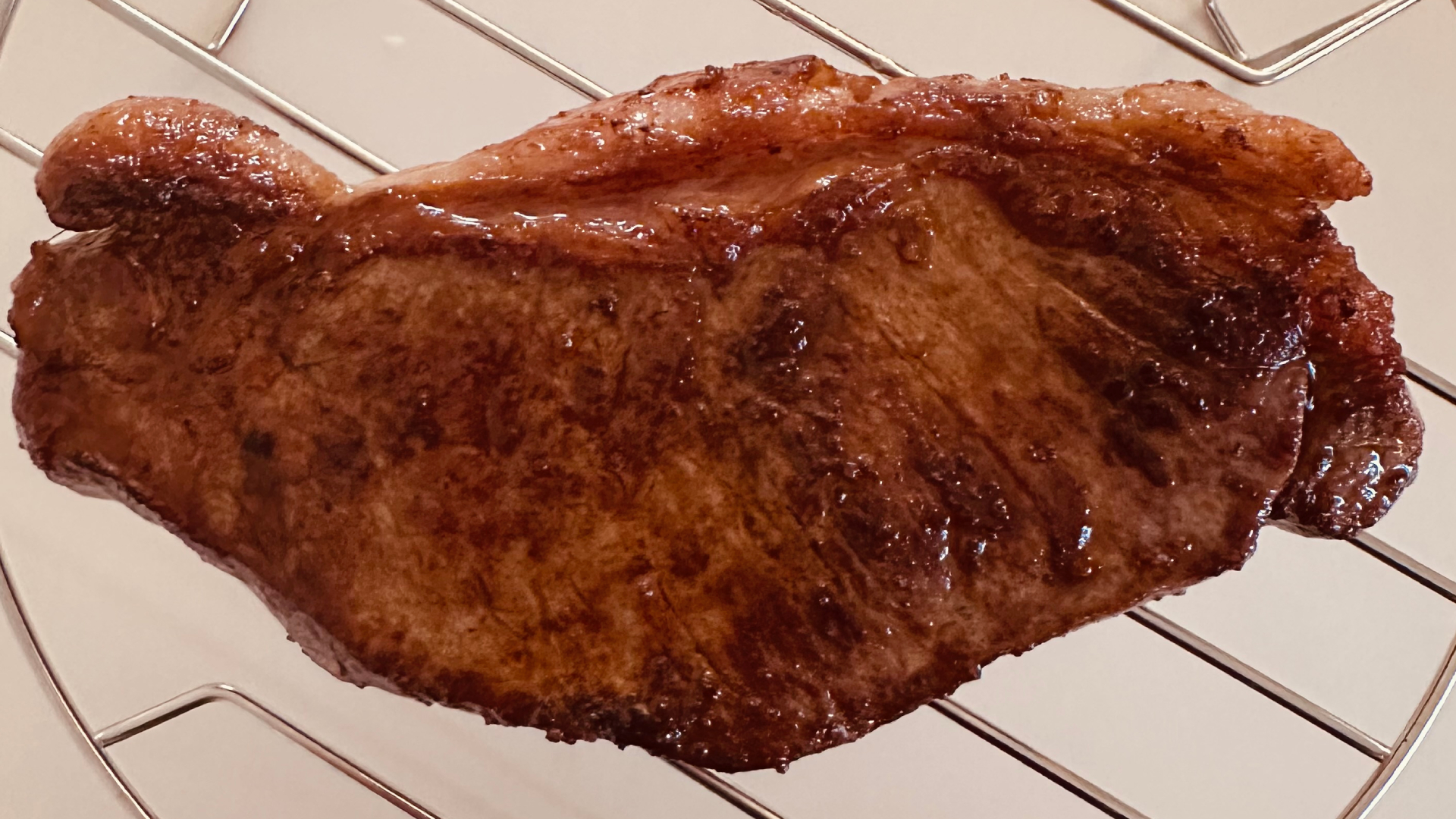
Resting after cooking is even more important than resting before cooking. Rush this step and you could easily ruin everything you’ve done so far.
Here’s why: intense heat causes the muscle fibres to contract, trapping the juices under enormous pressure. Cut the steak too soon and they’ll gush out in seconds. By letting the steak rest, the fibres slowly relax, allowing the juices to redistribute evenly. In a well-rested steak, internal pressure can drop by 70–80%, and the result is far juicier and more flavourful.
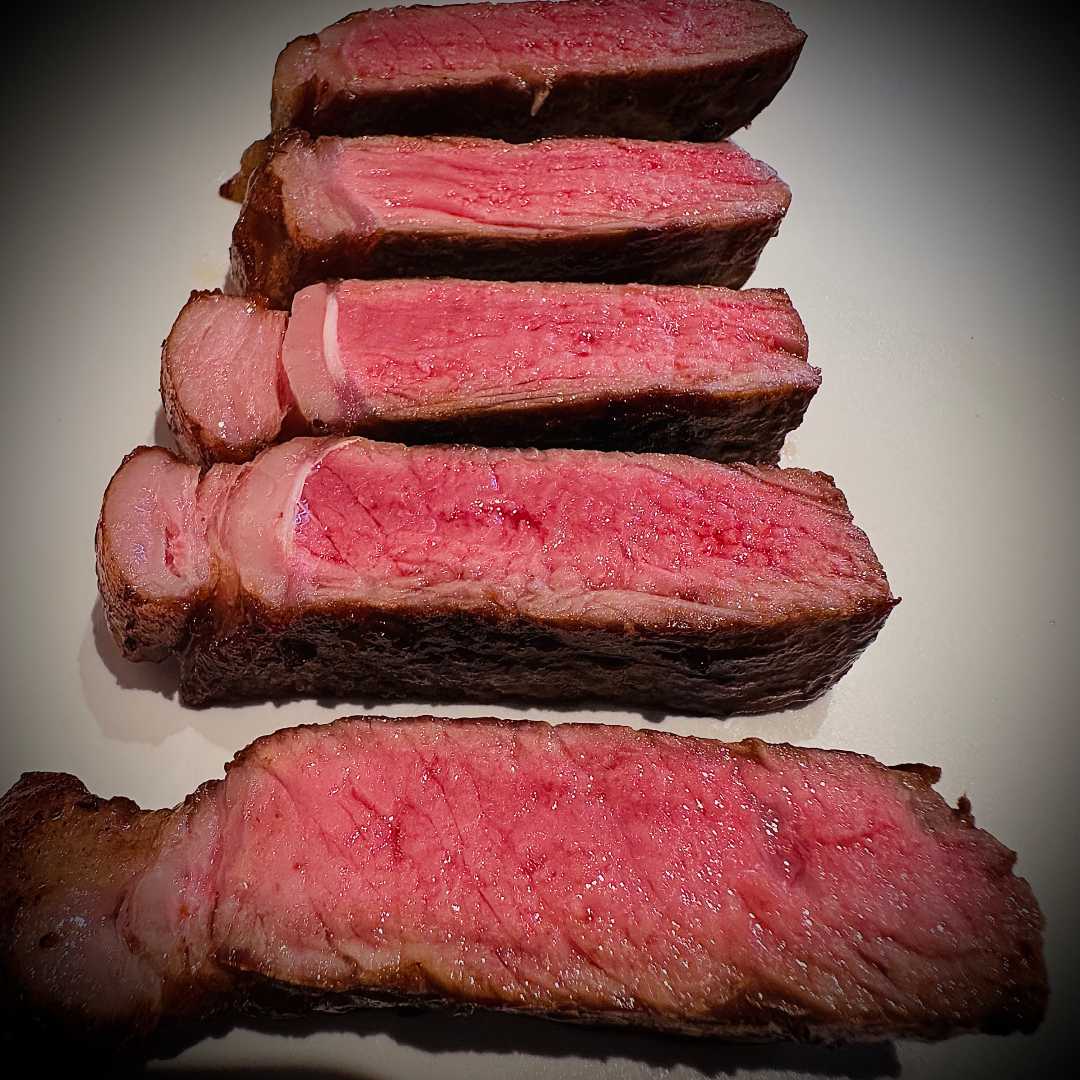
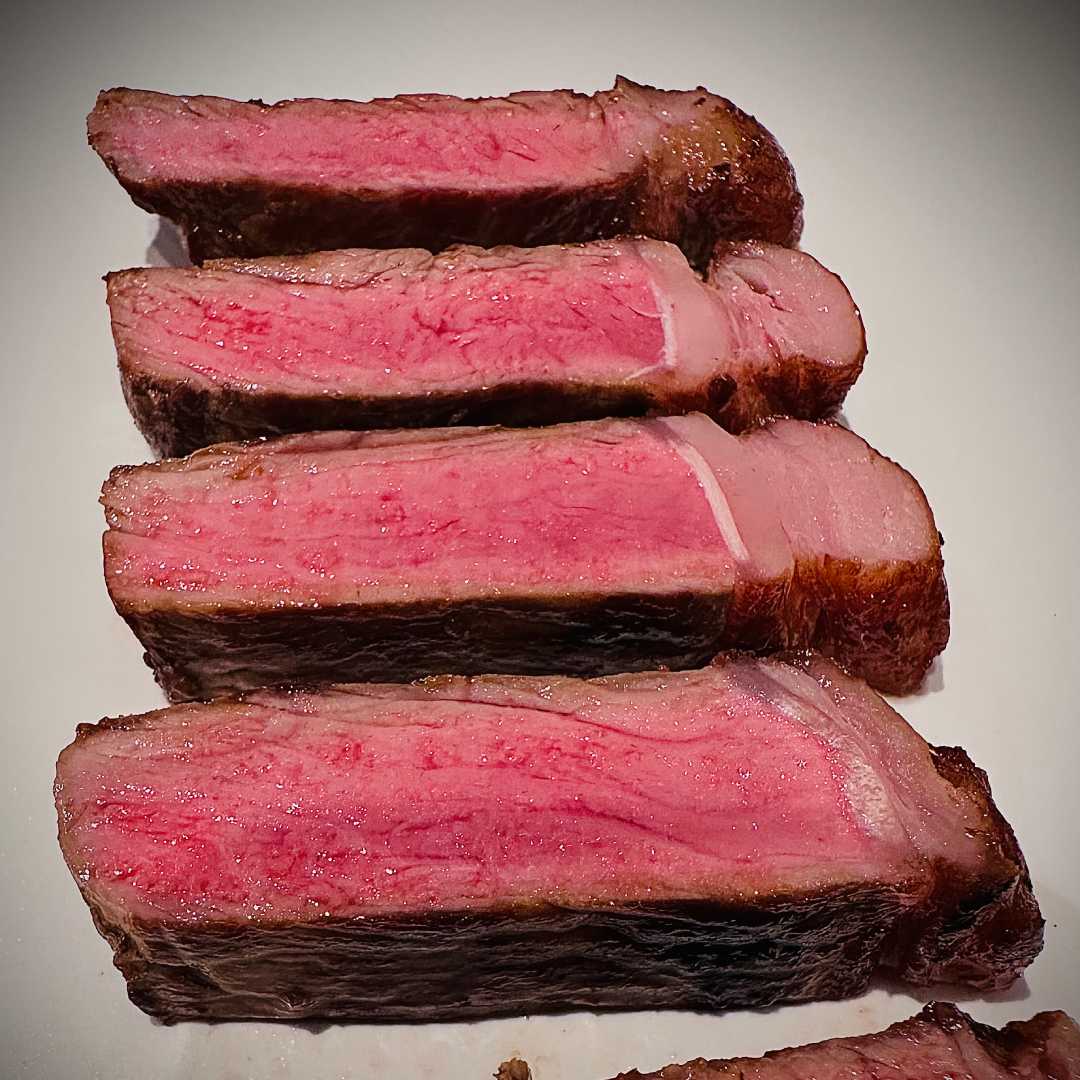
Here’s an old-school chef’s tip: cover the steak with the paper that wrapped the butter — the slightly waxy kind — and rest it on a rack, somewhere worm so any excess liquid can drip away. Whatever you do, let it rest for at least 10 minutes. During that time, the internal temperature will rise by 6–7°C. If you’ve hit 48–50°C, you’ve nailed a perfect medium rare. For more doneness, pop it in the oven, flipping every minute:
– Medium: around 2 minutes more.
With sirloin, though, going past medium is almost a crime against the cut — better to choose a different piece of meat.
A medium-rare sirloin, triple-cooked chips and homemade mayonnaise, quality ketchup (Mutti, my personal choice), and a cold beer — simple, perfect, and utterly satisfying. Take your time with it: the meat tender and juicy, the chips golden and crisp, the mayonnaise rich and silky. Let each bite linger, let the flavours mingle, and let the beer refresh your palate between mouthfuls. This isn’t just eating — it’s a small celebration of the table, a moment to enjoy fully, without rush or distraction. At the end of the day, the meal is most rewarding when every step, from the butcher’s care to the cooking, honours the meat and treats it with respect.
Afiyet olsun
İlker Altay