


Green, Salty, and a Little Spicy
In a modest bar on a narrow street in post-war San Sebastián, something quietly radical was born: not a poem, not a painting, but a pintxo—a small skewer of olive, anchovy, and pickled green pepper. Simple, briny, and sharp, it became known as the Gilda. But behind this unassuming bite lies a story of cinema, seduction, rebellion, and resistance.
It is 1946. Spain is under the iron grip of General Francisco Franco’s dictatorship. The Civil War has ended, but the wounds are fresh, and the state’s morality is suffocating. Women are expected to be obedient, modest, invisible. Culture is censored, and even the flicker of sensuality is suspect.
Meanwhile, across the Atlantic, Hollywood releases Gilda, a film noir set in Buenos Aires, starring the incandescent Rita Hayworth. In a scene that will become legend, she stands beneath a spotlight, sings “Put the Blame on Mame,” and—scandalously— removes a glove. That’s it. One glove. But to Franco’s Spain, it was practically a revolution.
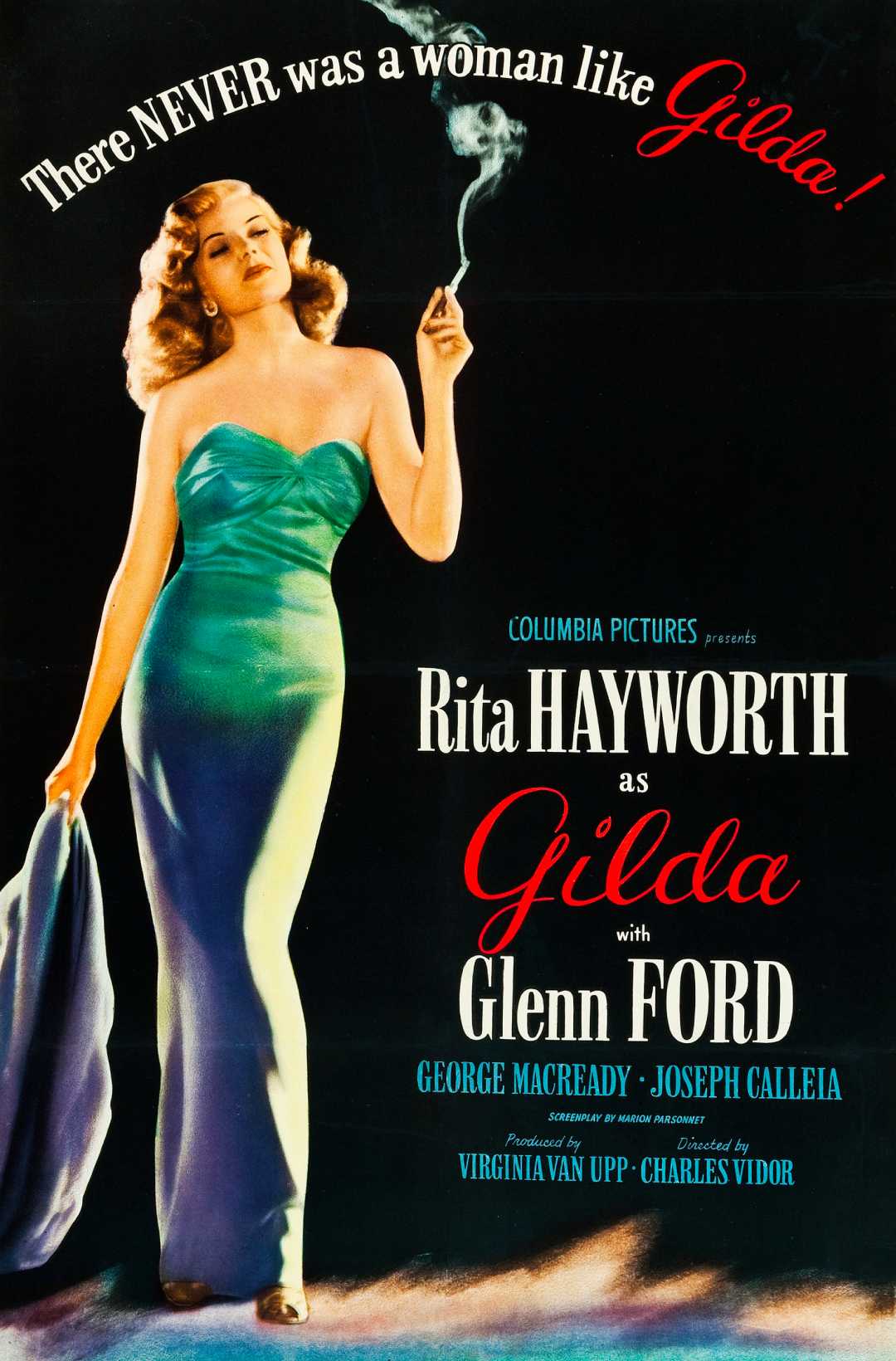
Gilda Movie Poster
Robert Coburn, Public domain, via Wikimedia Commons
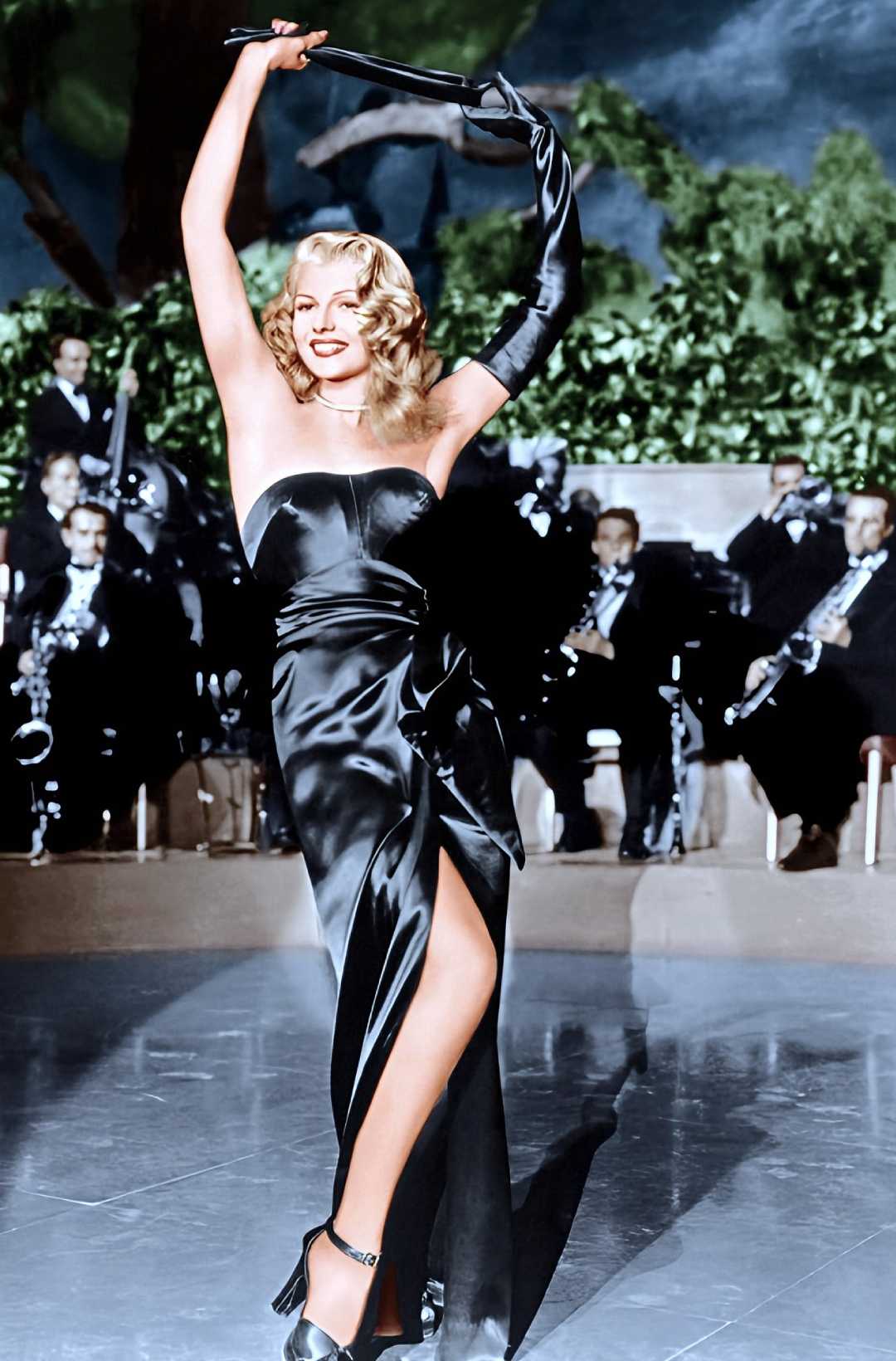
Rita Hayworth in Gilda
Robert Coburn., Public domain, via Wikimedia Commons
Gilda arrived in Spain like a lightning bolt. To a population shackled by the regime’s strict moral codes, Rita Hayworth’s character—bold, flirtatious, defiant—wasn’t just a femme fatale. She was a symbol of female autonomy, a woman unafraid of her own power. Hayworth’s Gilda was everything Spanish women were told not to be.
And then, something deliciously subversive happened.
At Casa Vallés, a neighborhood bar in San Sebastián, customers began skewering together three humble ingredients: a green olive, a pickled guindilla (a slightly spicy green chili), and an anchovy. Salty, briny, and just a bit fiery.
One regular, a man named Joaquín “Txepetxa” Aramburu, took a bite and smiled.
“She’s green, salty, and a little spicy… just like Gilda,” he said.
The name stuck.
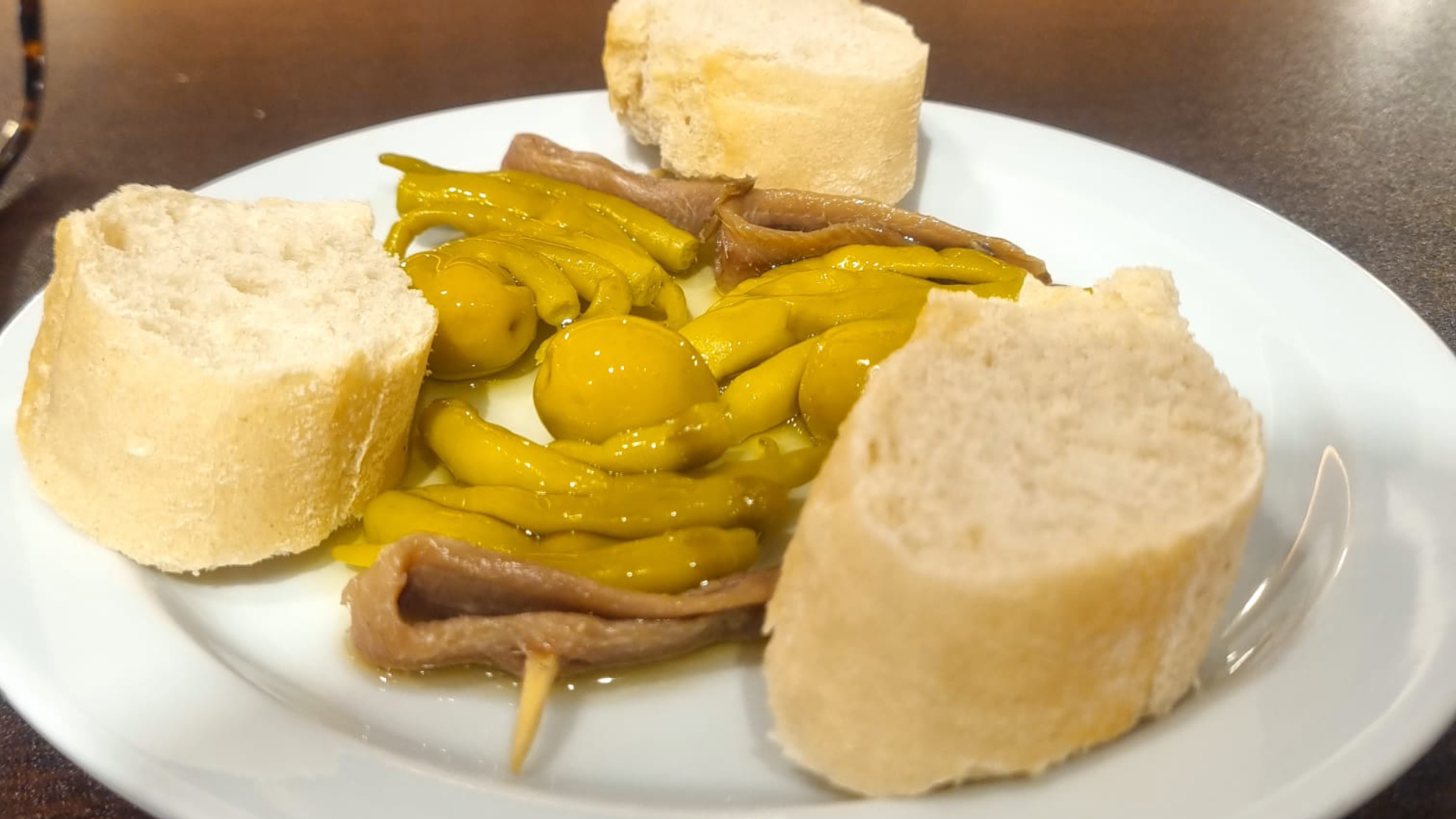
Gilda, Casa Vallés
Thus, the Gilda pintxo was born—not just as a culinary creation, but as a cultural wink, a quiet rebellion, a flirtation with danger disguised as a snack. In a time when a woman could be punished for showing her knees or speaking too boldly, naming a tapa after Rita Hayworth’s Gilda was an act of culinary poetry and cheeky political defiance.
It is tempting to see the Gilda simply as a delicious morsel, perfect with a glass of txakoli or vermouth. But to do so is to ignore the historical aroma it carries. This pintxo, skewered with a toothpick, pierced the veil of authoritarian repression and let a bit of sensuality—and feminine power—onto the table. It spoke to a longing Spain dared not express: for flavor, for freedom, for women who wouldn’t be silenced.
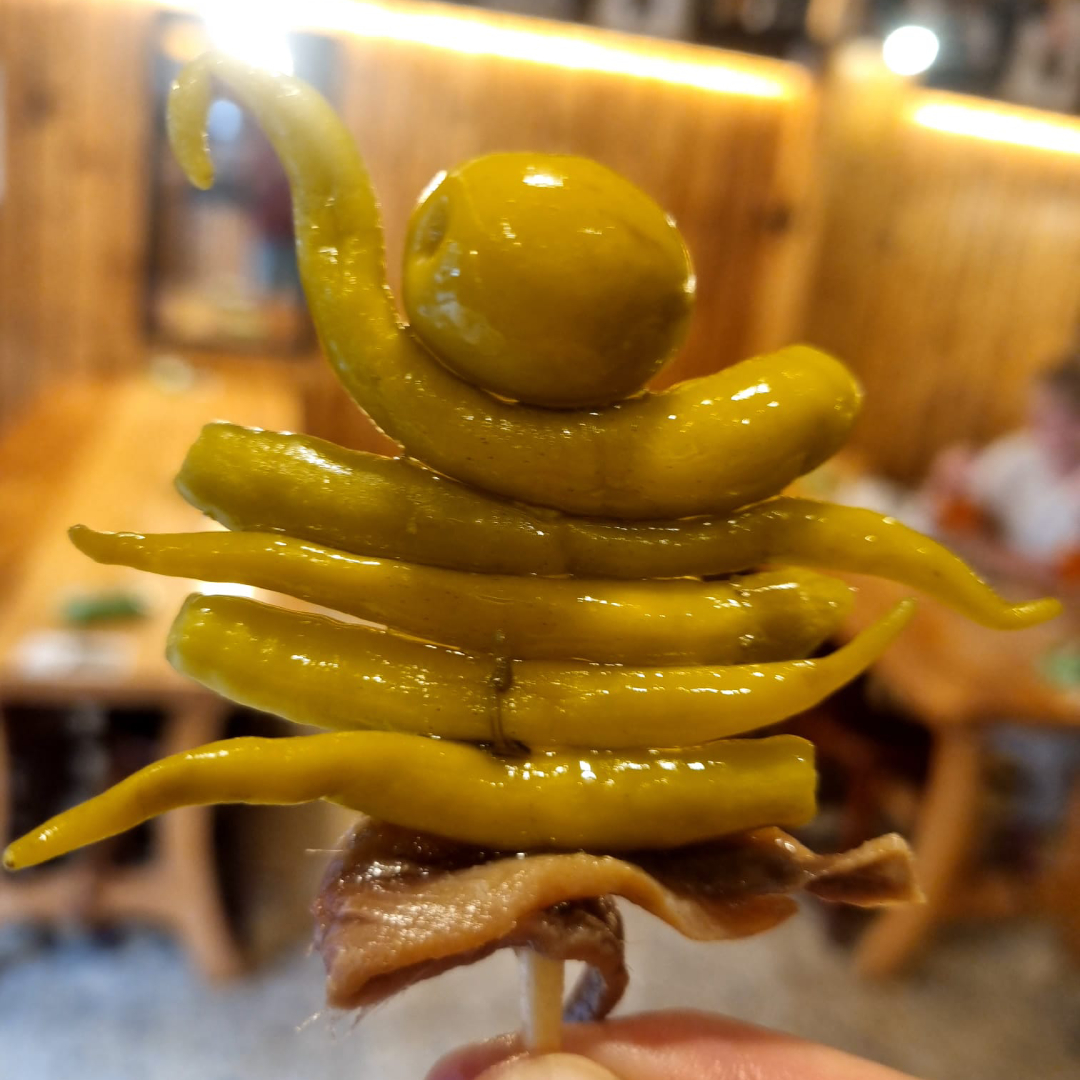
Gilda, Casa Vallés
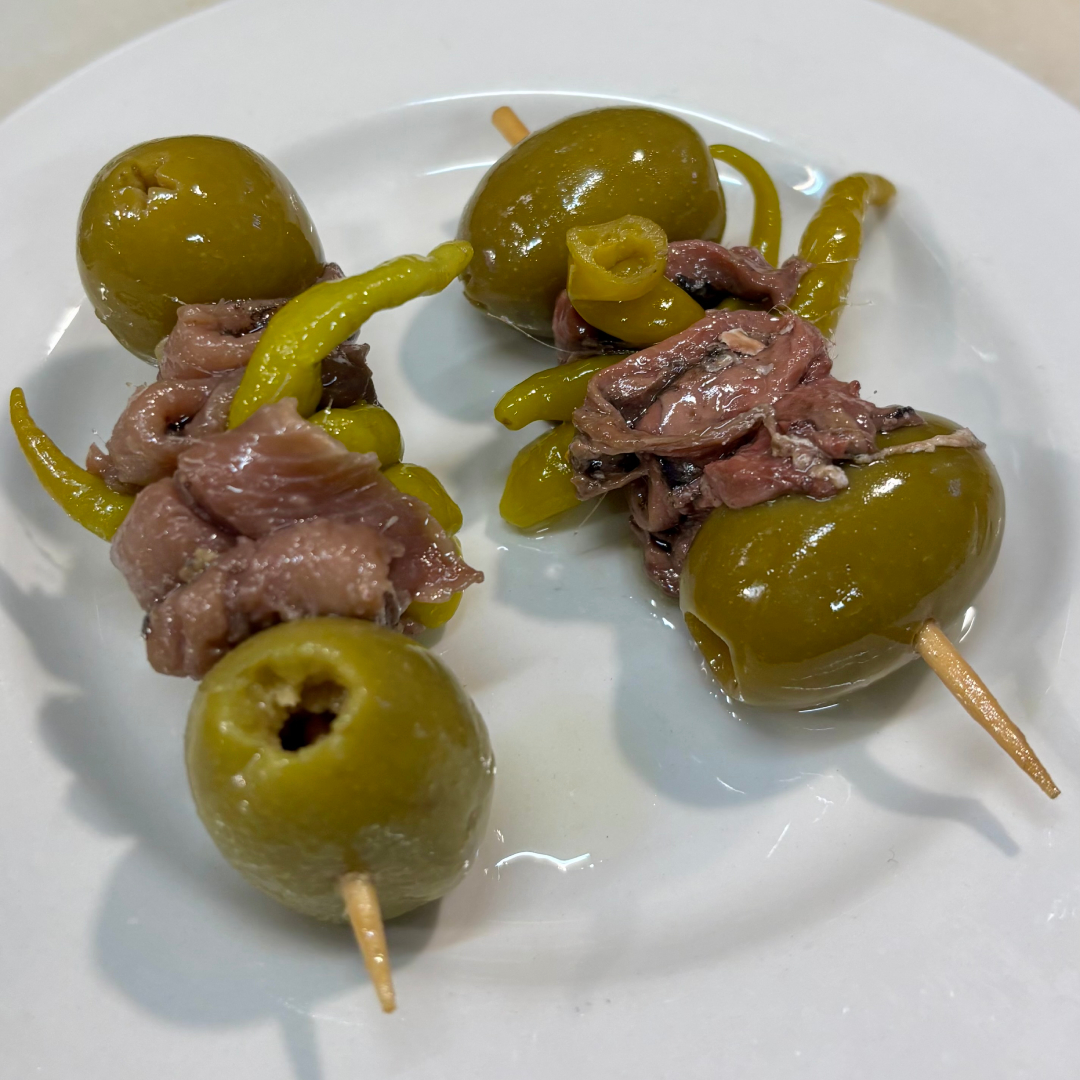
Gilda, El Xampanyet
Today, you can find Gildas all over Spain, especially in Basque pintxo bars and the lively vermuterías of Barcelona. Their preparation is still minimal—no kitchen required, just three ingredients, assembled with care. But their taste is anything but simple. Each bite is a burst of salt, vinegar, oil, and history. A whisper of rebellion. A nod to a glove dropped on the floor in a smoky, black-and-white world.
To eat a Gilda is to remember that food is never just food. It is a memory. It is resistance. It is art. And in the case of this pintxo, it is also an homage to the women who refused to be tamed—on screen, in life, and, fittingly, at the bar.
Recipe: How to Make a Gilda at Home
Ingredients:
- 1 green olive (with pit, preferably Manzanilla or Gordal)
- 1 pickled green chili (piparra or guindilla)
- 1 anchovy fillet in olive oil
Skewer in this order: olive, folded anchovy, chili, and optionally another olive. Serve chilled, ideally with a dry white wine or a glass of vermouth.

.jpg)
