


Cooking Alone, Serving All, Serra Beklen’s Solo Restaurant: Capra
In the Kaş region of Antalya, that sunlit corner where the Mediterranean and the Aegean meet, there’s a restaurant where the chef does everything all by herself: Capra Çukurbağ.
If there were ever a category called Casual Fine Dining, this place would win the gold medal. It’s impossible not to be moved by the sheer honesty, intimacy, and brilliance of its flavors.
Chef Serra Beklen prepares her dishes with local ingredients, mostly from the Kaş market. Think of okra, black zucchini, pickled rock samphire, dusky grouper, shrimp… Of course, she also has long-trusted suppliers across Turkey —especially for spices— but the backbone of her menu springs from this land.
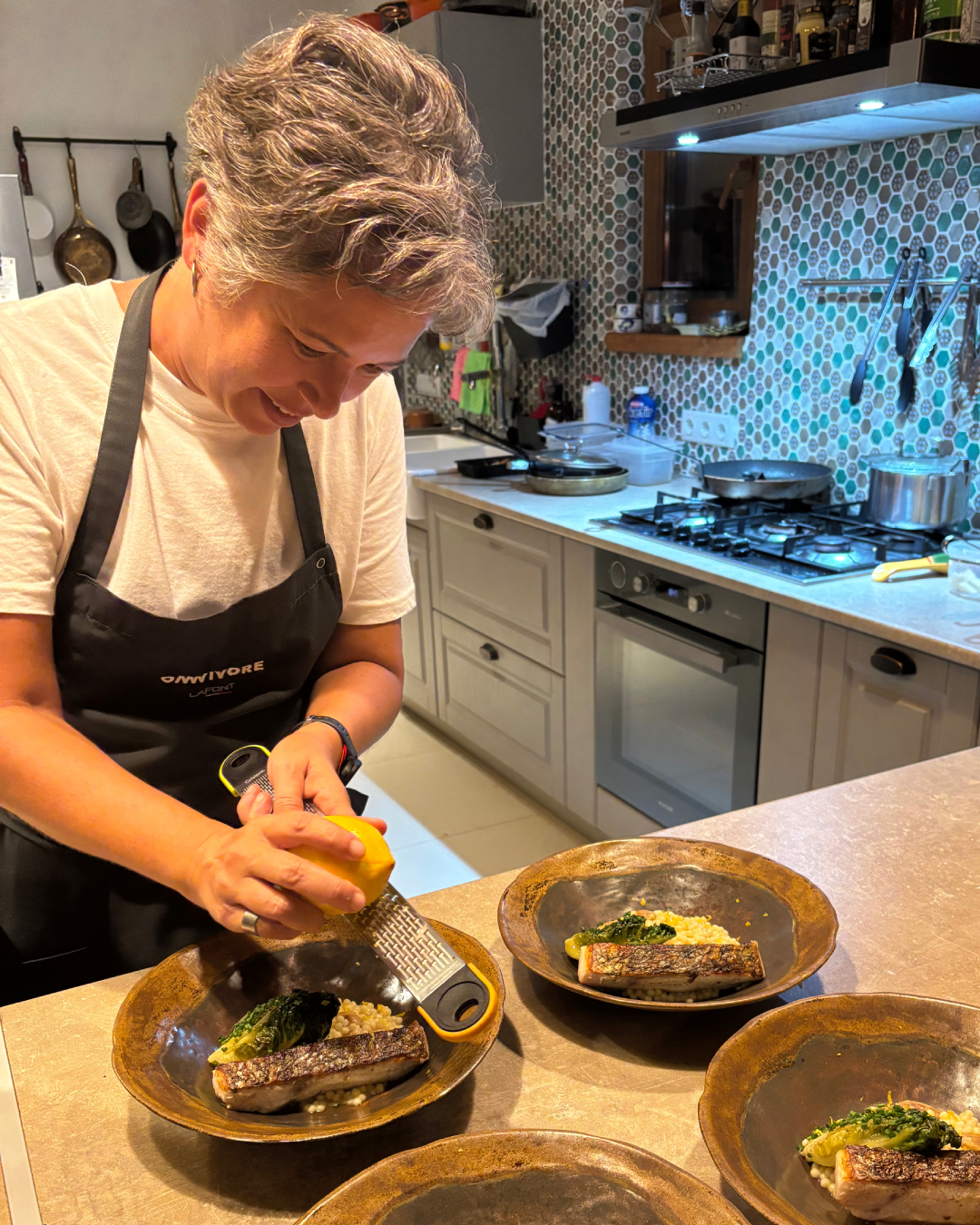
Serra Beklen
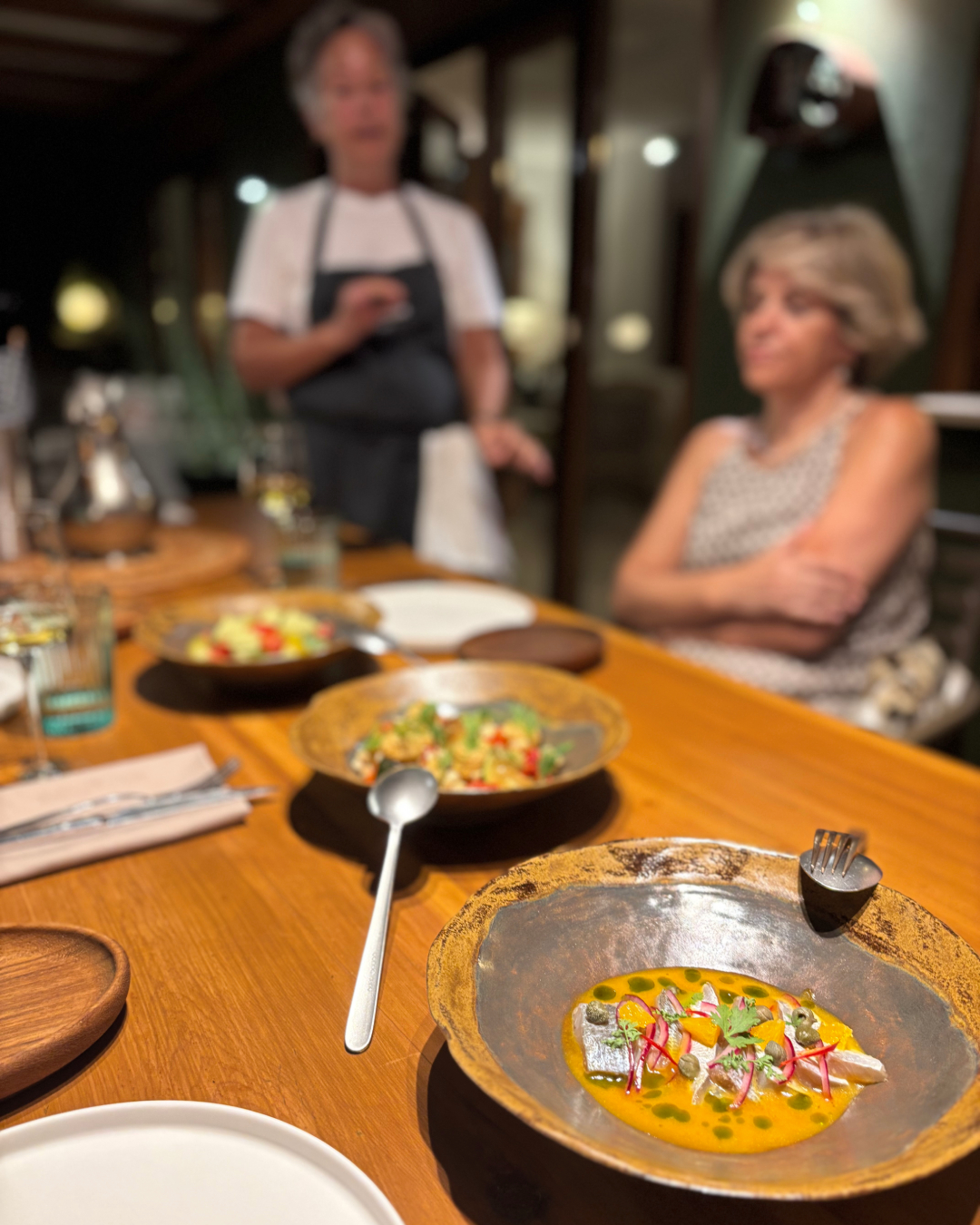
Born in Istanbul, raised in Antalya, she knows the region and its ingredients like a poet knows her verses. She studied in Istanbul, discovered her love for food at Antica Locanda (my favorite Italian spot in Istanbul), rose all the way to head chef at Neo-Lokal, and then—against all odds—opened her own little restaurant in what most would call an isolated, even deserted, corner of Turkey. From the outside it might look like madness, but I’m convinced she chose the truest path.
What feels utterly crazy to me is how she manages every single detail herself: shopping, prep, cooking, serving, even washing the dishes. Serra runs her twelve-seat restaurant alone. And she does it beautifully—without rush, without frenzy, everything flows effortlessly. She even makes time to chat with her guests. It’s unbelievable…
And then there’s her other daring choice: setting up this whole endeavor at the literal “end of the road.” Anyone who knows Turkey will understand what I mean. Along the coastline and in the western half of the country, chaos and crowds swirl together, but you’re never truly alone. Nobody waits for strangers to arrive at the end of a road where nothing else exists. People naturally gather where everyone can find and see each other. Serra swam against this current and opened her restaurant right there, where the road ends.
The August menu had four shared plates
The first: a palate cleanser disguised as a tomato salad: marinated tomatoes, Greate cheese cream and pistachios from Antep. The cheese cream was so divine you longed for a piece of bread just to spread it on.
Second: a ceviche variation of gilt-head seabream (Lidaki), then marinated again with a special prickly pear (cactus fruit) sauce. On the plate: capers, fresh coriander, and orange. Normally I refuse to enjoy a ceviche without fresh coriander, but here—even without it—I would have adored it. The sauce was so balanced, so alive, it married perfectly with the fish.
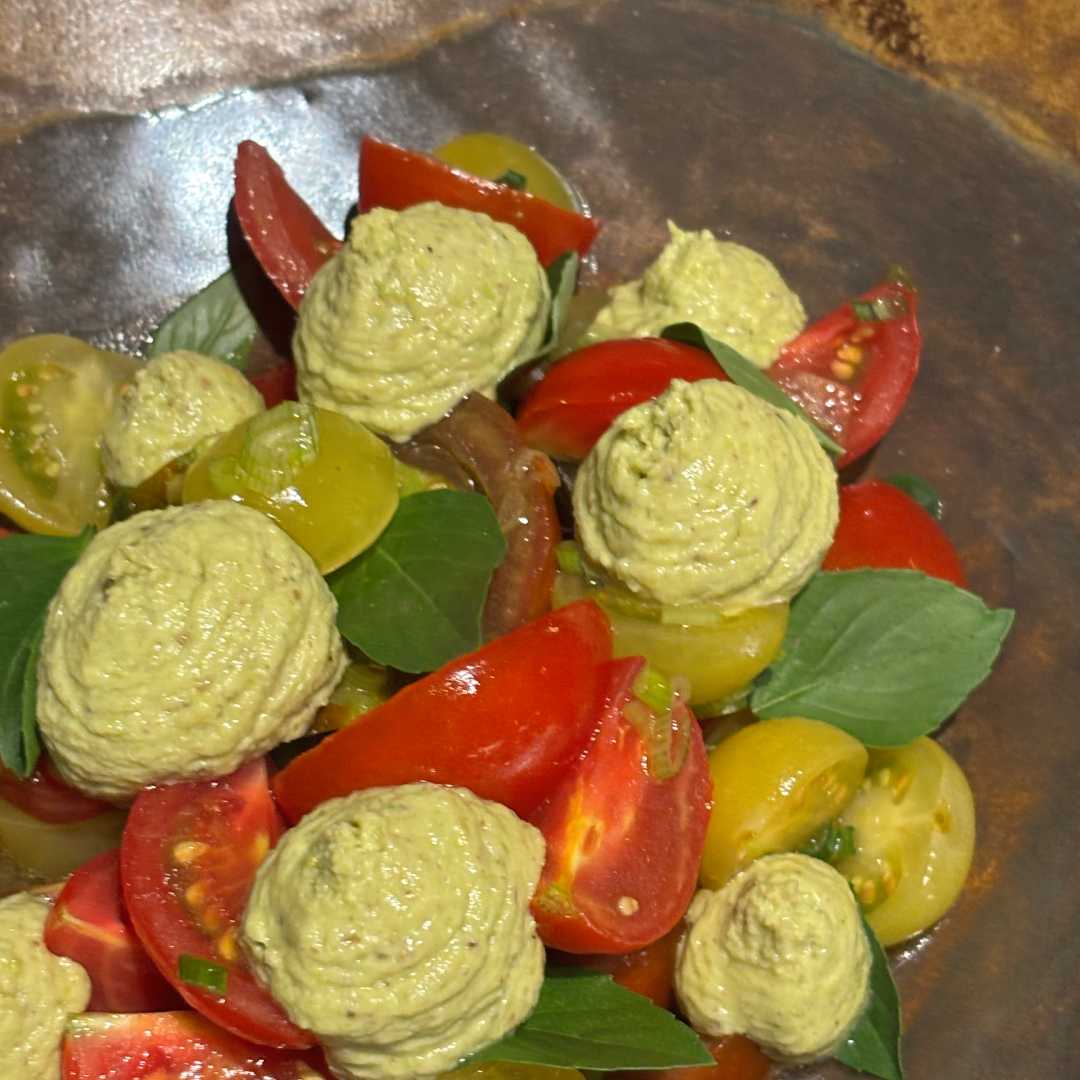
Tomato Salad
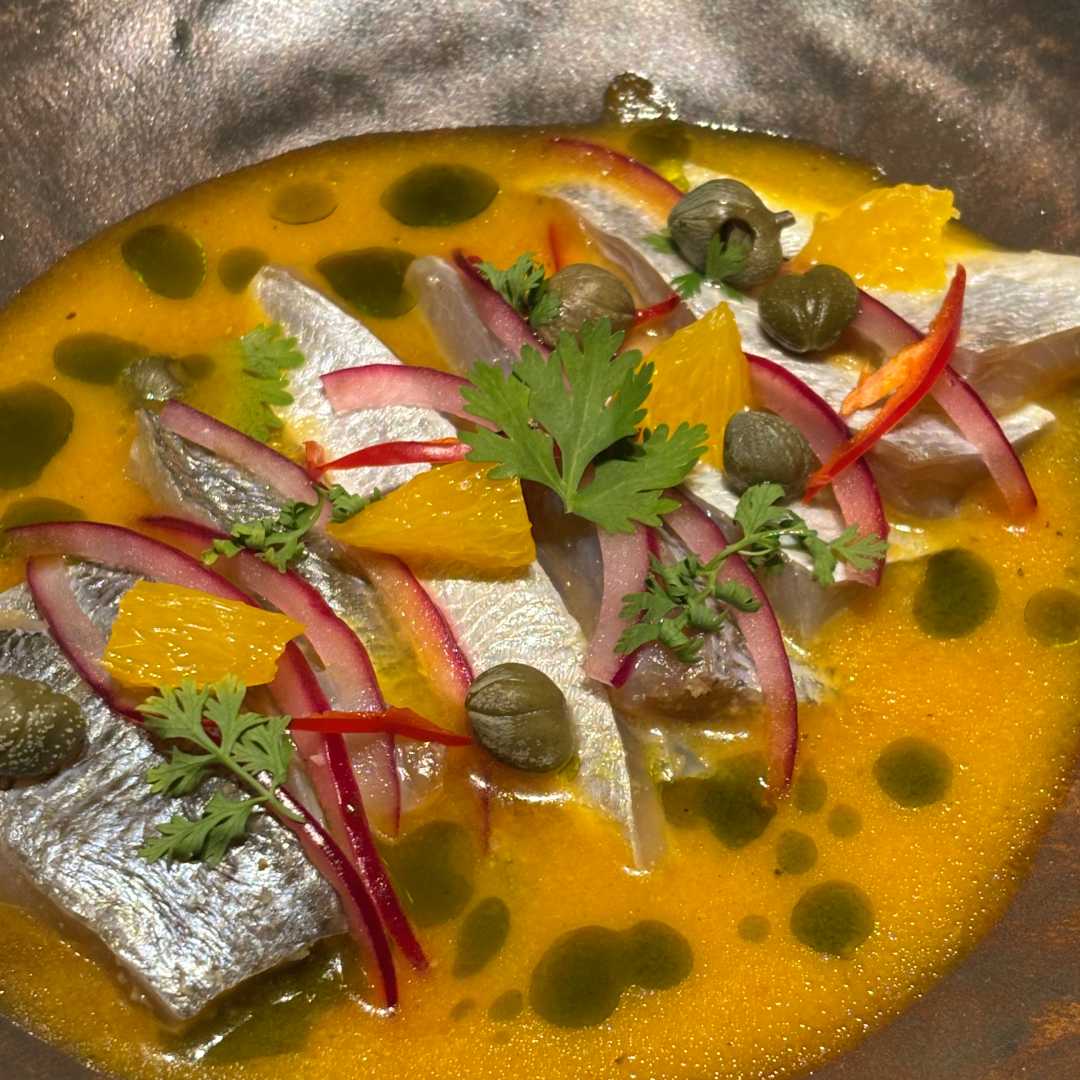
A Ceviche Variation of Gilt-head Seabream (Lidaki)
Another standout: caramelized black zucchini with hibeș. So memorable that the next morning we went straight to Kalkan village market and bought black zucchini to make a Greek-style fried zucchini for breakfast! Serra even explained how to make hibeș, that chickpea-free hummus of Antalya cuisine. She made it sound simple, but the delicate balance it requires is intimidating.
Then came the dish that crowned them all: shrimp with okra. The local okra is magnificent yet often mistreated or drowned in a single dull preparation. Here, it was sautéed at high flame and dressed garlicky tomato sauce, and it completely outshone the grilled shrimp beside it. The same phenomenon had happened to me just a day earlier, across the water on Kastellorizo Island, at Ta Platania restaurant: I found the potatoes baked alongside the baby goat (katsiki) even tastier than the meat itself. I don’t mean to slight okra or goat; I only want to highlight how sometimes the supporting player steals the spotlight.
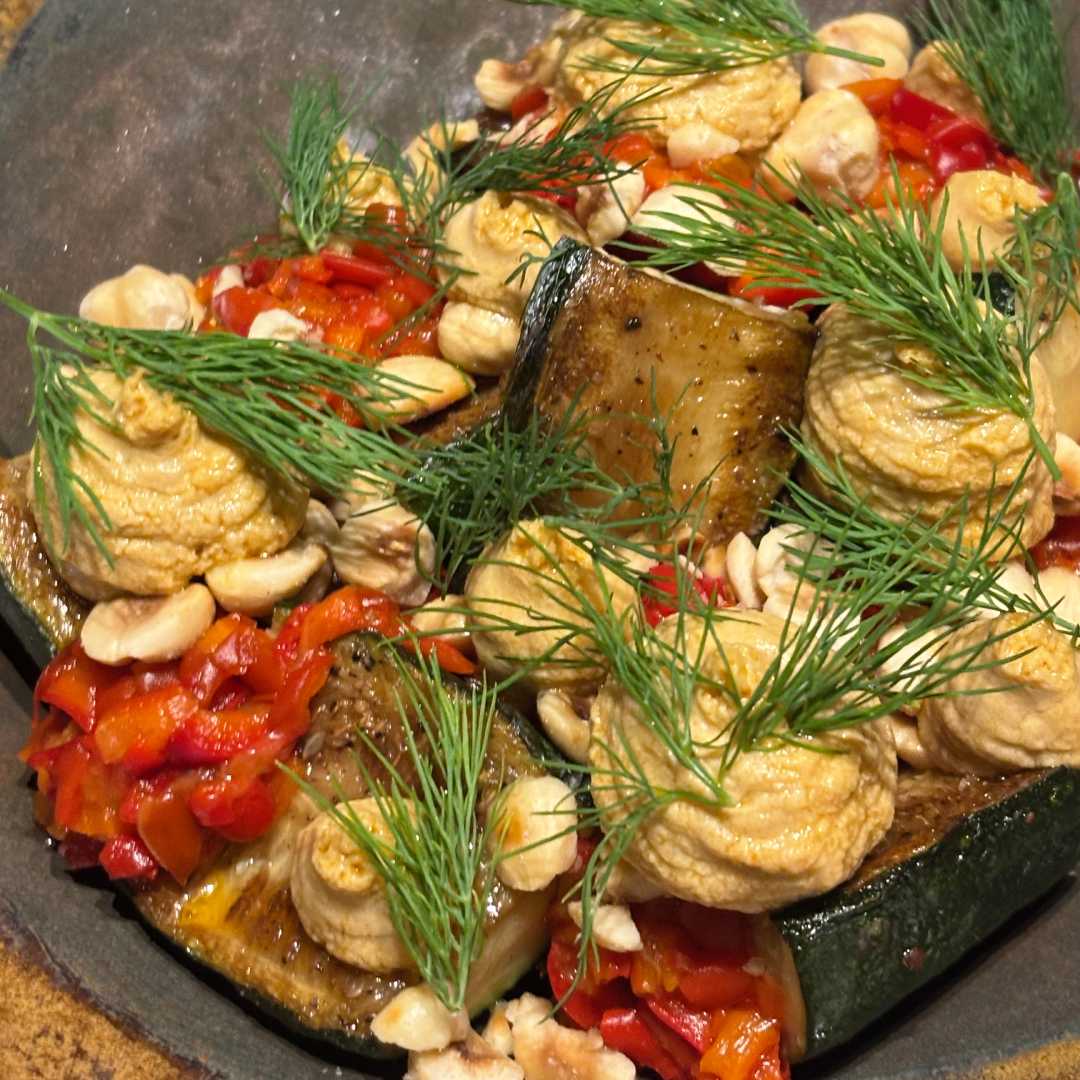
Caramelized Black Zucchini with Hibeș
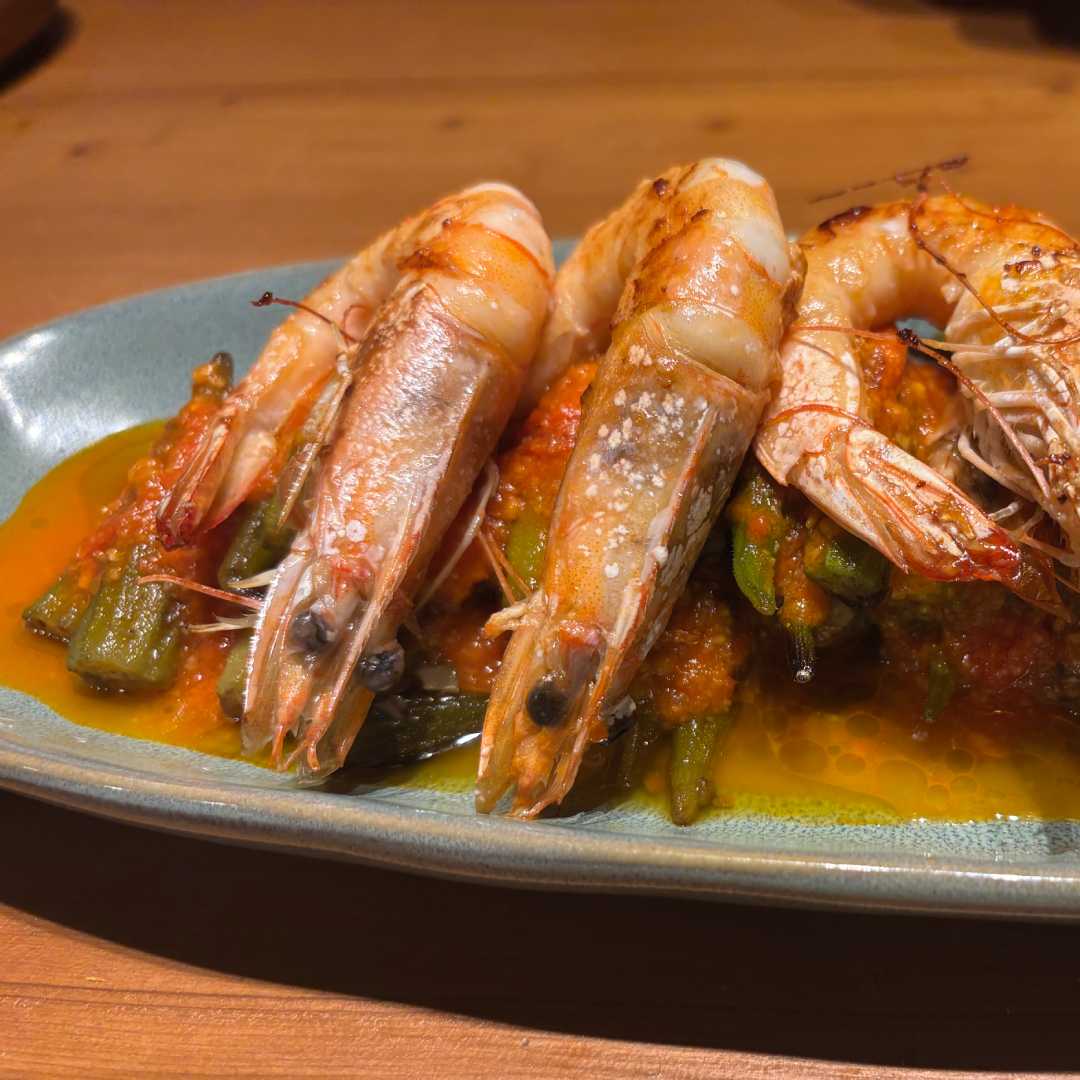
Shrimp with Okra
For the main course: Dusky grouper, served with couscous cooked in fish stock. The couscous, flecked with almonds and grated lemon zest, was joined by grilled lettuce—an unexpected partner that worked wonders. Again, Serra had achieved perfect balance.
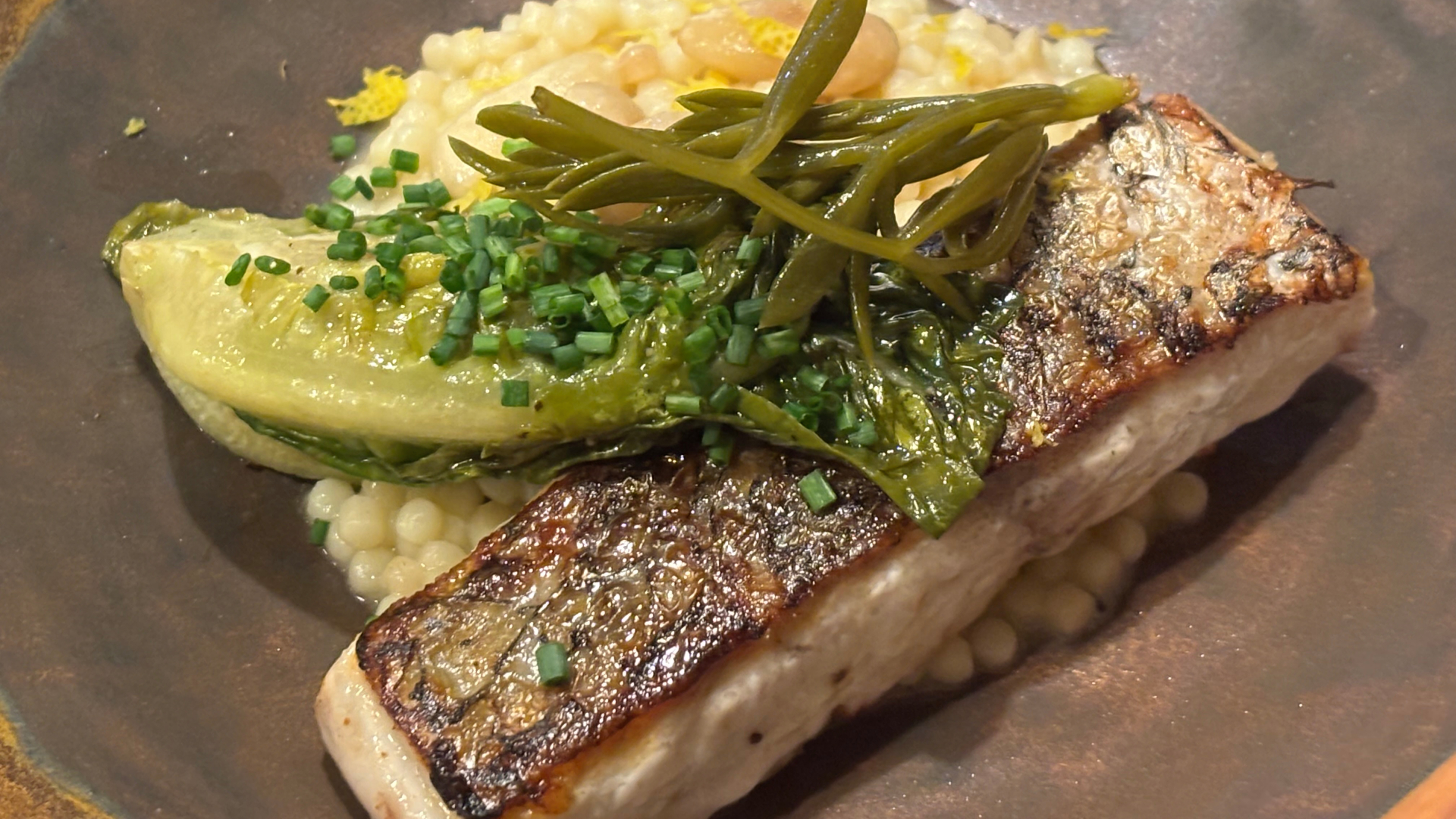
Dusky Grouper with Couscous Cooked in Fish Stock
The crowds that fill Kaş, Kalkan, and the surrounding villages usually flock to the central, seaside restaurants. They prefer rakı with mezze, not fine dining. Fine dining often feels intimidating, foreign—not only to Turkish tourists but to European ones as well. Yet places like Capra prove it can be different: they offer gastronomic plates in a warm, familiar atmosphere, making cultural encounters and new tastes less alien and more welcoming.
At Capra, you are asked to surrender gently—to sit with an open heart and wait, certain that beauty will come. Each plate is more than food; it is trust made visible, love returned in flavor. It’s no wonder this place has caught the eye of Gault & Millau at a notable level, though its truest accolade is in the hush of contented sighs and knowing smiles around the table.
I must add one more sentence—though I wish I didn’t have to. In Turkey, the economy only seems to favor the rich, the very rich. The rest of society is struggling, weighed down by uncertainty about the future. Passionate food lovers, the kind of people who could keep places like Capra alive, are not few in number, but their means, their wallets, are being stolen from them. Asking who the thief is is not the task of this piece, but it must be written: this system is also stealing Capra from us. Serra, by standing alone, carries the weight of a demanding craft, but in these times surviving as a larger, busier establishment might be even harder.
