


The Recipe: A Never-Ending Story of Humanity and Hummus Case
I’ve been cooking professionally for about 20 long years now. The last decade? Mostly me as a manager coordinating kitchens instead of sweating my ar** off on the pass. I’ve written hundreds of recipes for all sorts of setups, trained more chefs than I can even remember the faces of.
Whenever I start training chefs for a new menu, the first thing I always say is simple:
“Don’t just follow the recipe—understand the logic behind it.”
Unless we’re talking proper Michelin-level complexity, or something that requires insane amounts of mastered handwork, a well- written recipe is dead easy to follow. What’s tricky is getting your head around the logic behind it. The logic is all about the recipe. As a chef or cook, you need to understand the reasons behind every process you build.
The kitchen is basically a mad little lab where physics and chemistry are having a cheeky affair. Every single move you make in there is maths. Nothing happens by chance.
There’s always a cause and an effect. Every plate—whether it turns out gorgeous or absolute crap—comes down to natural laws being respected… or totally ignored.
All of it settles on the plate, whispered as flavour, weighed as cost, remembered as delight, or lamented as disappointment.
That, to me, is the definition of a recipe.
Recipes are the foundation of the kitchen, and they mould every chef’s journey.
Whether you’re a home cook or a professional, not everyone can wrap their head around recipes in an analytical way. Some follow them in a very military manner —step by step, no questions asked—and the results are fine. But the special ones, the real cooks, know exactly why each step matters.
Recipes are not just numbers and ingredients. They’re a philosophy: how to use fire, how to choose the right meat or vegetables, the type of olive oil, or even how to grab the pan. You can’t write everything down. A recipe is also the cook’s memory, intuition, and experience—knowledge blended with ingredients.
We all remember those uncles at family barbecues who were absolute legends with meat. Lamb chops, steaks—fat crisped up, golden-brown outside, juicy as crazy in the middle. That’s the Maillard reaction: a chemical love story between amino acids and sugars. Of course, that uncle didn’t know the name. But he knew, instinctively, how to cook perfect meat. Years of practice and many failures—that’s the key to a good recipe.
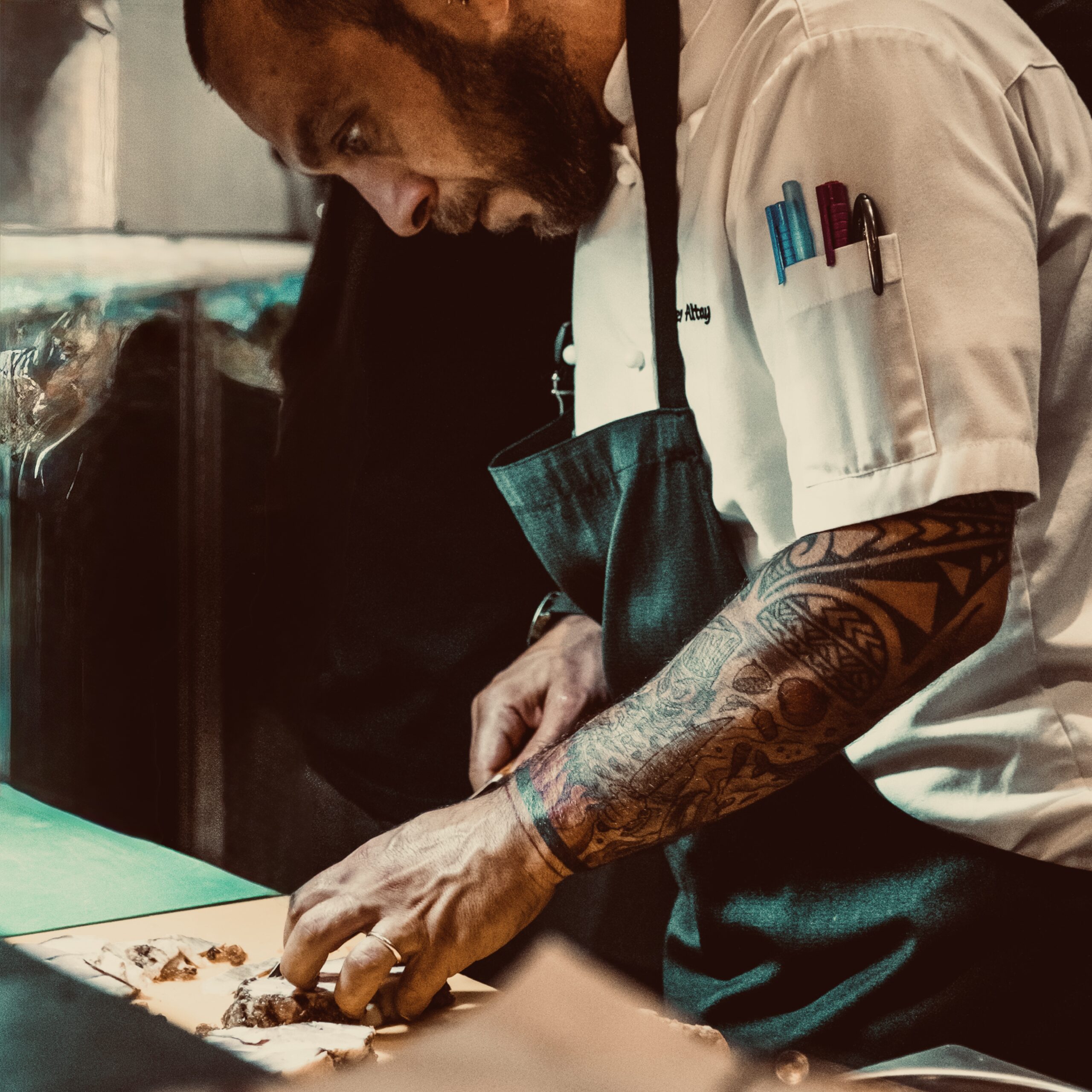
İlker Altay
And timing, of course!—always timing. Get it wrong and the best ingredients in the world won’t save you. Cost control is also part of the recipe. These days, with inflation hitting nearly every country, that’s not just a professional concern. Even at home, it matters how much you spend on meals.
Cooking is chemistry, yes—but it’s also economics.
Human beings have been cooking for nearly a million years. Even in the 21st century, cooking remains one of the most universal routines in the world. One way or another, everybody cooks. Some well. Some… let’s just say they try to save the day. Simple or complex, written down or passed on by a granny, or just improvised in the moment— we all cook by using recipes.
No one really knows how many recipes have been written since ancient Egypt. According to published estimates, the figure varies between 10 and 200 million. Personally, I’d put it another way.
The world population is about 8 billion, which makes roughly 2 billion households. If every household has just three recipes—whether written or memorised —that’s already billions of recipes out there. Recipes might be the single most used “tool” in human daily life. Which is why copyrighting them is nearly impossible. You can’t patent a recipe. In industrial production, you may patent a specific process, but never the dish itself. Recipes are passed down hand to hand, generation to generation. They have existed since mammals stood on two feet and have been evolving among us.
The act of cooking is very similar to human behaviour. Similar products work in very similar ways, and that drives recipes with the same mentality. I’m not going to tell you about onion or rice, etc. I’ll tell you something really weird: ash! History tells us that ash has been used for cooking since ancient times. But it’s not only in one region—it’s all over the world. Native Americans, Mesopotamians, Aztecs were using it. Those people had no clue about each other. They didn’t even know the rest of the world existed.
Ash is alkaline. What alkaline does is speed up the cooking process of legumes. Obviously it gives a nice smoky flavour as well. How beautiful is that? Trying to improve recipes 4–5 thousand years ago by using chemistry that wasn’t even named yet. Why can’t we be more clever and grateful nowadays? How much knowledge and how many tools we have. Instead of using a centrifuge machine to make the flavours more intense and clean, we are cooking in the most primitive way on social media.
The People’s Recipe
There is a dish that definitely makes the top 10 most famous foods in the world. It cannot beat Pizza, but it still has a strong personality. The recipe is probably older than religions.
From Mesopotamia to Ancient Egypt, everybody claims ownership. But it probably wasn’t invented in one place at one time. It’s a dish born from a huge region full of tribes, empires, and cultures. It’s just people’s recipe, and they call it chickpeas—as we know, “hummus.”
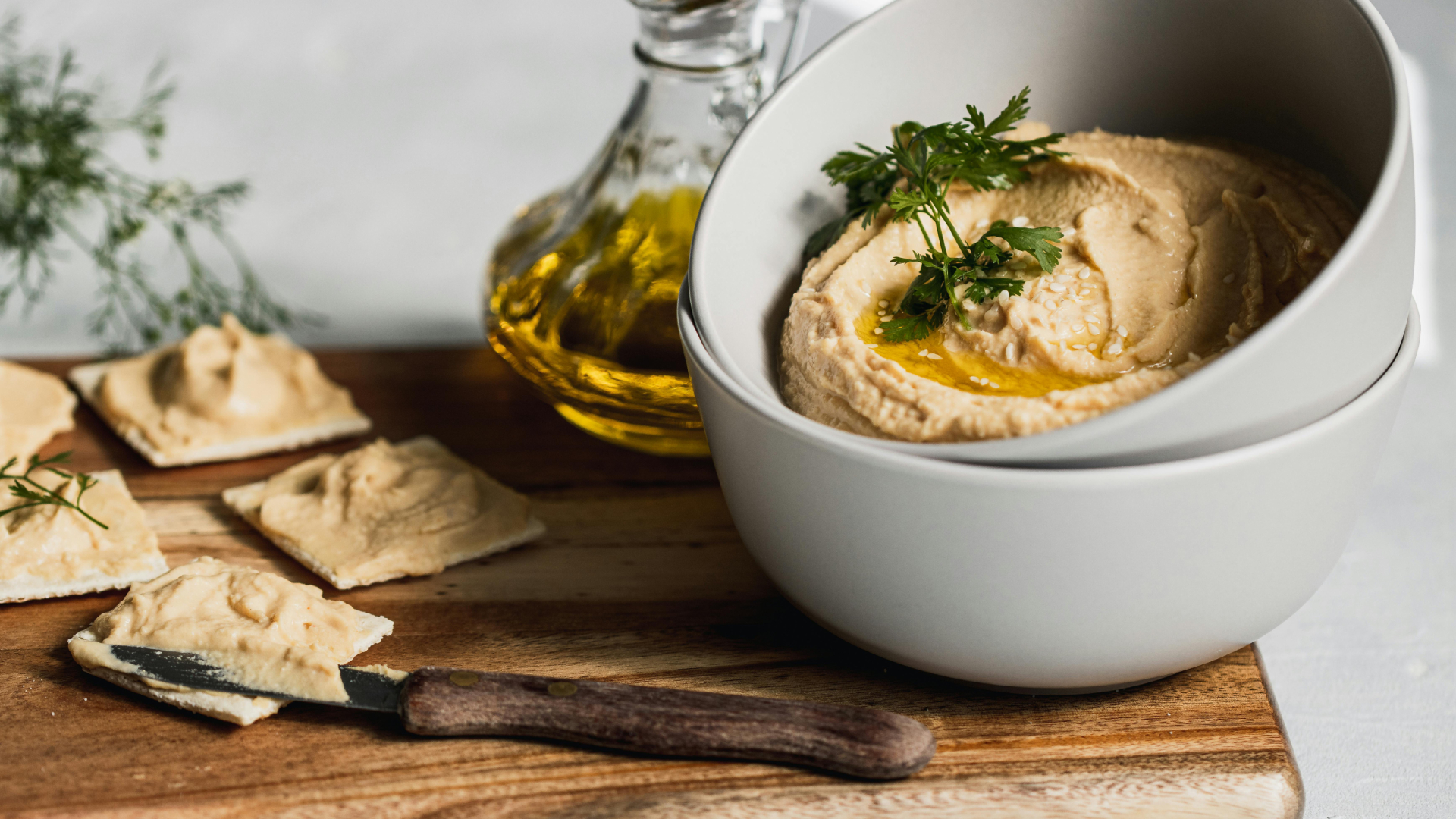
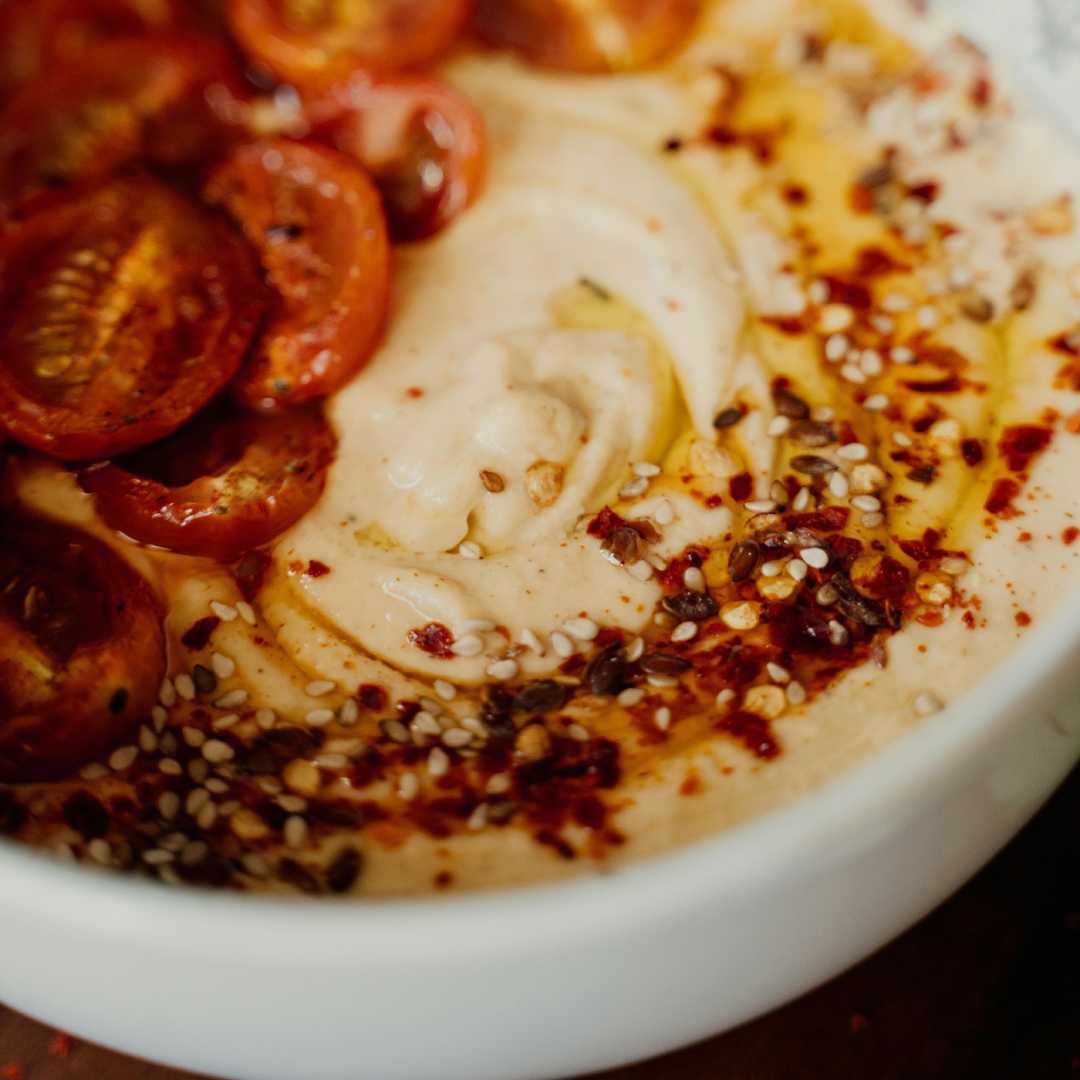
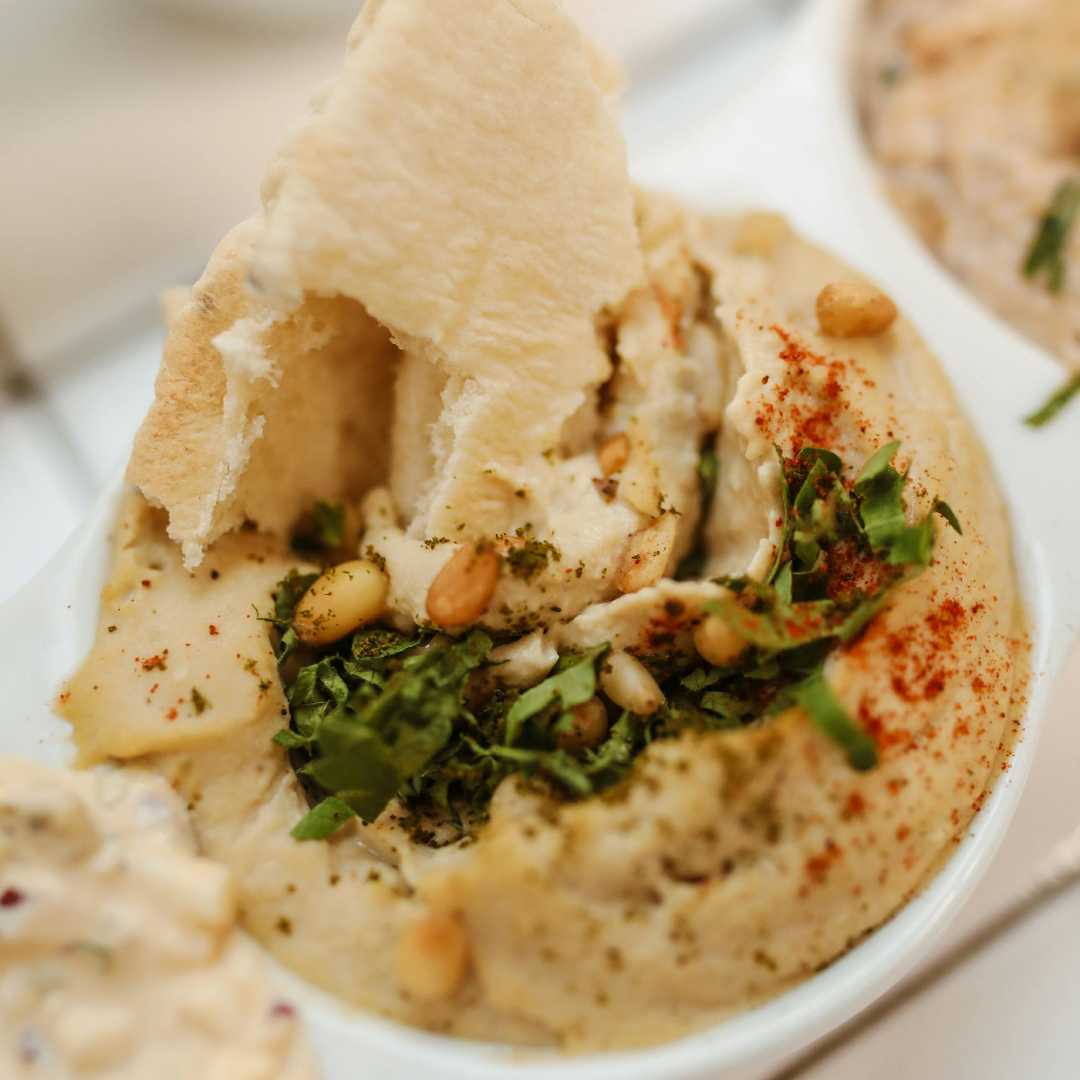
Chickpeas are about 10,000 years old. Tahini is about 5,000 years old (with its current form about 900 years old). However, the original hummus recipe is 700 years old. Can you imagine? All those years and no one thought to put them together! Some posh guy in Egypt was clever enough to write down a recipe officially in the 13th century. Do I believe that written recipe is the original? Not at all. More likely, someone, somewhere, overcooked chickpeas, mashed them, tasted them, thought, “Bit bland…” and chucked in some tahini. Voilà—an early form of hummus. That must have happened just after tahini was discovered. It is also quite likely that the dish was cooked around the same time by numbers of home cooks without knowing each other’s recipes.
Commercially, it’s a killer. Cost-wise, it’s a bargain. You can buy hummus anywhere in the world now. It carved itself a corner of the global market a long time ago. You won’t die without it, but if it’s there, you’ll have some.
It’s vegan, it’s trendy, and it is ancient—in a good way.
So here it is: my first recipe, a dish older than Jesus Christ.
Classic Hummus
Ingredients:
- 350 g cooked chickpeas
- 240 g tahini
- 240 g iced water
- 45 g lemon juice
- 5 g salt
- 7 g garlic
- 60 g olive oil
The chickpeas. They’re the star. Manufactures produce amazing cooked chickpeas. Good tins are fine these days— the most commonly used are Desi (small, dark, intense) or Kabuli (bigger, lighter). If you cook your own, soak a third of the recipe’s weight in dried chickpeas overnight, then boil with half a teaspoon of baking soda for 20–40 minutes until they split easily between your fingers but don’t quite mash.
It’s a very tiny, thin line. Overcooked chickpeas? Make a soup—don’t bother making hummus. Peel the skins if you can— it makes a lot of difference. Always let them cool before blending. The bottom line is: I do recommend good quality tinned chickpeas for a start.
The garlic is important. Remove the green shoots. If you cut it half ,you will see in the middle.That small piece brings a slight bitterness. Mash the garlic into a paste with a little salt, pressing firmly with the side of your knife and smearing it across the chopping board in a steady motion without lifting the blade. Fascinating fact about garlic is “allicin.” When you cut or crush the garlic clove, the cells break and release an enzyme called alliinase, and then alliinase starts converting into allicin. The more you break it, the more allicin you get. Basically, garlic is more powerful when it’s pasted. Not about quantity—it’s about texture.
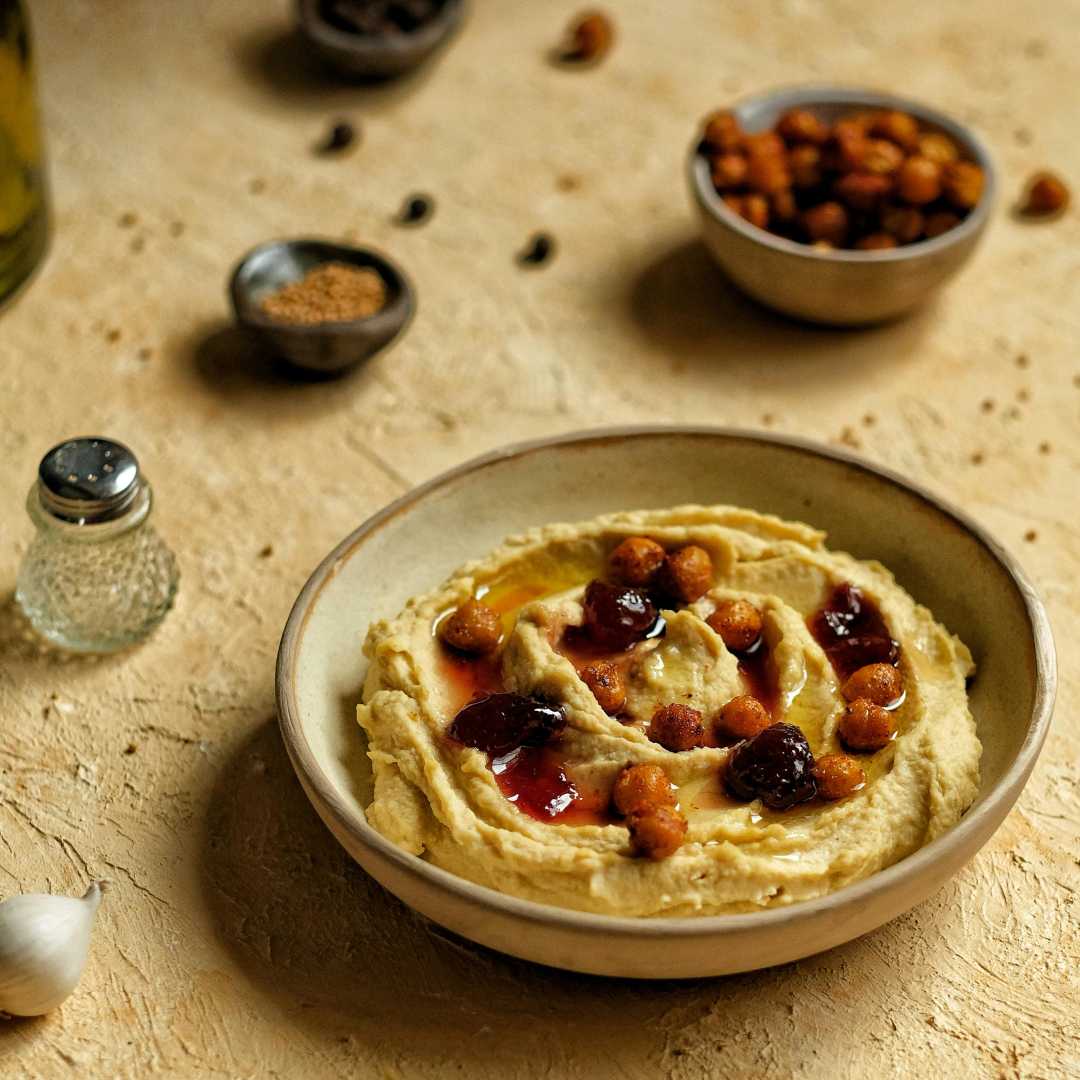
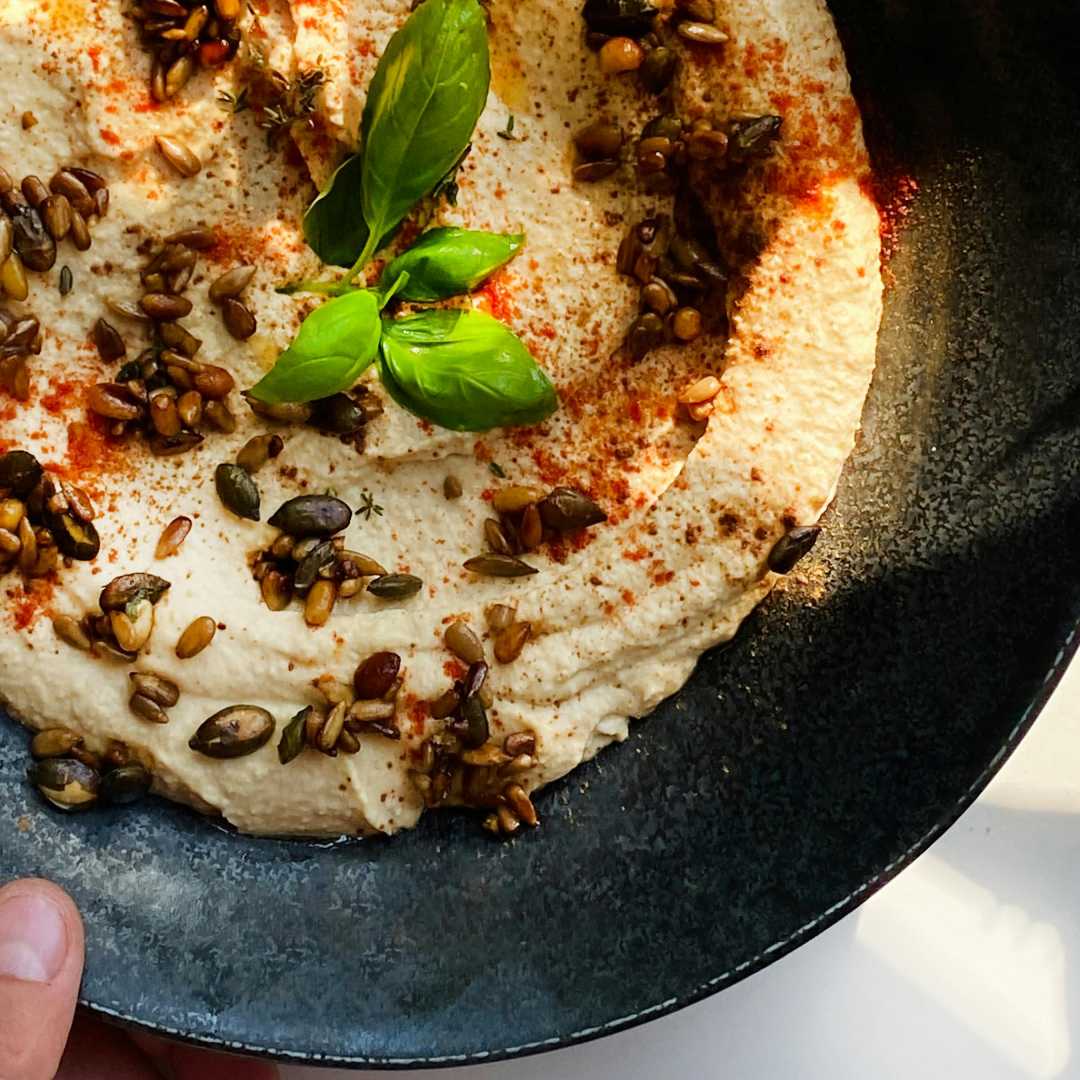
Blending hummus is the crucial step. Use a proper food processor—cheap hand blenders won’t do it. A Thermomix or similar tools will do the job perfectly. Blitz chickpeas, tahini, garlic, lemon juice, salt. Add water and oil gradually. Scrape, taste, and adjust. Keep it going for at least 5–7 minutes—the blend will start becoming warm.That’s why iced water plays cheeky role in the recipe: it cools the mix, prevents it from turning into mashed potatoes, and creates that silky finish. Taste every couple of minutes during the process.
A small hint: when the machine is blitzing, hummus will shape closer to the edge rather than wobbling in the centre. That will tell you it’s nearly done. Maybe your tahini is too mild, or your lemons are not acidic enough. Adjust until sweet, sour, bitter, and salty are all holding hands. If it fails? Add 70–80g more chickpeas and restart the recipe slowly again, building flavour up.
It is a fact that hummus thickens 10-20% in the fridge. That’s the knowledge part of the recipe. You’ll know after a couple of tries. Cover tightly, but make sure to put some cling film on the surface before putting the lid on—that will stop it from drying out.
Serve with whatever’s in season—meat, veggies, burnt butter, chili, etc. Personally, I love hummus with mushrooms on top — earthy, rich, and natural umami.So here’s hummus—not mine, not yours, not anyone’s. Just a recipe that belongs to the people of that time. Born of fire, patience, and practice. It has been passed down over the centuries.
Afiyet olsun
İlker Altay
