


Eating with the Locals in Barcelona
If you are going to live in Barcelona, you will live in a neighborhood. In Gràcia, for example, in Sarrià, Les Corts, or Sant Gervasi. These are places where you feel you are truly living with their festivals, street markets, everyday entertainments, the shops where you do your shopping, and the people you can form real bonds with.
They are the traditional living spaces of a modern city, centered around a Mercado, with bars and restaurants where regulars gather and where social life can unfold naturally.
Most of these neighborhoods belong either to the upper middle class or to a mixture of the middle class and the traditional working class. People with stable incomes, cultural capital, and generally representing older generations. They do not invest in luxury, display, or excessive consumption, yet they do seek a certain level of quality in their daily lives, and they do manage to secure it.
This is precisely the socioeconomic ground on which “solid” eating and drinking places are established, grow, and flourish.
Santa Coloma de Gramenet, on the other hand, lies quite far from Barcelona’s city center and is comparatively poorer. One clear indicator is the official figure used in Spain as a direct measure of welfare and purchasing power: RFDB per capita (Gross Disposable Household Income). In Santa Coloma this figure is €15,925, while in Sant Just, one of the neighborhoods I previously wrote about for United Plates, it is €30,352, nearly double. The overall average for metropolitan Barcelona is €21,297, a number worth noting in order to understand the contrast between these two areas.
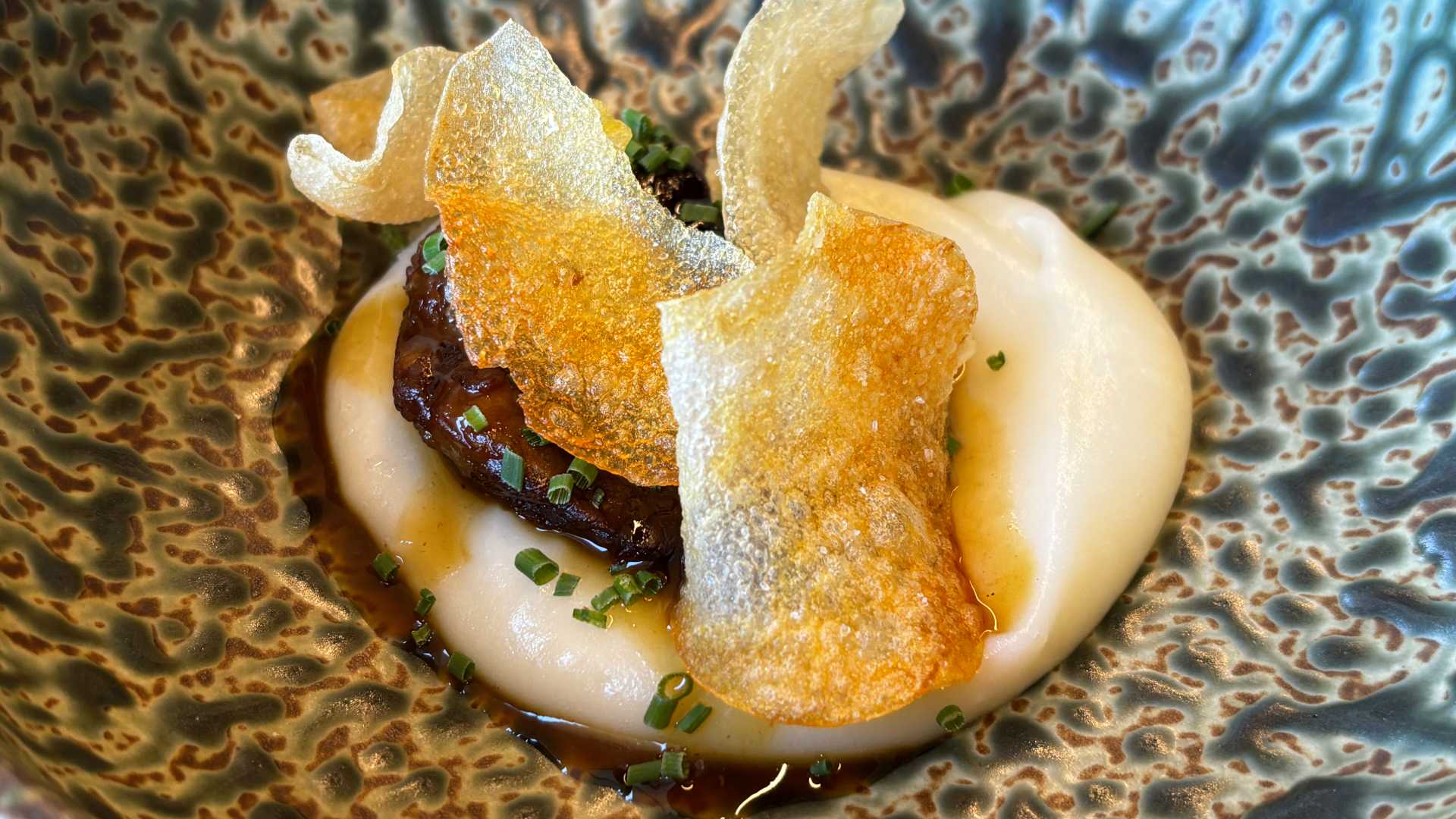
Wagyu Beef
Sant Just is largely characterized by the upper middle class, asset-owning retirees, and low-rise housing. Santa Coloma can be described as working class, lower middle class, and apartment blocks. In Santa Coloma, consumption habits are shaped by price sensitivity and basic needs, whereas in Sant Just selectivity, quality and taste, and social needs such as being a regular become more central.
And yet, in Sant Just, there is only one restaurant listed in the Michelin Guide, relatively expensive compared to other local restaurants but still at a price level that is considered normal for a Michelin recommendation. Meanwhile in Santa Coloma there is Lluerna, a one-star Michelin restaurant, and Bar Verat, a Bib Gourmand. Why in Santa Coloma?
Lluerna was founded in 2001 by chef Víctor Quintillà and his wife Mar Gómez, who leads the dining room and service. It can hardly be a coincidence that Lluerna, and later Bar Verat, its younger and more relaxed sibling, were opened in Santa Coloma de Gramenet, outside Barcelona’s touristic and gastronomic center, and specifically in a neighborhood that is not affluent.
This reflects Quintillà’s desire to remain in his own environment and stay rooted in his neighborhood. I am convinced that this was not merely a subjective choice. The decision was also shaped by the economic conditions at the outset: a larger space, lower rent, and labor that was easier to retain.
Today, even in the most luxurious Michelin-starred restaurants in cities that attract gastronomic tourism, those immaculate plates are prepared by immigrants and interns—in other words, by the cheapest and most precarious labor. Restaurant employees, who endure long hours and harsh conditions, do not live on those glamorous avenues; they cannot afford to. At midnight, they return to the outskirts.
There is also another reality, one closer to the logic of the entertainment industry: workers want to remain where they work, to partake in that lifestyle once their shift ends. To admire it is only human. Yet it is also exhausting and corrosive. Their monthly salaries vanish before the night is over.
That is why, for most people, this is not sustainable, and their work cannot become a long-term profession, a stable trajectory from internship to retirement. In contrast, restaurants on the city’s edges, away from that chaos and subculture, offer their employees a greater chance of a more regular and comfortable working life. This is also an advantage for the restaurant itself: it means the possibility of building a real team.
Starting in Santa Coloma de Gramenet must have offered an additional advantage to this couple. Lluerna, almost ten years after its foundation, received a Michelin star in 2012, and has continued to hold that star with consistent stability ever since.
Lluerna’s success, grounded in Catalan cuisine, local and seasonal products, and sustained relationships with local producers, seems to have naturally generated the idea of offering the same culinary line in a more accessible format, supported once again by the cost and labor advantages of being in this neighborhood. That is how Bar Verat emerged as a more casual and everyday project of the Quintillà–Gómez team. While Bar Verat reproduces Lluerna’s gastronomic sensibility in a “gastro-bar / tapas” format, it continues to maintain the same local roots, product quality, and creative balance of flavors. It is a strong example of how one can resist the idea that gastronomy must be confined to city centers, wealthy districts, and touristic zones.
Its name, Verat, meaning mackerel in Catalan, emphasizes accessibility. The three menus it offers at €23, €33, and €43 deserve full marks in terms of value for money. The à la carte prices are also very reasonable for this level of cooking, in fact one could clearly call them cheap.
Bar Verat surely has its regulars from the neighborhood’s higher-income segment and from the transforming riverside area. Thanks to guidebooks, it also attracts a significant number of visitors from outside the neighborhood, and it probably serves a small number of gastronomy tourists as well.
But from what I observed, it operates at a high level of occupancy. This shows that sustainable and accessible alternative business models are indeed possible.
Without underestimating the economic incentives of the beginning, I still believe that both of these restaurants lit their fires in this neighborhood not primarily for commercial reasons, but due to a personal and historical preference. This affects me. And I will not lie: it makes me love such places and their food.
I believe flavor is largely definable through relationships, through the bond we form with the place and with the people who cook the food. Otherwise, we would not spend our lives searching for our mother’s dishes.
In short, I liked Bar Verat. And I liked its food as well.
So what exactly was in the dishes that I “liked” so much?
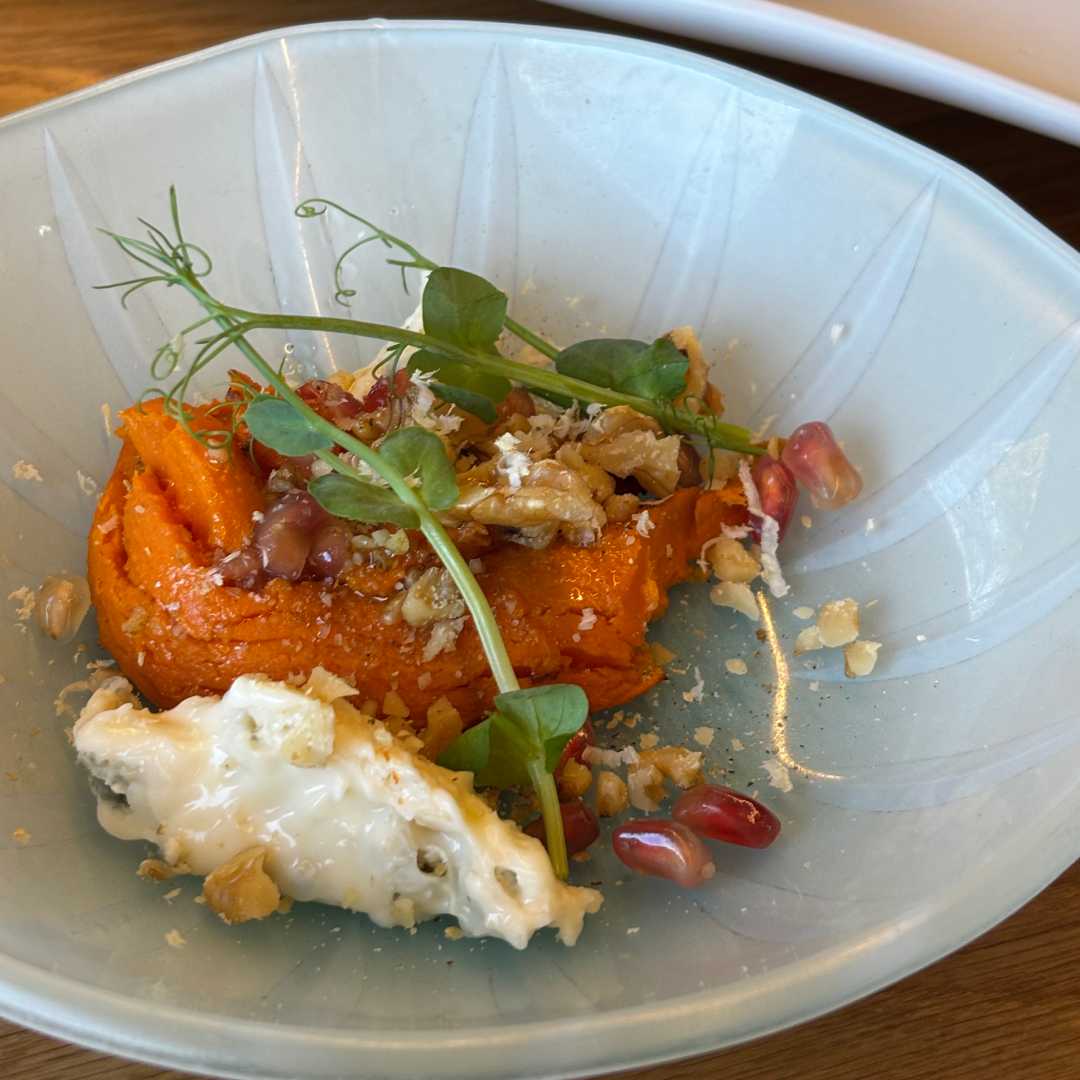
Sweet Potato with Gorgonzola, Pomegranate, and Walnuts
The first step of the menu was sweet potato with gorgonzola, pomegranate, and walnuts. Gorgonzola is a difficult ingredient to pair with anything outside of pastry. If you turn it into a cream sauce and let it be crushed by crispy potatoes, its dominant and sharp taste can still result in a dish that is acceptable. But if you are looking for balance, it is a risky ingredient, far too overpowering. Bar Verat took this risk at the very first step.
If we set aside pastries, which easily wrap and soften this intense cheese, the effort to find second and third ingredients that can complement it, rather than leaving you thinking “it would have been better spread on toasted bread,” is important. But sweet potato? I do not think so. Or perhaps, in that first dish, I should have restrained my hunger and curiosity, mixed the freely placed elements together, and tasted it that way. It is possible.
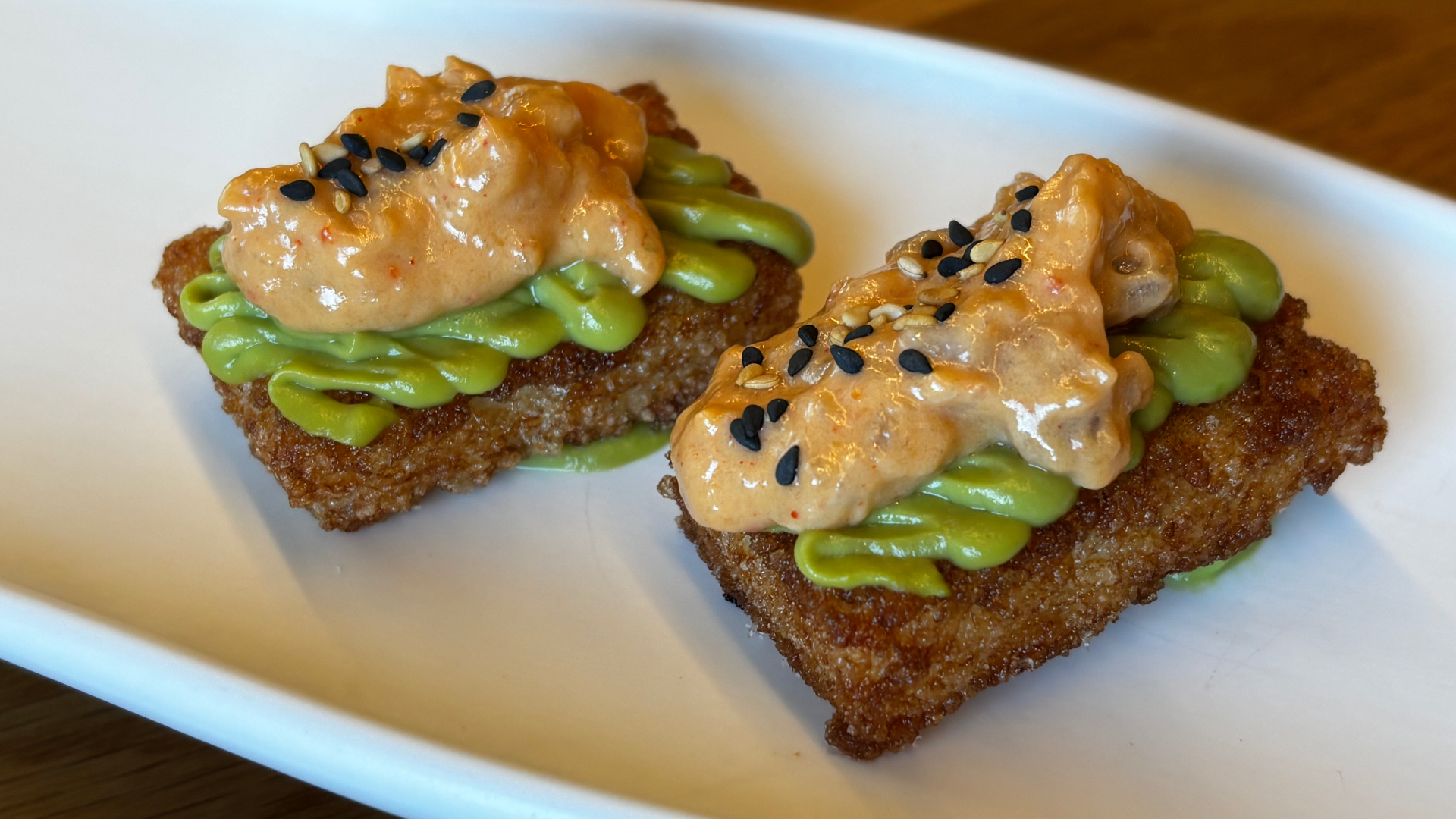
Fried Rice with Guacamole and Tuna Tartar
Fried rice with guacamole and tuna tartar, however, was excellent. Fried rice as a base, topped with guacamole and tuna tartar. The fried rice transcended rice, and the guacamole transcended avocado. Their unity was completed by the tuna tartar. I think this was the dish I enjoyed most. Its only flaw was not being able to be satisfied by it. Tasting menus always leave your appetite unresolved.
Tempura-battered cabbage and potato with pork jowl was another dish that left a mark. The pork jowl was so delicious, and I was still hungry. Because of it, I could not focus on the other layers. I am not sure whether one component being that delicious is a good thing or a bad thing.
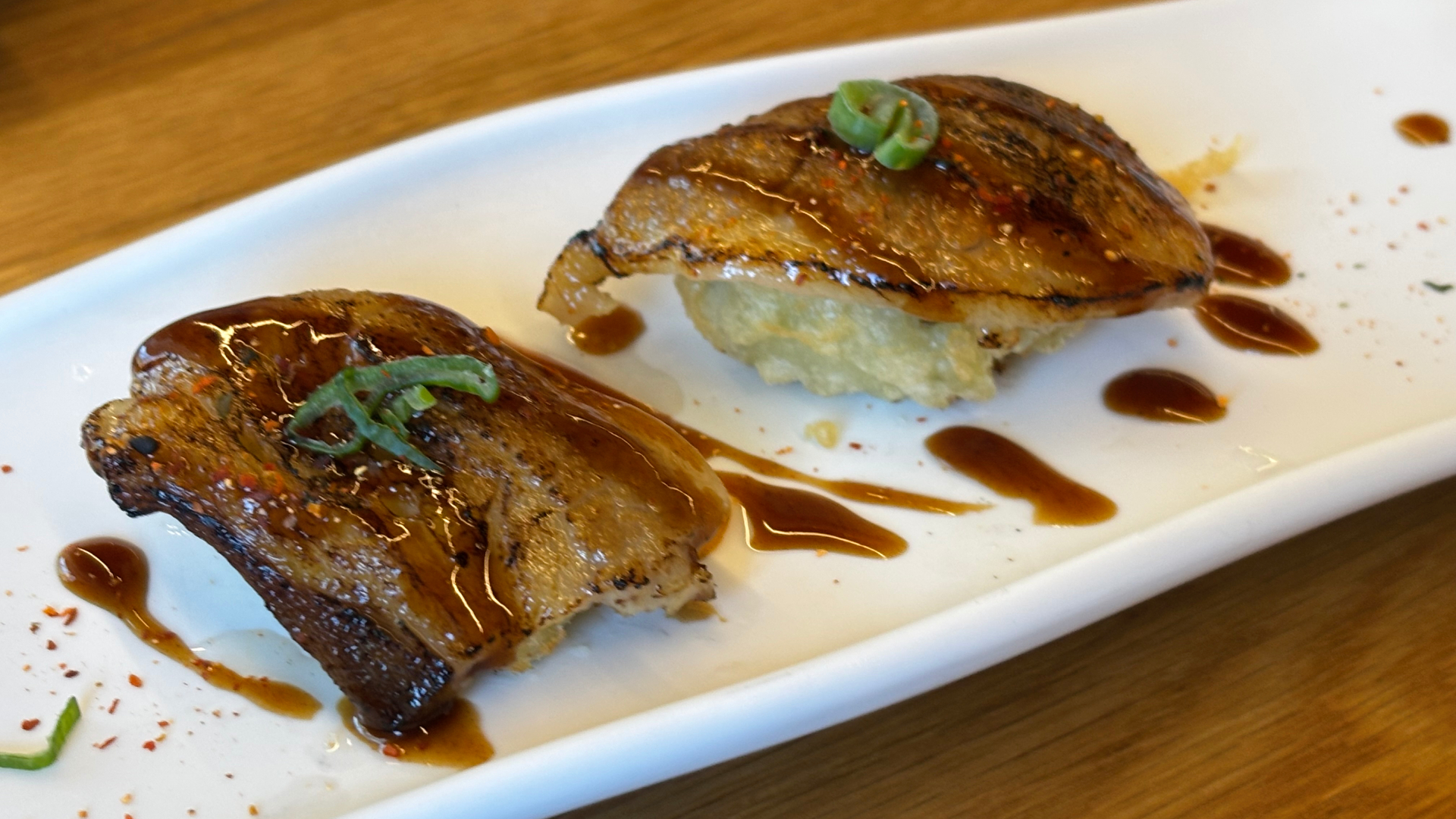
Tempura-battered Cabbage and Potato with Pork Jowl
Of course it was wonderful. This is not a criticism. What I am trying to say is something else: one of the weakest aspects of this new eclectic age of food is exactly this. When one building block becomes too dominant, what you end up with is not a dish, but rather “elements standing next to each other” on the same plate without fully integrating. At least for palates like mine, shaped by traditional cooking, by fewer but essential ingredients, by simplicity and pot-based dishes, this sometimes feels like a problem. A dish made of disconnected or unmerged parts.
The answer arrived in the next plate, as if saying: here is what an integrated dish looks like. Ricotta and spinach ravioli with parmesan and mushroom sauce. What remains in your mouth while eating and in your memory afterward is one clear and singular impression. Very good.
Corvina with Thai mushroom curry was the second-to-last dish and the fish course of the menu.
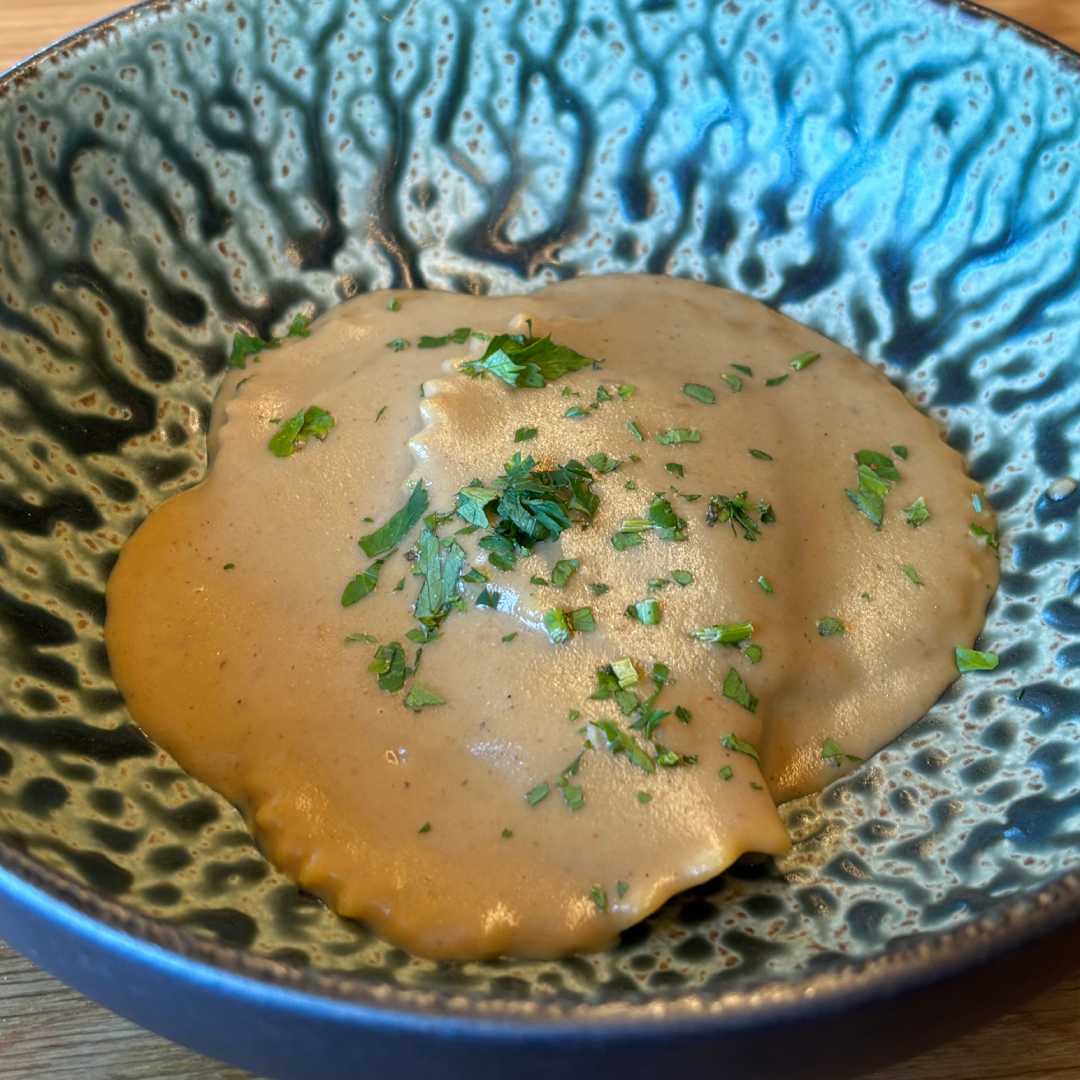
Ricotta and Spinach Ravioli
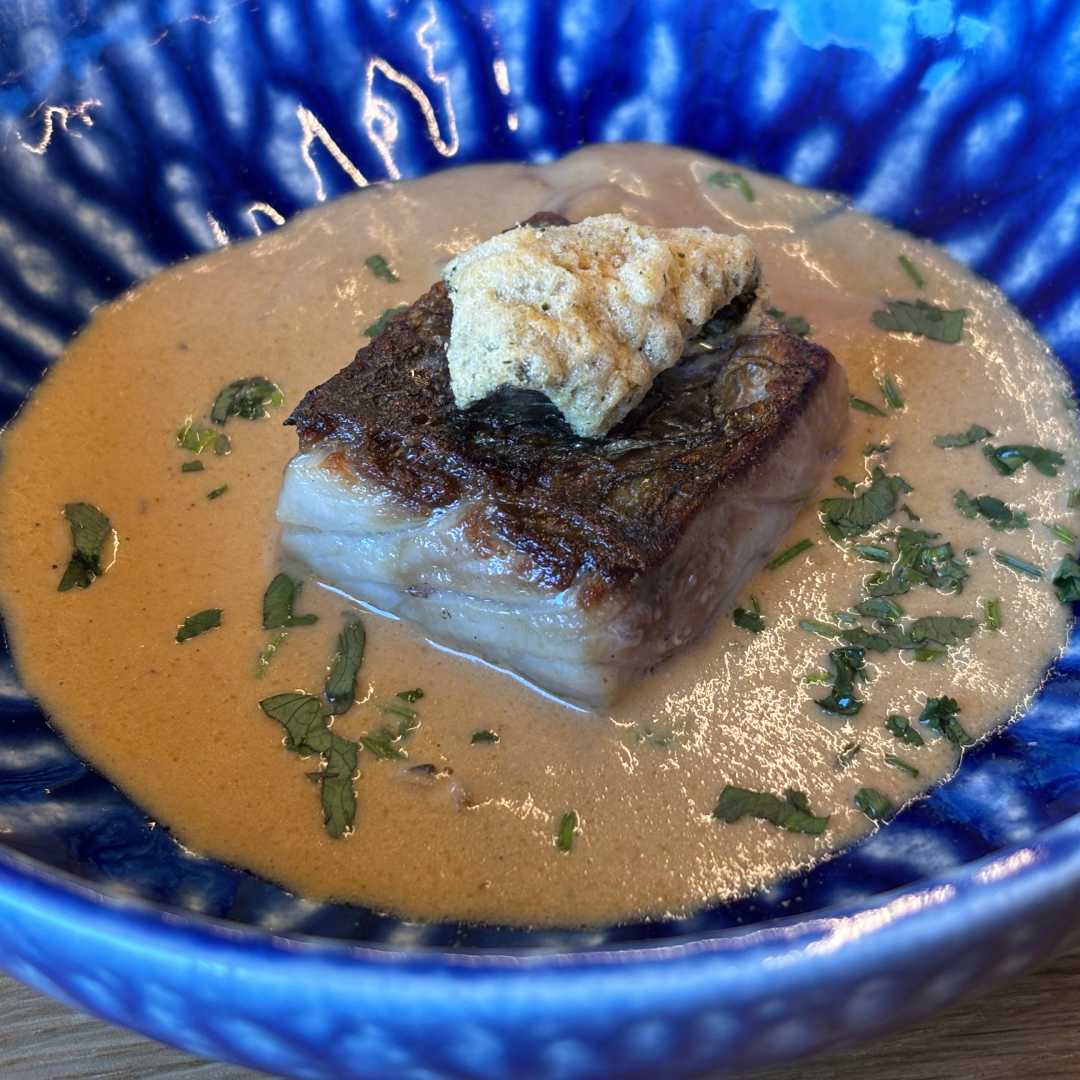
Corvina with Thai Mushroom Curry
And finally, the wagyu beef arrived: wagyu with potato purée, truffle, and roast jus.
Neither of these last two dishes were gastronomic masterpieces, but both were mature and satisfying plates, dishes I enjoyed. They preserved the level established in the opening and development of the menu
