


You’ve finally made it to the restaurant of that chef who’s been blowing up on social media for ages. Getting a reservation already felt like applying for a visa. You dressed to kill, phone in your pocket ready to go — every detail, every corner, every tiny bit of breadcrumb is going on your story. That’s the whole point of coming, after all.
So you start making your little “arriving at the restaurant” reels. I mean, it’s just a building, a door, some stairs, and a wall — but somehow it all feels different. Or rather, you’ve convinced yourself it has to. You walk in, you sit down, and boom: you’re already “enchanted,” with absolutely no reason to be, but you’ve decided you must be enchanted, so enchanted you are.
There’s already a little prologue waiting on the table. You sit, and naturally you start reading. It tells the story of how the restaurant got its name. The chef apparently started cooking at the age of two — inspired by his grandmother.
And the name? It’s simply the Latin name of the small birds that used to gather in the garden and chirp around them while they cooked together. What an extraordinary coincidence to build a whole identity on — but there we are.
Before the food even begins, you choose your wine. The waiter gives you tiny little origin stories for each bottle, like some sommelier bard performing a one-man show — a one-man show in which he’s clearly convinced he’s the star. He carries himself with the sort of hauteur only a man who secretly believes he’s Olivier Poussier can manage; a charming little charlatan in a waistcoat.
And yet, you’re so utterly taken in by the theatre of it all that, in your eyes, he may as well be Dionysus himself.
…Before the tasting menu kicks off, they bring bread and butter. Naturally, the waiter has a whole separate tragic-heroic saga for those too.
The sourdough starter? It’s 200 years old — discovered in the old village of the chef’s great-great- great-grandmother.
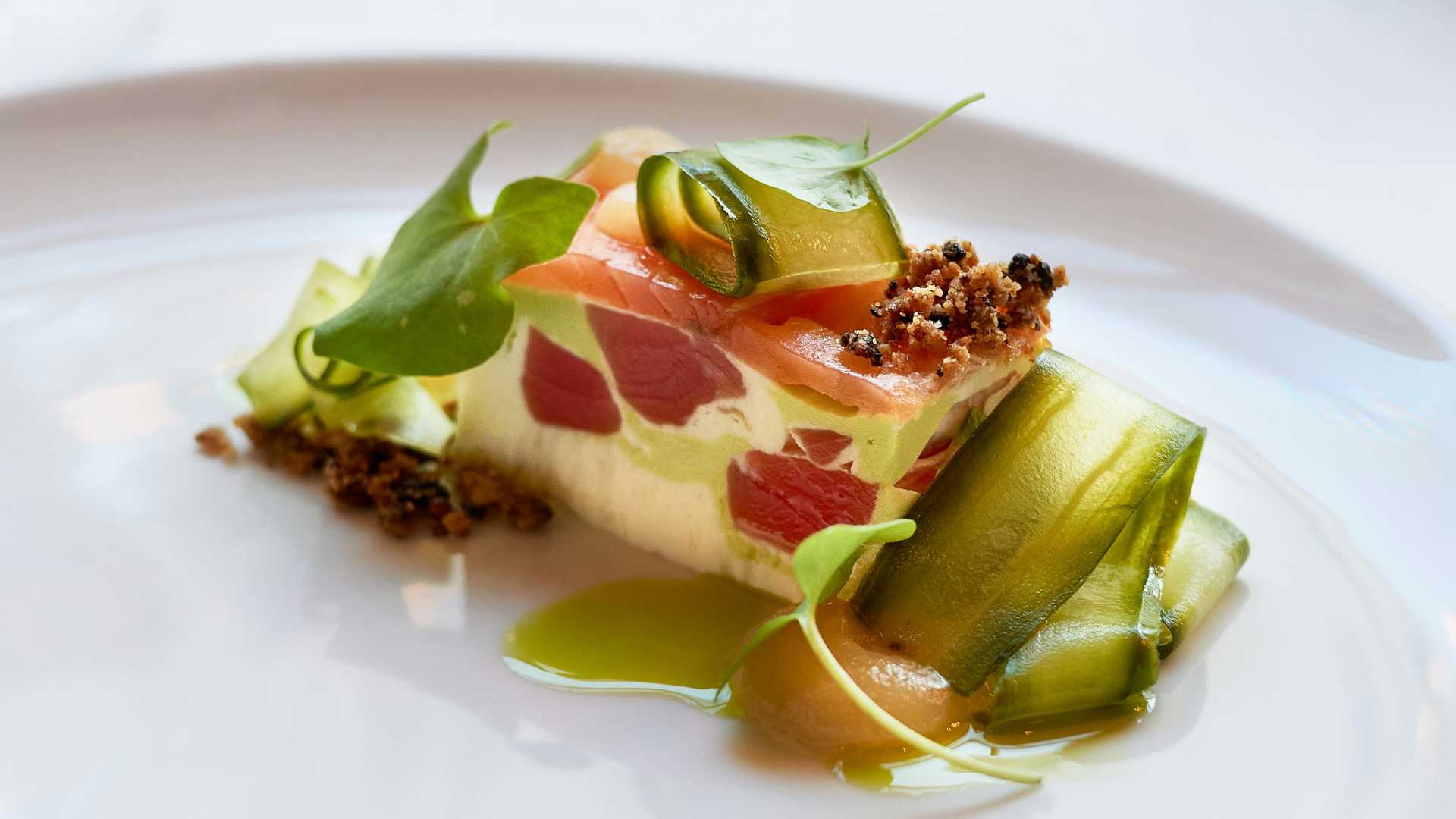
The butter? But of course it’s exceptional — made from milk supposedly simmered in the very pots once used by the chef’s great-great-grandmother. You’re snapping photos of everything. Then the tasting begins. Every plate comes with yet another mini-story. And the waiter says, “Keep them all in mind — they’ll all connect in the end into the real story.” It is rather “Mulholland Drive,” not dinner. David Lynch would’ve almost certainly looked like an amateur next to these bullshit storytellers!
Nothing connects to a single damn thing anyway. Most of it is just rubbish. You’ve basically eaten an okay-ish excuse for a tasting menu — average at best — but because they wrapped it up in a Disney-level narrative, you walk out thinking you’ve just eaten the meal of your life. You paid a load of money — money that could’ve bought you ten genuinely great meals from a real chef — but the storytelling hypnotised you into thinking it was all worth it.
And here’s where the science steps in.
When a story hooks you, you release dopamine.
When it gets dramatic, cortisol.
When you empathise with a character, oxytocin.
When you feel pleasure, endorphins.
This cocktail sharpens your attention, builds emotional bonds, and creates trust. Meanwhile, the prefrontal cortex — the logic, the scepticism — goes offline. The brain stops questioning. Mirror neurones kick in. The hippocampus merges the story with your old memories or even fabricates new ones.
In English:
Your brain is reprogrammed. The dish seems more delicious, more valuable, more “authentic,” even though it’s painfully average. And honestly, what a load of crap. Don’t get offended, but this is the way some fake chefs trick you with fabricated stories.
This whole “story-selling” thing has gone too far. It’s actually quite strange: despite social media and platforms like Netflix constantly parading chefs who whisper to seaweed on the shoreline or flirt with mushrooms in the forest, this kind of marketing somehow still manages to appeal to people.
Most of these tales are obviously made up, yet somehow they’ve become a PR juggernaut. And it isn’t even shallow PR — someone out there has clearly done the psychological homework. I’m kind of guessing who is behind all this shit, but it would be too much of a conspiracy.
Look — if a chef is good in the kitchen, I genuinely don’t care about anything else. He can be a horrible person, an alien, a compulsive story-fabricator — none of that bothers me. Being a chef isn’t some sacred priesthood. What I can’t stand is the way shitty plates get away with murder thanks to fancy storytelling.
A dish’s fundamentals haven’t changed in thousands of years: it’s either good or it isn’t. I used to laugh and swear at how stories magically “fixed” terrible food. But now I’ve actually tried to understand it. Yes, social media has amplified it — multiplied it by a thousand — but the core of it is still old-school trickery. Posh rubbish!
And to explain this modern circus properly, we need to go back 136 years.
Paris, late 1880s.
The city — as history loves to tell us — was on fire culturally. The Eiffel Tower had opened. The World Fair made Paris the jewel of Europe. Art, music, erotica, technology, gastronomy — it all erupted at once. Escoffier was busy dragging French cuisine into its Golden Age. The city was packed with extraordinary restaurants, glorious wines, flawless plates. Paris was euphoria.
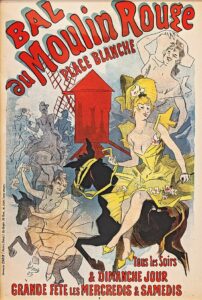
Two investors saw an opportunity. In 1889, on Boulevard de Clichy in Montmartre, they opened a “restaurant.” A place so sensational everyone wanted to be seen there; so trendy it was basically a catwalk; so soaked in booze and erotic dancing that people queued for hours to get in. Everything was perfect — except for one detail nobody seemed to care about: the food was awful!
Joseph Oller and Charles Zidler had basically invented the world’s first “experience-economy” restaurant. They marketed the place so brilliantly they made millions. You know it today as: Moulin Rouge. Their PR was so powerful that even critics got fooled.
Le Figaro, 1893:
“On y sert des plats bien inférieurs à ceux d’une simple brasserie, mais personne n’y vient pour manger.”
“They serve dishes worse than a regular brasserie — but nobody goes there to eat.”
A 1907 English travel guide wrote:
“If you want to dine well in Paris, dine elsewhere. If you want to be seen, go to the Moulin Rouge.”
At its height, Moulin Rouge reportedly brought in what today would be around €80 million a year. It was, honestly, a genius business model. They used food as a prop and sold pure experience. Their target was the working class, tourists, artists. They leaned into eroticism, staged massive shows, and made their real money on alcohol. There are accounts saying most of the food was pre-made and reheated. Some writers joked, “You must have a strong stomach to eat anything there.”
And here’s the punchline:
Moulin Rouge never claimed to serve good food. That wasn’t the point.The real story, of course, was the sheer entertainment of it all.
There’s a certain charm in admitting you cook rather badly yet still managing to keep people amused — in a way, that’s a perfectly legitimate business model. At least it’s honest.
But then there’s the other breed: the ones who roll out glossy TV shows, orchestrate social-media theatrics, and throw together gargantuan, sponsor-stuffed gastronomy panels. They build an entire ecosystem of self-promotion, stitch it all into a cosy little network, and then use that machinery to bend reality itself — all to make thoroughly average food appear as though it has descended from the culinary heavens.
It’s not just marketing; it’s performance art with a side of delusion and creating fabricated gastronomies.
Meanwhile Paris was birthing modern gastronomy, and Escoffier was reshaping culinary order across Europe. Escoffier spent most of his time in London with César Ritz, building the foundations of haute cuisine and bringing French refinement to the world stage.
Escoffier had set the transformation in motion, and things progressed so rapidly that fresh rebellions emerged right in the midst of it. Naturally, all this defiance only served the true nature of the kitchen. And soon enough, a new breeze began to blow — one they rather grandly called Nouvelle Cuisine. It was in the late 1960s. Paul Bocuse, Alain Chapel, Michel Guérard — the giants — swept in to fill the gaps of classical haute cuisine. Fernand Point was the sensei Splinter, and these new chefs were his students. Cooking became more individualistic, ingredient-focused, lighter, faster, more artistic. Plates became aesthetic statements. The old military discipline of Escoffier’s kitchens loosened; creativity took the throne.
In 1980, something truly uncanny happened — the sort of shift you’d expect only in old legends, as if someone had prised open the hidden workings of matter itself. For centuries, kitchens had evolved in their own quiet, stubborn way, shaped by instinct, repetition and craft. Yet science had never truly stepped inside. We cooked, we stirred, we burned and we cured without ever acknowledging that every action was a reaction, every technique a form of physics, every flavour a piece of chemistry.
And then came the realisation. A spark. A rupture. Suddenly, what we thought we knew crumbled. The familiar rules of the kitchen — the ones passed down through generations — were no longer enough. We had always known the results, but we had never dared to ask the reasons. From that moment, a new kind of transformation began — a transformation within the transformation — and it thundered through the world’s kitchens like a force awakened from myth, reshaping everything in its path.
Hervé This and Nicholas Kurti — a chemist and a physicist — obsessed over the science of cooking and birthed molecular gastronomy. The first chef to walk through that door was Ferran Adrià. El Bulli became myth. Heston Blumenthal, Grant Achatz, René Redzepi — the alchemists — followed. They broke reality on the plate. Adrià’s liquid olive, Heston’s nitro-cooked bacon-and-egg ice cream — it was magic, madness, and genius.
Back then, this stuff was mind-blowing because it was genuinely new. As a young chef, visiting these kitchens felt like wandering into Willy Wonka’s lab. Centrifuges, rotary evaporators, vacuum distillers — machines that extracted the purest essence of flavour. It was alchemy. And of course, like every evolutionary phase, the hype eventually calmed. Some chefs remained in the avant-garde, some returned to the old ways, and some blended both. Research exploded.
Countless scientists entered gastronomy. We learned more in the last twenty years than in the previous hundred. And this will eventually drag us into Molecular Gastronomy 2.0 — whenever that arrives. The founders of El Bulli and the Basque Culinary Center have been laying the groundwork for years after El Bulli closed its doors.
Everything began, rather dramatically, with the Moulin Rouge. As with all things, humankind couldn’t settle for what it had; it wanted more, something stranger, something “different.” And just as the consumer economy has seeped into every last corner of our lives, the very idea of food has surrendered to it as well. Forget a hundred years ago — we don’t even cook or eat the way we did twenty years back.
But social media changed the rules of natural selection.
Nature normally kills off mutations that don’t work. A butterfly with asymmetrical wings can’t attract a another butterfly and eventually gets removed from the gene pool. That’s how ecosystems stay balanced.
But in gastronomy?
Social media favours the butterflies with broken wings,perhaps old-good cooking had the broken wings .
The weirdest restaurants survive. The loudest, silliest, most ridiculous “experiences” thrive. Good food is quietly slipping out of a generation’s memory.
Pierre Koffman — a legend whose students run half the fine dining world — is followed by ninety thousand people.
Meanwhile some kid poking dough and fingering apricots and a half million views for no reason at all.
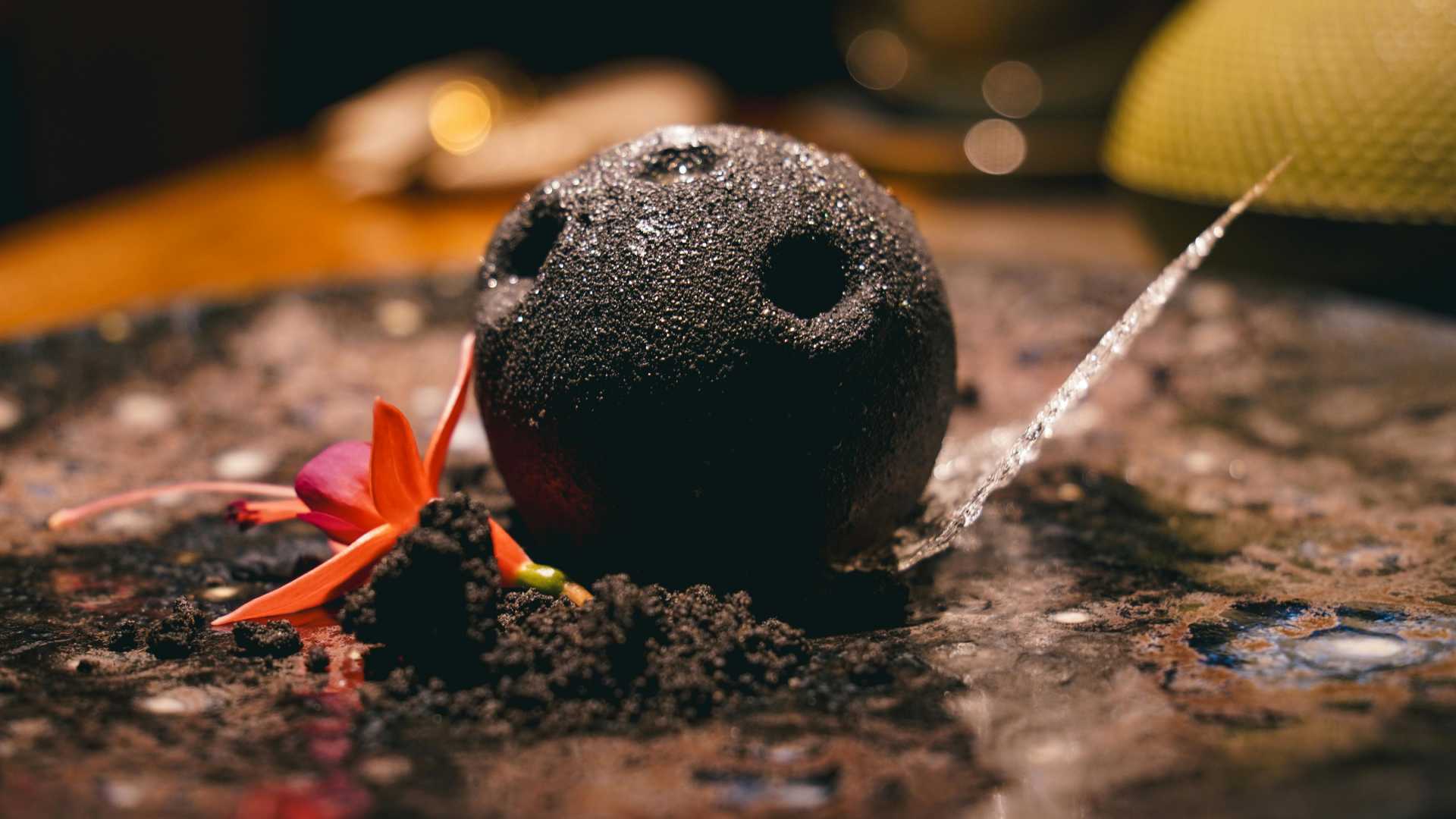
This bizarre hybrid of fast consumption and social media hype has warped everything. Trends move so quickly that chefs are forced to create new “support structures” — stories, theatre, gimmicks — just to keep up.
And honestly, it was all inevitable.
Today’s new-generation “digital age chefs” are remarkably fortunate; what they’re doing now would have been unacceptable not so long ago. And with everyone happily drowning in digital illusions, no one can quite predict where this will end. Cooking, restaurants, the entire business — they’re all shapeshifting, and no one has the faintest idea what the final form will be. In an age where imagination becomes reality with unsettling speed, this so-called Molecular Gastronomy 2.0 will feel like the antichrist to those who actually remember the past, yet it will be worshipped as a culinary god by the new generation.
Considering all this, the future looks a touch unnerving. Yes, there are still places cooking the old- fashioned way — how long they’ll survive is anyone’s guess. One day everything may revolve entirely around “experience cuisine.” A gastronomic encounter that sweeps us off our feet without a single dish being cooked, a glass shared, a joy or sorrow laid on the table — in fact, without a table at all — may not be as far-fetched as it sounds. And the idea that I might live to see a Judge Dredd– style chef era is, frankly, rather depressing. That will be very sad.
